Get Full Government Meeting Transcripts, Videos, & Alerts Forever!
Get email alerts on the Immigration Policy topic
No spam. Unsubscribe anytime.
Colorado Springs council affirms non‑sanctuary stance after heated public comments
Summary
The City Council adopted a resolution declaring Colorado Springs a law‑abiding, non‑sanctuary city after hours of debate and public comment; the measure passed 7‑2.
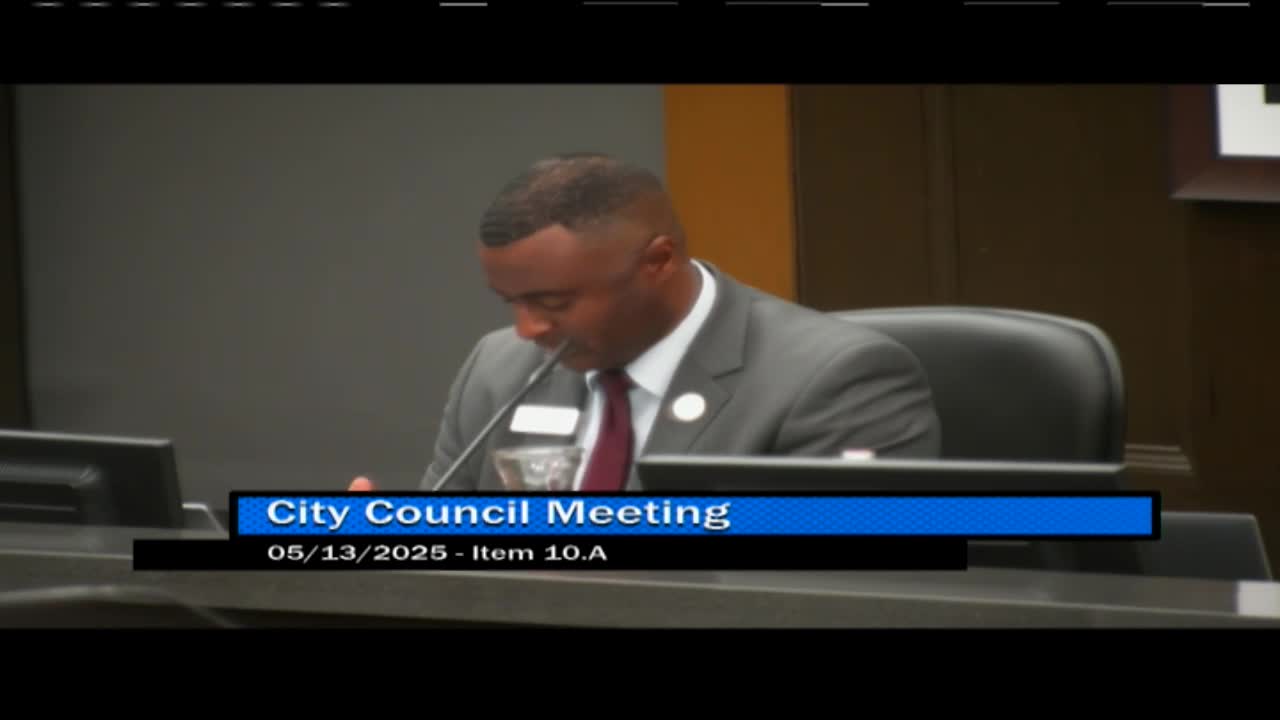
Councilman John Rainey introduced a resolution reaffirming Colorado Springs as a law‑abiding, non‑sanctuary city, and the City Council approved it 7‑2 on May 13.
The measure, introduced by Councilman John Rainey, said the city “will continue to uphold the rule of law for all local, state and federal regulations” and that the city “supports and welcomes legal immigrants into our community.” The council then opened the item to public comment before taking a recorded vote.
The resolution matters because it was brought to council in the aftermath of a high‑profile law‑enforcement raid and because it prompted extended public testimony that included sharply divided views on immigration enforcement and civic priorities. Supporters said the resolution was a necessary statement of support for law enforcement and a commitment to use municipal resources for local priorities. Opponents called the item a political statement that risked stigmatizing immigrants and said it diverted time from other local needs.
During public comment dozens of residents spoke either opposing or supporting the resolution. Opponents included Susan Garso, who said, “People without papers are not illegal,” and urged the council to focus on solutions for people in need. Chris Curry said the resolution “goes in direct contrast to the wishes of the state” and warned of harms to undocumented residents. Supporters argued the resolution reaffirmed support for police and public safety; several speakers urged council to focus follow‑up energy on resourcing police and addressing crime, not symbolic gestures.
The council discussion included legal and procedural framing as well as policy views. Councilman Tom Bailey said the text was limited in scope and could serve as a starting point for action, adding that support for law enforcement should include funding and oversight. Councilwoman Lynette Crow Iverson said the resolution’s pledge not to use local resources to address federal immigration matters was intended to reassure residents about local priorities. Council members debated whether the item was primarily symbolic and whether it should be revisited as an action plan for public safety.
The formal motion to adopt the resolution was made by Councilman Brian Risley, seconded by Councilman Tom Bailey, and passed 7‑2 with Councilwoman Kimberly Gold and Councilwoman Nancy Hingeam voting no.
Council members and several public commenters said they hoped council would follow the vote with concrete steps to improve response times, invest in public safety resources and consider community‑level solutions for public safety and social services.