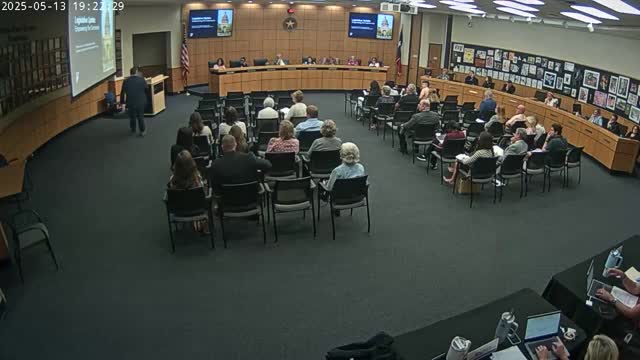
Trustees hear legislative developments: assessment, discipline, virtual-school and early-literacy proposals
Loading...
Summary
District staff reported a series of developments at the Texas Legislature affecting assessments, school discipline, virtual attendance funding and proposed early-literacy/mathematics training; staff said some proposals are promising but details remain incomplete.
DENTON, Texas — At the May 13 meeting Denton ISD received an update on pending state bills that district leaders said could affect testing, discipline rules, virtual attendance and early‑learning programs.
Doctor Robinson, the district’s legislative presenter, told trustees that House Bill 4 passed the House and would replace the current STAR summative assessment framework with a nationally normed, shorter interim testing approach that can be used multiple times a year for instructional growth; Robinson said the change would also permit local indicators (for example extracurricular participation) to be included in accountability frameworks.
On discipline, House Bill 6 (the House’s version of proposals to restore local discretion in discipline) passed the House and, if enacted, would give local administrators broader authority, including more options for students served by special education. Robinson said the district supports returning some local control but that final Senate action is still pending.
Robinson also confirmed that Senate Bill 569 — the bill enabling the state to count virtual academy attendance for ADA — has been signed. The district said that, if it chooses, it could re‑establish a virtual campus that would receive ADA funding under the new law; staff said they were not committing to reopening a virtual academy but noted the option exists without the previous sunset provision.
Robinson summarized House Bill 123, an early‑literacy and numeracy bill that would require a kindergarten readiness assessment and expand required math training academies for teachers (similar to the earlier reading-academy model). He said the bill includes significant implementation costs and that the district is monitoring which grade spans and training obligations will be required.
What trustees heard: staff characterized the larger House Bill 2 finance package as “a good start” but warned it does not fully replace the funding gaps created by inflation and lower attendance. Robinson said that the committee sub for a Senate finance discussion included billions for teacher compensation, special education and other priorities, but he urged trustees to watch the Senate process closely because the funding mechanisms and long-term implications remain uncertain.
Ending: Robinson asked trustees and district stakeholders to remain engaged with legislators as bills continue to move and to expect additional district analyses once more detailed templates and final bills become available.