Get Full Government Meeting Transcripts, Videos, & Alerts Forever!
Get email alerts on the Education Policy topic
No spam. Unsubscribe anytime.
Trustees hear slate of Texas bills that could shift school funding, discipline and bond rules
Summary
Superintendent staff briefed trustees on multiple legislative items — including a likely expansion of the homestead exemption (SB4), House Bill 2 (finance bill) and bills affecting discipline, virtual education and bond elections — and flagged potential effects on Denton ISD revenue, program rules and bond capacity.
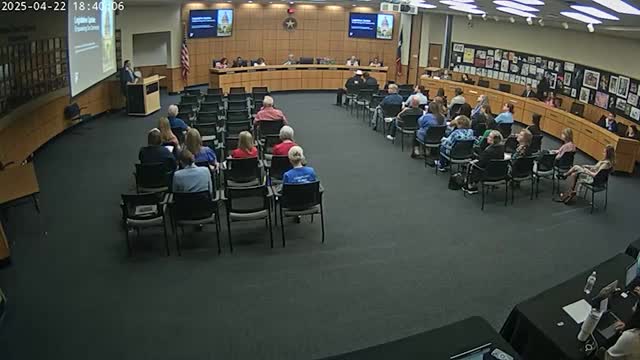
DENTON, Texas — At the April 22 Board of Trustees workshop, district officials summarized multiple Texas legislative proposals they said trustees should watch closely because of their potential effects on school funding, student discipline and district operations.
Doctor Robinson, the district’s legislative liaison, and superintendent staff told trustees that Senate Bill 4 (a proposed expansion of homestead exemptions) and House Bill 2 (the finance bill) are among the measures most likely to affect district revenue and cost pressures. They also reviewed bills affecting virtual education, district-of-innovation waivers, discipline (Chapter 37) and the scheduling or mechanics of bond elections.
Key points
- Homestead exemption and revenue compression: Officials said changes increasing the homestead exemption would shift property tax responsibility from local taxpayers to the state but would not create new money for education overall. Robinson said an increase to the homestead exemption (citing SB4) could remove about $1.8 billion of taxable value from the district’s roll in the example shown and materially lower the district’s “frozen levy” amounts used for state hold-harmless calculations.
- Finance bill (HB2) and funding mix: Trustees were shown preliminary Legislative Budget Board (LBB) runs and staff cautioned that those early runs are often imprecise. District staff said HB2’s proposals — including a higher basic allotment and new or expanded allotments for safety, fine arts and teacher incentives — could increase the district’s average daily attendance funding but that state-model runs will need verification before the district can rely on them.
- Discipline and Chapter 37: Staff described House Bill 660 (and related measures) and earlier drafts that would alter discipline options, including expanded in-school suspension (ISS) allowances and additional DAEP options, some focused on students who pose safety risks. Officials said one bill under consideration could allow injunctive relief in court for dangerous students served by special education, a narrowly applicable but significant legal remedy.
- Liability and immunity language: Robinson told trustees that a Judiciary committee bill introduced by Representative Little would, as written, risk stripping governmental immunity in a broad way because the draft includes negligence language; the district’s legal contacts are urging careful monitoring and proposed technical edits.
- Bond elections and timing: House Bill 19 (as shown in committee) would require bond elections to be held in November and could cap maximum annual debt relative to recent property-tax collections; staff said a November mandate could raise election administrative costs and hamstring growth districts.
Trustee questions and context
Trustees asked whether proposals would affect trustee elections, virtual school waivers, and the district’s ability to hire non‑certified instructors in specialized areas. Staff said some bills under discussion would limit certain District of Innovation flexibilities — for example, restrictions on school-start dates tied to tourism — and that proposed language on certified teachers would likely be focused on core-content certification while permitting CTE exceptions in practice.
Ending
Staff recommended continued monitoring and said the district would return with more precise fiscal analyses once state budget runs and final bill language are available. No formal board action was taken on legislative matters at the April 22 meeting.