
Hazlet board adopts $1.5 million tax increase to reduce budget shortfall after public questions
Get AI-powered insights, summaries, and transcripts
Subscribe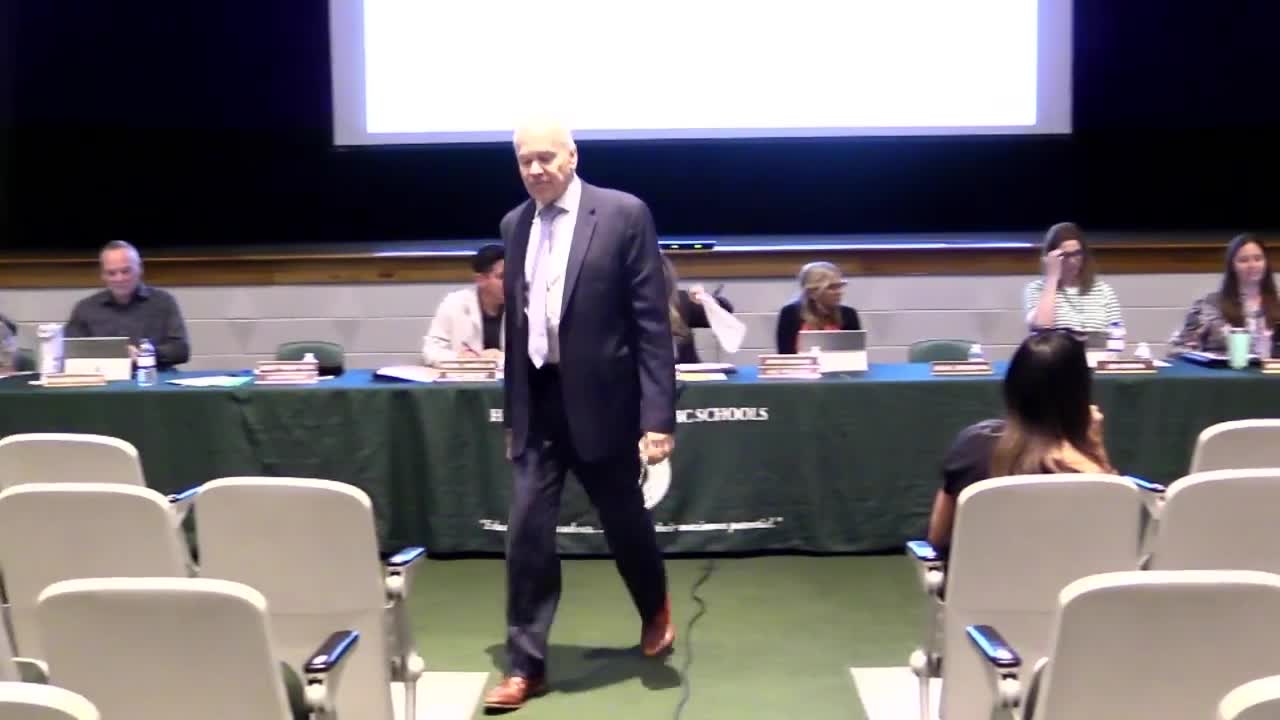
Summary
The Hazlet Township Public School District board approved a budget that relies on a $1.5 million tax levy increase plus reserve withdrawals and grants to reduce a multi‑million dollar deficit; the vote followed a detailed district presentation and multiple public questions about reserves, a bus-analysis error and program sustainability.
The Hazlet Township Public School District Board of Education on a roll-call vote approved a final budget that includes a $1.5 million increase in the tax levy and withdrawals from several reserve accounts to reduce a multi‑million dollar shortfall.
District Superintendent Dr. Ridley said the district faced a roughly $5 million shortfall last year and reduced that gap to about $2.1 million this year through staff reductions and program cuts. "Last year we suffered… we had over a $5,000,000 deficit," Dr. Ridley said during the meeting, adding that the proposed $1.5 million increase would allow the district to restore smaller class sizes and targeted reading and basic skills programs in September.
The budget drew sustained public attention before the vote. Resident Laurie Joseph pressed district staff on an apparent discrepancy in a courtesy-busing analysis that substantially changed the projected savings and questioned the timing of the discovery, reserve withdrawals and an item listed as $420,000 revenue from the sale of property. "This $600,000 discrepancy turns into a major disruption to the original budget that then requires the taxes for all citizens to be raised," Joseph said during public comment.
Business administrator Miss Petrino outlined the revenue-side changes, including a $196,000 reduction in state aid (capped by law), a large reduction in Medicaid/SEMI reimbursements and proposed withdrawals from maintenance, capital and emergency reserves to bridge the gap. Petrino told the board the district would use about $2 million from capital reserve toward roofing projects and that $250,000 from the emergency reserve would be used to evaluate and replace aging public-address systems across buildings.
The board also noted an available state tax-incentive option that made the $1.5 million increase feasible. The district was approved for a tax incentive increase by the county and received an incentive payment after applying to the state Department of Education, the superintendent said.
During the discussion, Petrino and Dr. Ridley described cost drivers including double-digit health-benefit increases, transportation contract CPI adjustments, and higher out‑of‑district special-education tuition. Petrino said district energy savings from solar power purchase agreements (PPAs) are expected to yield long-term savings; she said a 15‑year PPA reduced the district’s energy cost to 3.5¢ per kilowatt-hour for some buildings versus the current 15–16¢ per kilowatt-hour.
Board members then moved to approve the final budget. The motion passed on a roll-call vote with all present voting yes.
The meeting record shows additional procedural votes that evening: approval of the superintendent's consent agenda and several personnel appointments (see "Votes at a glance").
The district said the finalized budget and a user-friendly budget summary will appear on the district website.
Less-critical details from public comment included questions about line-item differences between the printed "user friendly" budget and values posted in the agenda packet, the sudden drop of the legal reserve to zero in the next fiscal projection, and why shared-service savings were not disclosed in the user-facing materials. The superintendent pledged to follow up with members of the public who raised specific questions.