
Board upholds $3.25 million assessment for Riverpointe affordable housing over owner’s appeal
Get AI-powered insights, summaries, and transcripts
Subscribe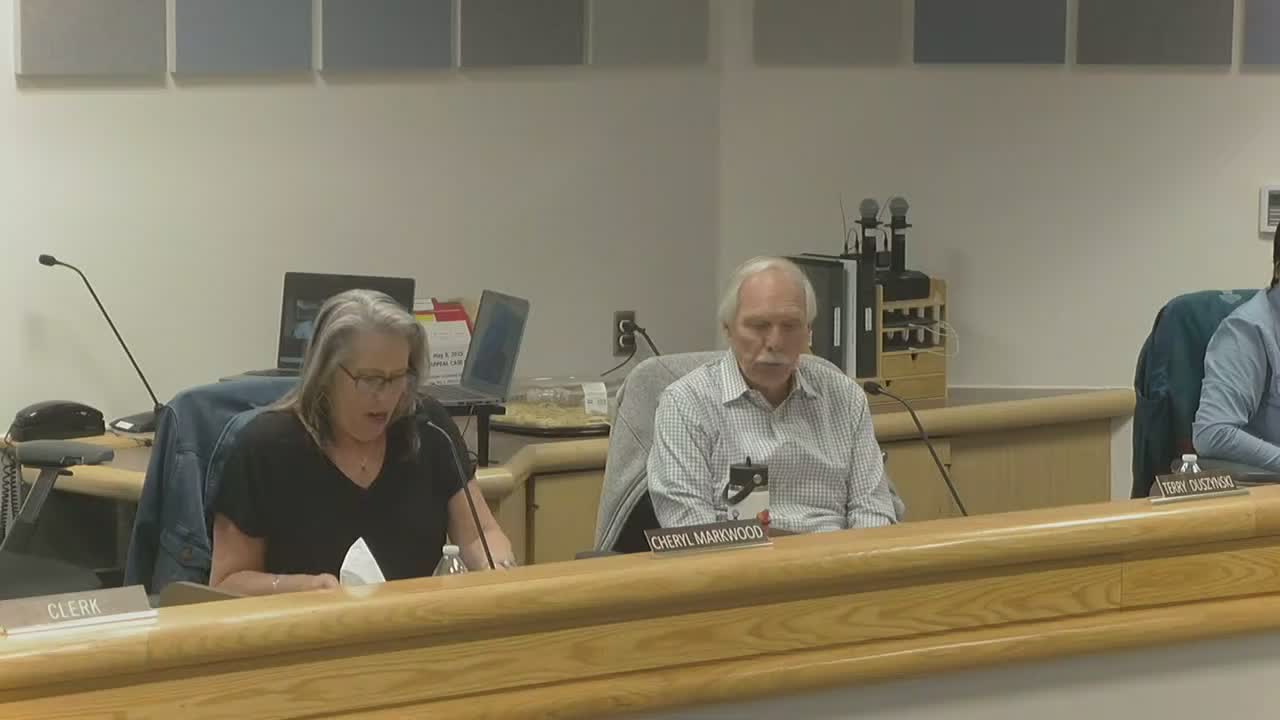
Summary
The Fairbanks North Star Borough Board of Equalization voted 4-1 on May 9 to uphold the borough’s 2025 full-and-true valuation of Riverpointe (also called Riverpointe Village) at $3,252,565, rejecting the owner’s appeal.
The Fairbanks North Star Borough Board of Equalization voted 4-1 on May 9 to uphold the borough’s 2025 full-and-true valuation of Riverpointe (also called Riverpointe Village) at $3,252,565, rejecting an appeal from the property owner.
The decision preserves the assessor’s 2025 roll value of $142,517 for land and $3,110,048 for improvements for the multifamily complex identified in the record as Riverpoint LLC (case 95). The appeal was presented to the board by the property owner, identified in the meeting notice as Roland Powell, who asked the board to reconsider the assessment.
The board’s chair opened the appeal by noting procedural rules and sworn testimony requirements for Board of Equalization hearings under Fairbanks North Star Borough code. The owner described purchasing the 26-unit affordable housing property in 2020 and presented an appraisal and alternate valuations tied to inflation adjustments.
“The property makes sense to operate the way we do,” the appellant said, explaining the property is operated with reduced overhead by the current owner and that rents are set by the low-income program. The assessor’s appraiser, Matt Casort, testified that borough staff inspected the property on March 18, 2025, made inventory corrections totaling $381,000 in the owner’s favor, and nevertheless recommended upholding the full-and-true value.
Casort told the board the assessor used a sales-informed cost model consistent with the International Association of Assessing Officers (IAAO) standards and reviewed recent sales of multifamily properties. He said comparable sales produced a per-square-foot range that placed the subject at about $116 per living-space square foot and that the assessor’s full-and-true value falls within the local sales array.
Casort also explained the borough’s valuation process for properties that apply for the Low Income Housing Tax Credit (LIHTC). He said the assessor first establishes a full-and-true value for the roll and will, if and when the property’s LIHTC preferential valuation is applied, recalculate value using the income-and-expense approach mandated by statute for that program. The assessor cited Alaska statute 29.45.110(D) as the law requiring the income approach for LIHTC applications.
Board members’ questions focused on unit counts, square footage, maintenance reserves, and whether the LIHTC income approach could be used outside the program. Casort said the assessor cannot use the income approach to set the general ad valorem value outside the LIHTC application process because doing so would be inequitable to other properties and would subvert the state-mandated application process. Casort also identified a realtor, Matthew Vincent of Jack White Real Estate (Anchorage), who provided an unsolicited offer that the assessor described as a “lowball” and not a firm listing.
During deliberations, board member Daczynski moved to accept the assessor’s valuation; the motion was seconded by Schuster. Shuster voted no and provided reasons on the record; four members voted yes and the motion passed. The board then voted 5-0 to accept its written findings of fact and conclusions of law, which the clerk will mail to the appellant and to the assessor.
The assessor noted that the assessed value likely will change if and when the owner submits LIHTC financials and the borough processes a preferential LIHTC valuation; the board’s decision in this hearing upheld the 2025 roll value as currently calculated.
Clarifying details recorded in the hearing included: the assessor’s description that the subject parcel totals about 57,000 square feet and the assessor’s breakdown of building living-space square footage (building 1: 6,170 sq ft; buildings 2 and 3: 10,336 sq ft each; building 4: roughly 10,096 sq ft as described in assessor materials); the property was described in meeting materials as having 26 residential units and a community building with office/laundry/meeting space; the assessor reported inventory corrections of $381,000 in the owner’s favor following inspection. The meeting record contains two different build-year statements: the appellant referenced 2005 and the assessor referenced 2004 in the appraisal materials; the record does not resolve that discrepancy.
The board’s oral decision and the written findings will be entered into the record and mailed to the parties. The assessor reiterated that if the owner’s LIHTC application is submitted and approved, staff will recompute preferential value under the income-and-expense method required for that program.
Sources: sworn testimony and exhibits entered for case 95 during the Board of Equalization meeting, Fairbanks North Star Borough, May 9, 2025.