Get Full Government Meeting Transcripts, Videos, & Alerts Forever!
Get email alerts on the Commission Governance Membership topic
No spam. Unsubscribe anytime.
Air Pollution Control Commission debates its role as membership shortages and officer elections proceed
Summary
Commissioners acknowledged low membership and the commission’s advisory role under borough code, nominated officers and recommended sending meeting minutes and concerns to the mayor about appointments and possible temporary suspension if membership remains low.
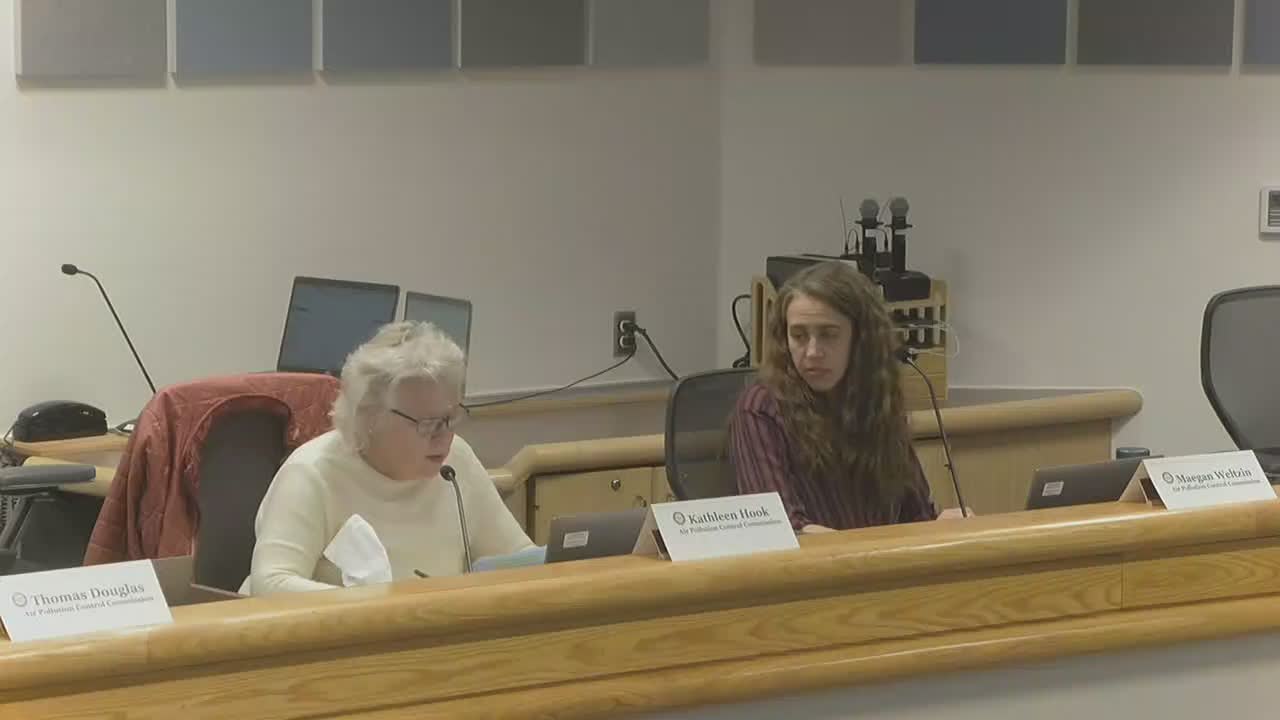
Commissioners on the Fairbanks North Star Borough Air Pollution Control Commission discussed the commission’s role and low membership at their May 7 meeting, then held officer elections for chair and vice chair.
Commissioner Kathleen Cahill reviewed the commission’s authority and purpose, saying the APCC “was established under chapter 4.12 of the borough ordinances” and describing the body as an advisory panel that reviews regulations, explains air quality issues to the borough assembly and develops comprehensive plans for prevention and control of air pollution.
The nut graf: commissioners signaled concern about being understaffed and debated whether to keep the commission active, move it into temporary suspension, or continue meeting quarterly while the mayor’s office seeks additional nominees.
Cahill said the APCC has seven voting members with three‑year terms beginning in January and that four members are required for a quorum; at the time of the meeting the commission had four members. Commissioners asked how appointments occur; Cahill said members are selected by the mayor and that she had asked the mayor to look for candidates. Commissioners noted the mayor’s executive assistant handles application packets.
Commissioner Tom Douglas said he felt the panel provides value but agreed some resources might be better used elsewhere if the commission continues to be lightly engaged. Several commissioners suggested the minutes of the meeting be forwarded to the mayor to underscore appointment concerns and to assist the mayor’s review of each commission’s usefulness. One commissioner recommended keeping quarterly meeting dates on calendars to avoid future scheduling difficulties if the commission needs to reconvene quickly.
On nominations, Cahill nominated Commissioner Tom Douglas for chair; Douglas accepted. A commissioner then nominated herself for vice chair and was confirmed. The clerk announced no ballots were necessary; commissioners did not record a roll‑call vote for the officer elections in the meeting transcript beyond acceptance and no other nominations.
The commission did approve the meeting’s agenda and consent agenda at the start of the meeting; the consent agenda contained minutes from November 6, 2024 and February 5, 2025. The meeting adjourned at 6:33 p.m.
Commissioners discussed potential next steps but did not take formal action to suspend the commission. They directed that the minutes be sent to the mayor to inform his review of commission appointments and status.