Get Full Government Meeting Transcripts, Videos, & Alerts Forever!
Get email alerts on the See Click Fix Citizen Reporting topic
No spam. Unsubscribe anytime.
Lawrence staff review SeeClickFix rollout, say app offers feedback loop but equity and staffing gaps remain
Summary
City staff reviewed the SeeClickFix resident-reporting app and its integration with CityWorks, describing how requests are routed and tracked, a 72-hour pothole target, and plans to map where reports originate to guide outreach; participants raised concerns about equity, snow-event use and staff capacity.
City of Lawrence staff on April 21 reviewed the city’s SeeClickFix resident-reporting app and described how the platform has been relaunched and tied into internal asset-management work while acknowledging gaps in outreach, staffing and some department processes.
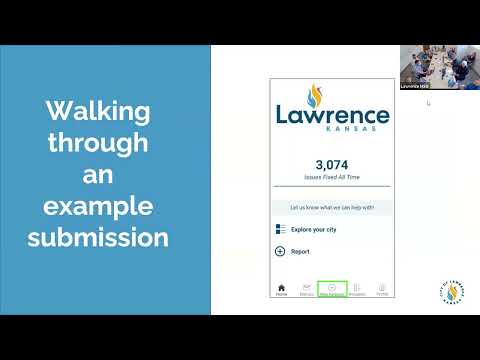
The presentation by Brandon Bayless, a supervisor in the city’s tech and asset division, explained the relaunch and how SeeClickFix integrates with the city’s web portal and CityWorks asset-management software. “When a request is submitted, they'll get an initial confirmation email saying thank you for submitting the request,” Bayless said, describing the automated confirmation and the app’s ability to provide status updates to users.
City staff argued the tool creates a “360-degree feedback loop” that can let crews ask follow-up questions, attach photos, and close requests with explanatory notes. That exchange, they said, is intended to improve transparency for residents and to route submissions directly to the appropriate work groups so problems can be prioritized and tied into capital planning.
Board members and staff discussed how SeeClickFix handles priorities and quality control. Bayless said the city used a phased rollout of request categories and communications posts to introduce the app to residents after the relaunch in February 2024. Staff also noted a mix of request handling: some straightforward issues, like potholes, can be fixed and closed quickly; other items—stormwater, major reconstruction, or projects requiring public processes—may remain open for months while they move through review or the capital improvement program.
Participants raised equity concerns. One board member noted that disadvantaged neighborhoods might be less likely to use a smartphone-based reporting tool and asked whether the city tracks submissions by neighborhood or demographic measures. Staff said they do not currently track SeeClickFix usage specifically by socioeconomic metrics but that the data can be mapped and that they would follow up with the board next month with geographic distribution of requests. Staff also pointed out an additional internal layer: many operational work orders are created before requests appear in SeeClickFix, and those field-generated orders are not always captured in the public-facing map.
The board pressed staff on expectations and performance indicators. Staff described a current operational target for pothole responses of roughly 72 hours as a working key performance indicator and said they are using SeeClickFix and CityWorks data to direct rehabilitation and longer-term capital investments. Street sweeping, which staff said is primarily driven by stormwater permit compliance (MS4 permit), is scheduled about twice per year citywide; staff noted sweepers focus on reducing debris in storm sewers rather than prioritizing bike lanes specifically.
Members also discussed limits of the platform for certain events. Staff said SeeClickFix is not well suited for snow-removal requests because the city lacks personnel dedicated to answering the influx of reports during large snow events, and that during the January snow event many users submitted debris reports that required manual triage.
Staff outlined several next steps discussed during the meeting: map SeeClickFix submissions to identify geographic gaps in usage and target outreach; develop standardized staff responses for common request types; and hold internal stakeholder meetings to close long-running request backlogs. Staff also noted ongoing work to document city facility assets and expand the types of facility-related requests that can be routed through the system as assets are migrated into CityWorks.
Board members asked about outreach and account requirements; staff said users may submit reports anonymously or create an account to receive status emails and that the communications team will continue targeted promotion. Staff said they are considering monthly stakeholder meetings and additional communications to reduce delays that make the city appear unresponsive.
The meeting concluded with scheduling items and reminders about an upcoming field tour of ongoing projects in North Lawrence. Staff said they will return to the advisory board with mapping results and suggested communications options at the next meeting.