Get Full Government Meeting Transcripts, Videos, & Alerts Forever!
Get email alerts on the District Budget topic
No spam. Unsubscribe anytime.
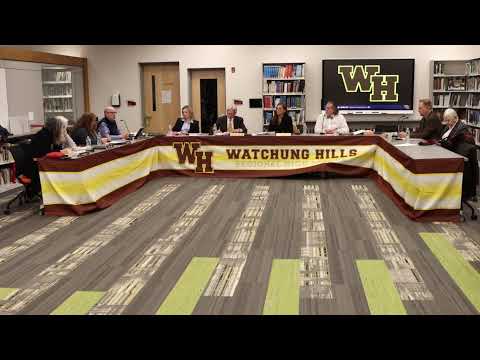
Watchung Hills projects steep health-care, special-education and technology cost pressures in preliminary 2025'26 budget
Summary
Business administrator Tim Stice presented a preliminary 2025'26 budget showing flat enrollment, a 2% local tax cap (about $700,000), an expected health-care increase near 11'12%, a settled teacher contract at 3.4% and declining send'receive tuition that could reduce revenues by roughly $400,000.
Tim Stice, presenting the district's preliminary 2025'26 budget, told the board the document is an initial look at revenue and expense pressures and that detailed numbers will be refined after the governor's state budget address. "This is our first shot at the budget. It's kind of preliminary information. There's not a lot, not a lot of detail, but just enough," Stice said.
Stice highlighted several cost drivers: a projected double-digit increase in health-care premiums (he and the finance committee were looking at about 11'12 percent, but the figure remained subject to change), escalating special-education tuition and transportation costs, and ongoing technology and maintenance increases. He said the district faces a 2 percent local tax-cap that equals roughly $700,000 in additional levy capacity, and that several items already eclipse that sum. Stice noted the district could draw on a banked cap and a health-care waiver but cautioned some waiver choices would increase the tax levy. The board was told teacher salaries have been settled at 3.4 percent and that the district's audited reserves stood at about $5,700,000.
Stice also reviewed enrollment and tuition revenue: the send'receive general-education tuition rate for the sending district is $21,433, special-education tuition will rise by formula, and Greenbrook's sending population has fallen from more than 400 students to about 350, with about 20 fewer students expected next year. "There's 20 fewer students in this year's number as opposed to last year's. So that's $400,000 if you do the math," Stice said. That decline reduces tuition revenue and complicates balancing the budget under the 2 percent cap.
Board member Mr. Morrison raised two budget-related points: he said an increase in the district's free-and-reduced-lunch count may partly reflect changes in the federal eligibility formula rather than a sudden local income shift, and he said the Warren Township Committee had previously discussed allocating opioid-settlement funds to support security upgrades in K'8 districts. "If there's a year where we could use a little gift, this may be it," Morrison said, and he said he would follow up with township officials about the settlement funds.
The board discussed potential capital projects that could reduce the tax burden if funded from reserves, including a condensate tank replacement for a boiler, science-room and IT-closet upgrades to improve cooling, and carpeting and security upgrades. Stice said transportation and energy costs remain an unavoidable pressure. The district's budget timetable in Stice's presentation sets the county filing deadline on March 19, with a public hearing planned for April 29. The board will continue discussions at its March meetings pending the governor's budget and final state aid numbers.