Get Full Government Meeting Transcripts, Videos, & Alerts Forever!
Get email alerts on the Strategic Plan Update topic
No spam. Unsubscribe anytime.
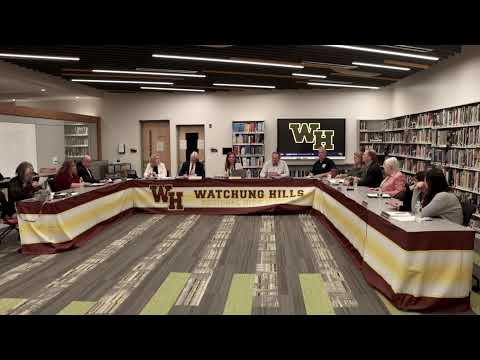
Watchung Hills board hears updates on strategic plan: counseling, peer outreach, design lab and unified sports
Summary
District leaders and students described progress on the five‑year strategic plan, highlighting expanded counseling services, a peer outreach arts class, a new design lab and course, growth in career internships, and the inaugural unified flag‑football team.
Watchung Hills Regional High School District presented an update on progress toward its five‑year strategic plan at the May 13 board meeting, with administrators, clinicians, teachers and students describing recent programs and space improvements aimed at social‑emotional support, innovation and inclusion.
The update focused first on social‑emotional growth and wellness and the district’s multi‑tiered system of supports. Jason Sabino, co‑chair of the goal, told the board the district logged “over 12,000 visits to our school counseling offices this year,” which administrators said shows high student engagement with counseling services. School counselors and student‑assistance counselors described their roles: school counselors deliver tier‑1 lessons and individual academic and personal guidance; student‑assistance counselors provide a higher level of in‑school intervention; and on‑site clinicians from Rutgers offer tier‑3 clinical services.
Dr. Susie Millar, program director for the school‑ and community‑based program that provides Rutgers clinicians in the building, said the in‑school clinicians perform risk assessments, provide individual and group therapy and connect families to higher levels of care when needed. Millar described the clinicians’ role as reducing barriers to care by screening students on campus and linking them to inpatient, partial‑hospitalization or community providers when appropriate.
The board heard examples of student‑facing programs aligned to other plan goals. A peer outreach arts class pairs general‑education students with peers who have special needs; student speakers described projects, bulletin‑board campaigns and the development of friendships and empathy. Teachers said the program expanded in grade span and that students involved reported meaningful outcomes and increased interest in careers serving people with disabilities.
Career internship programming also expanded. A district staff member said internship placements grew from two students when the transition program began to about 16 students for the coming year, with placements in retail, restaurants and assisted‑living establishments in the sending districts and nearby towns.
Administrators reported a design lab that opened in January and is already used by robotics and product‑engineering courses. A new course, Foundations of Creative Design, is scheduled to run next year and will use the lab; more than 30 teachers across the district participated this year in workshops on design thinking and ethical design to integrate innovation practices into classrooms.
World‑language and arts teachers described project‑based units that combine language skills with creative problem solving. French 1 students presented projects that asked them to research Francophone contexts, propose solutions to school‑supply affordability issues and work through ethical dilemmas in the target language.
Students also shared extracurricular developments. Thiago Taksiria, identified as a post‑graduate student, spoke about the district’s inaugural unified flag‑football team, saying the team “won our first game ever against Roxbury” and praising coaches and teammates.
Board members praised the presentations and emphasized the district’s efforts to embed the strategic plan into budgeting and daily operations so the plan guides long‑term work across administrations. One board member said the plan has been used to align resources and professional development and to make the plan a “living” document rather than a shelf report.
The update combined classroom examples, student testimony and staff descriptions to show how multiple strategic goals — wellness, pathways/imagination/innovation, and inclusion — are being operationalized across programs and facilities.