Get Full Government Meeting Transcripts, Videos, & Alerts Forever!
Get email alerts on the Community Mediation topic
No spam. Unsubscribe anytime.
Community Mediation Upper Shore presents free mediation option for Kent County disputes, discusses police-complaint referrals
Summary
Community Mediation Upper Shore described free mediation services available to Kent and Queen Anne's counties, including an existing MOU for police-complaint mediation in Queen Anne's and a proposed Kent County MOU. Board members raised questions about confidentiality and an Attorney General briefing that may limit mediation's legal effect.
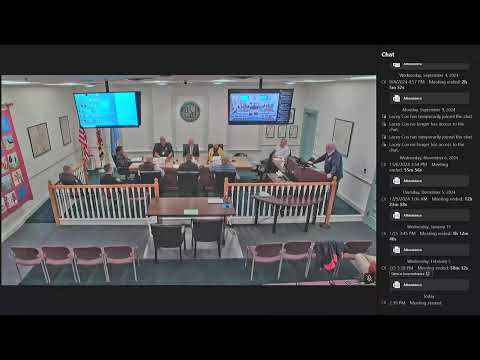
Community Mediation Upper Shore outlined its free mediation services to the Kent County Police Accountability Board on March 1, saying the nonprofit already serves Kent and Queen Anne’s counties and can mediate disputes ranging from neighborhood complaints to police–community complaints.
“ We serve the community, providing completely free mediation services in a variety of situations,” said Cameron Romaine, executive director of Community Mediation Upper Shore. Romaine said the program handles neighborhood disputes, family and school conflicts, and can accept referrals from law enforcement.
The presentation explained how police-complaint mediation works in practice. Romaine said participation is voluntary: if a complaint is eligible for mediation, the complainant and the officer would receive contact information and decide whether to participate. “It’s always a voluntary service,” Romaine said. She added that when mediation results in a written, signed agreement those agreements can be shared with the involved police agency but that confidentiality details should be defined in a local memorandum of understanding.
Why it matters: mediation offers an alternative to formal complaint adjudication that some officials said can help repair relationships and reduce recurring calls for service. Board members and attendees pressed for clarity on how mediation interacts with existing complaint processes and on recent guidance from the state Attorney General that board members said could limit mediation’s legal effect.
Romaine said Community Mediation Upper Shore already has a memorandum of understanding (MOU) with the Queen Anne’s County Sheriff’s Office and that a Kent County MOU could be customized. She described the center’s funding model as a mix of judicial partnerships, private foundations and donors and said the program trains volunteer community mediators each year to keep services free.
Board members and attendees asked operational questions. An HOA representative, Johnny Jones, asked how to submit a police-complaint referral; Romaine explained the center typically receives contact information for both participants and then reaches out to explain mediation and schedule sessions. Romaine said mediations are usually in person at neutral locations—libraries, churches or the center’s office on Cross Street in Chestertown—but that staff can arrange Zoom sessions when necessary.
A board member raised legal concerns and said a briefing from the Maryland Attorney General’s office indicated mediation might not prevent a separate administrative complaint review. “It’s basically, they’re cutting out the legs of mediation, which is shame,” the board member said, referring to the AG briefing; the board member said they would circulate the document to others on the board.
Board members discussed next steps and outreach. The sheriff’s office indicated willingness to help set up mediation access points in Millington, Galena and Betterton, and Romaine said she will provide brochures and a sample police-complaint mediation MOU to the board. Board staff also noted the county complaint-procedure web page needs updating so residents know mediation is an option.
No formal policy change or binding agreement with Kent County was approved at the meeting. Romaine said the center can work with county leadership to develop a Kent-specific MOU and to clarify referral pathways.
The presentation drew several follow-up questions and ended with Romaine asking board members to share information about mediation with community contacts.