Get Full Government Meeting Transcripts, Videos, & Alerts Forever!
Get email alerts on the Earned Sick And Safe Time topic
No spam. Unsubscribe anytime.
Committee lays over bill to exempt very small farms from Minnesota earned sick and safe time
Summary
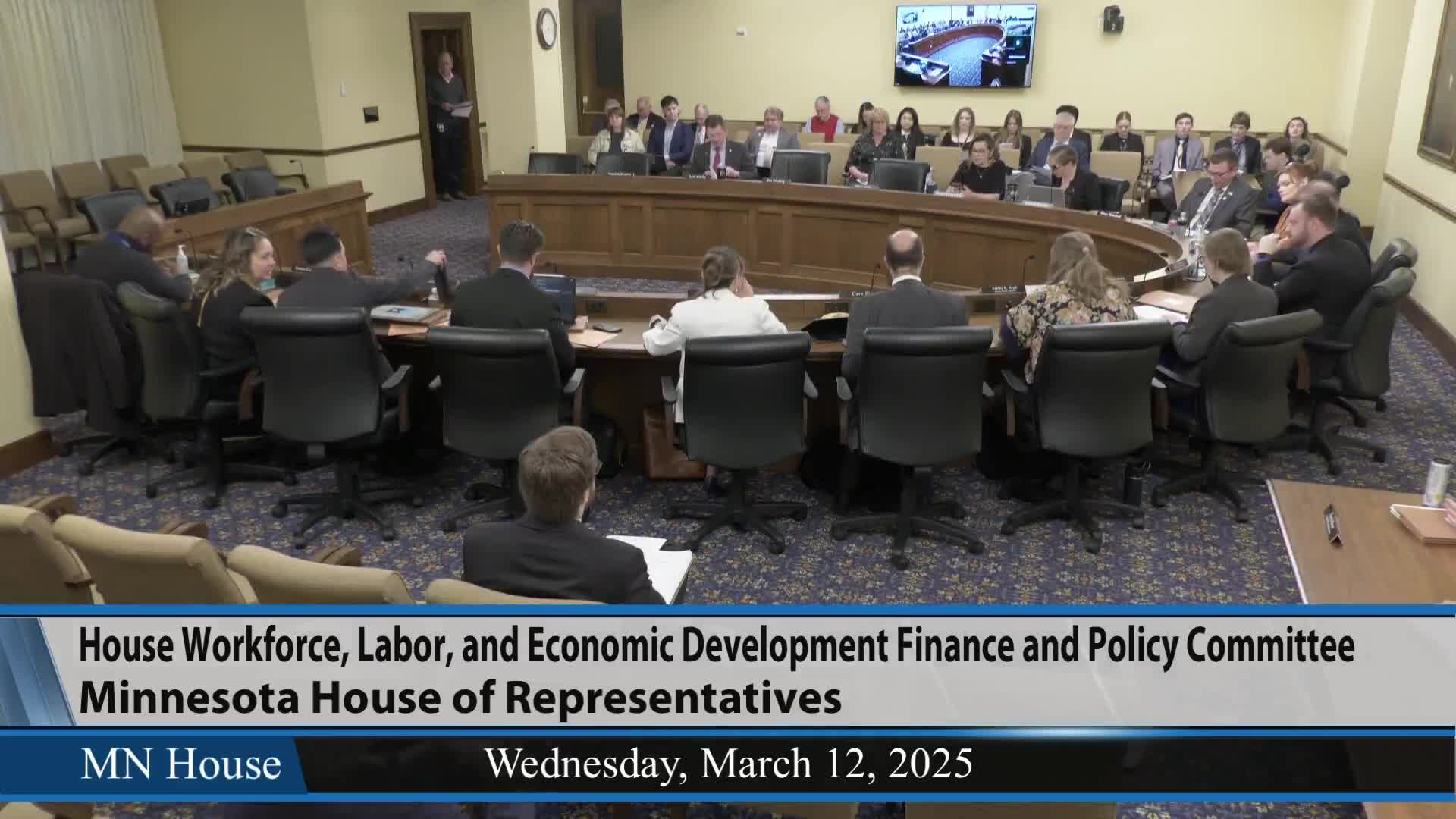
The Workforce, Labor, and Economic Development Finance and Policy Committee on March 12 laid over House File 1057, a bill from Representative Ruth Anderson that would exempt ‘‘farms that have fewer than five full‑time employees’’ from Minnesota’s earned sick and safe time (ESST) law.
The Workforce, Labor, and Economic Development Finance and Policy Committee on March 12 laid over House File 1057, a bill from Representative Ruth Anderson that would exempt ‘‘farms that have fewer than five full‑time employees’’ from Minnesota’s earned sick and safe time (ESST) law.
The bill’s author, Representative Ruth Anderson, told the committee the change would be a ‘‘relatively small exclusion’’ to ease administrative burdens on family farms that lack human resources staff. Anderson said many family farms ‘‘have shared labor’’ among relatives and rely on workers during high‑intensity seasons such as planting and harvest.
Nicole Lisonbee, commissioner of the Minnesota Department of Labor and Industry, testified in opposition and said the department estimates roughly 1,500 agricultural establishments and about 2,500 employees would be affected by the proposed exemption. Lisonbee reiterated the current ESST standard — one hour of sick time earned for every 30 hours worked, up to 48 hours per year — and said the law was intended to set a statewide floor so workers do not have to choose between their paychecks and recovering from illness or caring for family. She warned agricultural work can involve higher occupational hazards, noted public‑health concerns such as avian influenza and cited technical problems enforcing a ‘‘five or fewer employees’’ threshold because farm employment is highly seasonal.
Supporters of the bill said the change recognizes the practical differences of family farms. Darren Broton, executive director of the Minnesota Agri Growth Council, described a prolonged downturn in farm income and argued family farms operate differently than other businesses; he said family members often cover work when someone is ill and that certain tasks (for example, milking or feeding livestock) are difficult to replace with temporary labor. Bruce Clavin, representing multiple farm organizations including the Minnesota Association of Wheat Growers and Red River Valley Sugar Beet Growers, told the committee the idea was not new and pointed out that a 28‑day harvest exemption enacted last year targeted seasonal help.
Committee members pressed both sides on practical effects. Representative Cedric Frazier asked for concrete examples of harm to small farmers; Representative Anderson offered two anecdotal accounts she said came from farmers who told her the ESST law had drawn them into unemployment insurance and raised costs — one example cited an estimated $30,000 annual cost for a two‑brother family farm. Members from both parties expressed concerns about administrative complexity and enforcement. Representative Kelly Schultz and others said they wanted to protect farm operations and avoid undue paperwork burdens; Representative Janelle Greenman and several members representing labor interests argued the bill would reduce protections for vulnerable workers and oppose carving out categories of employees.
The committee did not vote to advance the bill; the chair moved to lay House File 1057 over for further consideration and the motion was carried. No formal roll‑call vote was recorded in the transcript.
Because testimony raised both worker‑protection and agricultural‑operational issues — and because enforcement questions were raised about a seasonal workforce — the committee left the bill on the table for additional discussion rather than taking final action.
Votes at a glance: House File 1057 — Motion to lay over: moved by Chair; outcome: laid over (voice vote; no roll call recorded).