Get Full Government Meeting Transcripts, Videos, & Alerts Forever!
Get email alerts on the School Budget topic
No spam. Unsubscribe anytime.
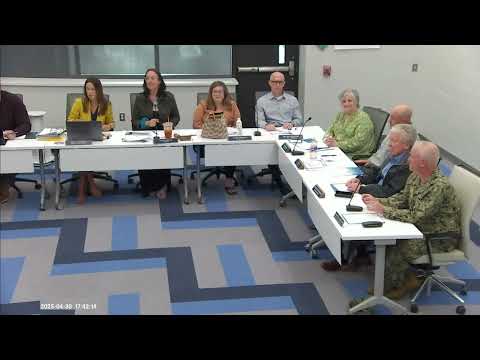
Board hears presentation on 2025–26 school budget; approves budget items amid state-aid and cost pressures
Summary
District staff presented the proposed 2025–26 Manchester Township School District budget, detailing a modest state-aid increase, major cost drivers and mitigation steps. Board members approved the budget items in a roll-call vote; the district applied for additional tax-levy relief but the final award amount had not been returned by the state.
Staff member Craig Lorenzen presented the proposed 2025–26 Manchester Township School District budget and the board voted to approve the budget items after a discussion of state aid, major cost drivers and mitigation steps.
Lorenzen said the district received a state-aid increase of about $359,000 for 2023–24 but that the revised state funding formula would have yielded roughly $1.8 million more without a cap. He told the board, “Realistically, today, the 2% cap, it doesn't work when you're trying to develop a budget with the costs of everything else going up significantly more than the cap.”
The presentation laid out why the district remains heavily dependent on local property tax revenue: the tax levy is the district's primary revenue source and local taxpayers fund roughly 71–77% of the budget, Lorenzen said. He described staff salaries and health benefits as the single largest share of spending — roughly 70% when combined — and pointed to potential year-over-year increases in utilities (an estimated 20% increase), liability insurance (about 25%), and pension payments for staff not in TPAF (an estimated 17% increase). He also noted the district is projecting $1.2 million in tuition payments for students who attend nonpublic schools within the required radius.
Special education and charter-school enrollment were major cost drivers highlighted in the presentation. Lorenzen said the district currently has about 739 students with individualized education programs (IEPs), roughly one-quarter of the student population, and 168 students with 504 plans. He said the district’s out-of-district special-education placements are projected to fall from about 57 this year to roughly 47 next year and credited special-education staff with work that reduced those costs. He also said each charter-school student costs the district about $22,000.
To reach a balanced presentation for the budget vote, the administration proposed several mitigation measures, including eliminating six positions through attrition, reducing some out-of-district placements, and moving cafeteria aides from the local budget into the cafeteria (food-service) budget. Lorenzen said class sizes and extracurricular programs are expected to remain unchanged under the plan and that transportation and field-trip services remain available.
The district also applied for additional tax-levy approval as part of the state’s application process. Lorenzen said the district applied for $829,000 (about $790,000 of which falls into the tax levy and roughly $40,000 into an incentive), but the district had been told that while the application itself was approved, the state had not yet issued a finalized award letter to specify the amount.
Board members asked about residency verification for students attending charter and out-of-district programs; Lorenzen said the district has begun residency checks this year and will continue that work, and that some families discovered through checks were not Manchester residents. The presentation also noted that reassessment reduced the district school tax rate by $0.55 and estimated the impact on the average home (assessed value $366,000) at about $114 per year.
After discussion, the board approved the budget items in a roll-call vote (names and votes recorded from the meeting transcript). Lorenzen closed by thanking staff and the board for their work on a difficult budget process and noting continuing uncertainty about future federal funding and the state funding formula.