Committee advances state vaccine‑purchase proposal amid polarizing public testimony
February 08, 2025 | House Committee on Health & Homelessness, House of Representatives, Legislative , Hawaii
This article was created by AI summarizing key points discussed. AI makes mistakes, so for full details and context, please refer to the video of the full meeting. Please report any errors so we can fix them. Report an error »
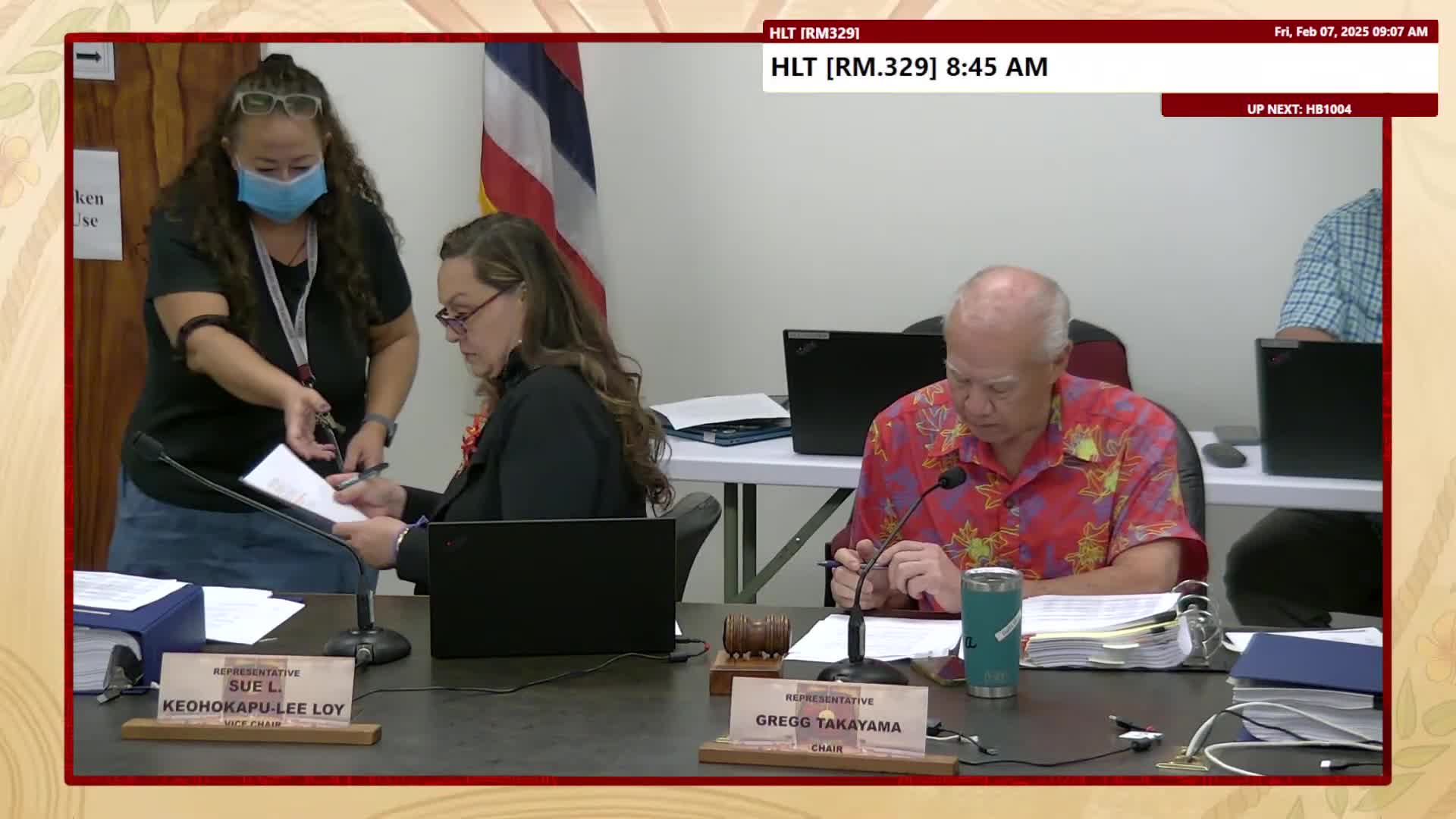
The Department of Health described the bill as a funding proposal to reduce barriers and administrative burdens that primary‑care providers face when stocking vaccines. Sarah Kimball of DOH explained the measure would not mandate vaccines but would enable the state to leverage bulk purchasing and reduce uncertainty in federal programs, noting other states use similar models. The bill’s report language will capture a suggested range for funding: DOH recommended a startup amount of about $934,000 and ongoing annual funding in the $2.8 million to $3.6 million range for program operations and to preserve access for children who rely on state vaccine purchasing channels.
Medical groups and pediatricians, including the Hawaii chapter of the American Academy of Pediatrics and several practicing pediatricians, testified in support, saying the proposal could stabilize vaccine access for private and public clinics — a concern especially for remote islands where ordering and shipping have caused shortages and delayed well‑child vaccination schedules. Dr. Melissa Kim, a pediatrician on Maui, said clinics there have at times been unable to offer a vaccine because shipments did not arrive on time, sometimes forcing scheduling delays for infants.
Opponents, including several parents and community groups, urged rejection. Their testimony raised constitutional objections, concerns about vaccine safety, and objections to limiting religious exemptions; some speakers attributed personal or family adverse outcomes to vaccinations. Committee members and witnesses also discussed legal protections for vaccine administrators and details about program governance. The Department of Health proposed clarifying amendments and technical edits, and the committee added report language with the suggested funding figures and technical clarifications to the bill text.
Why this matters: Proponents said the bill preserves access and protects providers from financial risk, especially on the neighbor islands; opponents said it raises religious‑freedom and liability concerns and asked for more transparency and safeguards.
Next steps: HB1115 advanced with amendments; the committee included proposed funding ranges and startup funds in report language for further fiscal consideration.
Don't Miss a Word: See the Full Meeting!
Go beyond summaries. Unlock every video, transcript, and key insight with a Founder Membership.
30-day money-back guarantee
Sponsors
Proudly supported by sponsors who keep Hawaii articles free in 2026

