
Lawmakers advance bill to fund peer‑to‑peer family support programs, recommend 2 FTE and $860,000/year in report language
Get AI-powered insights, summaries, and transcripts
Subscribe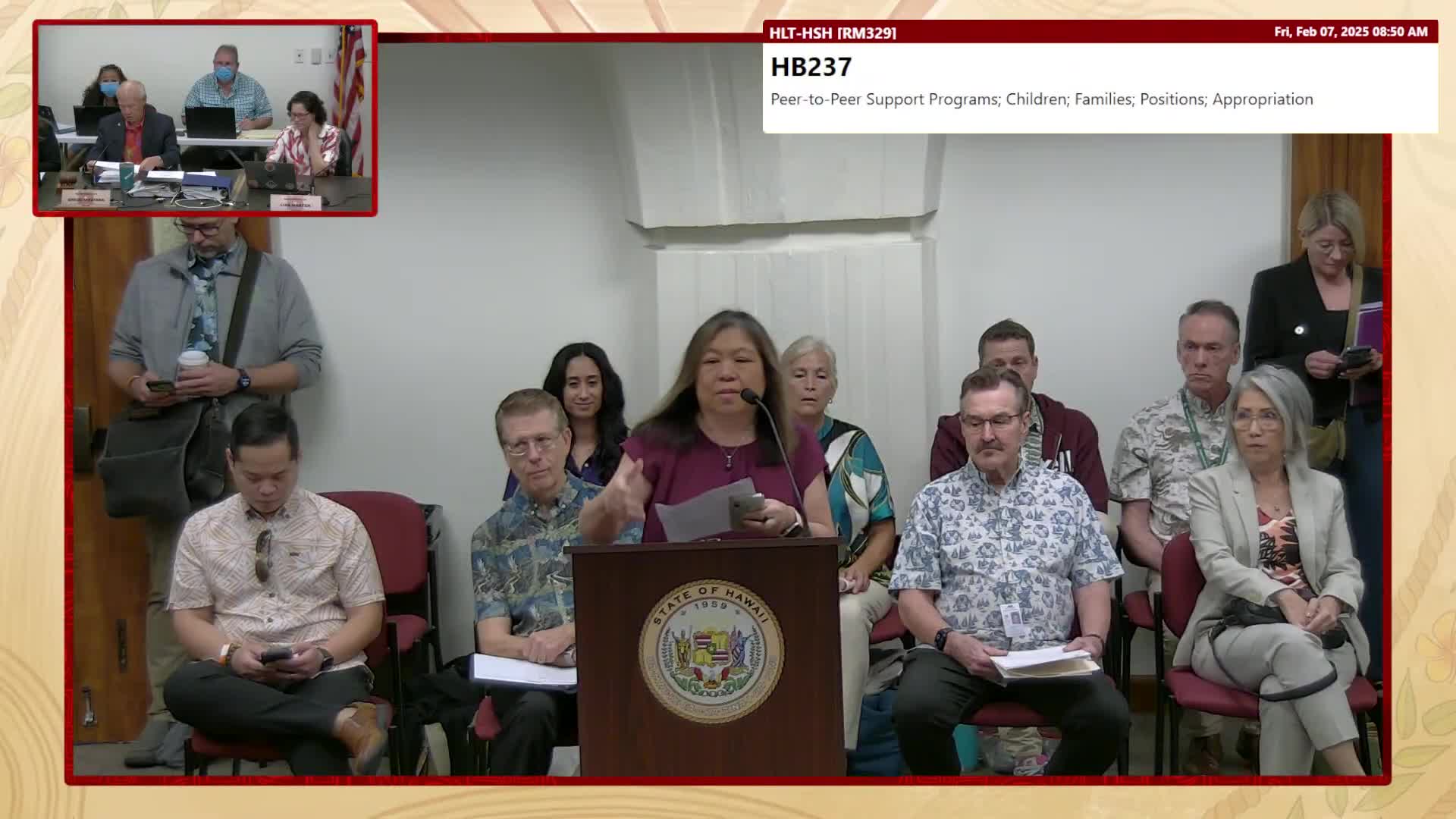
Summary
Committees voted to pass HB237 to expand peer‑support programs for families, with testimony from providers and caregivers stressing long‑term community benefits; report language will record proposed staffing and approximate annual costs.
Lawmakers advanced HB237, a measure to expand peer‑to‑peer support programs for families, moving the bill forward with amendments and report language specifying proposed staffing and budget figures.
Speakers emphasized that peer‑support programs leverage lived experience and produce sustained community ties that improve family resilience. Sherilyn Shinoki, executive director of Family Hui Hawaii, described peer programs as a “smart investment” because relationships formed through the programs often last well beyond program funding and help families navigate systems and access services. Kim Navarro, who described herself as a peer support specialist with 10 years' experience, testified about how peer workers use lived experience to help parents connect to resources, attend appointments and remain engaged with services.
Committee members asked how at‑risk families would be identified. Matt Shim, chief of family health services for DOH, described existing referral pathways — including home visiting and community partner referrals — that can identify families in need.
At decision time, sponsors proposed moving forward with a house draft and to note in the committee report that the bill would blank out two FTE positions and an annual budget figure of $860,000 per year; that language was placed in report instructions for the Finance Committee to consider. The joint committees voted to pass the bill with amendments.
Why this matters: Supporters said peer‑to‑peer programs produce durable social networks, strengthen parenting and reduce downstream child‑welfare involvement. The bill would formalize and expand funding for peer support as part of the state’s family‑support continuum.
Next steps: HB237 will proceed to fiscal committees; report language will capture suggested staffing and annual cost parameters for budget negotiations.