Committee backs pilot approach for mandated cognitive assessments after agencies request flexibility
February 08, 2025 | House Committee on Health & Homelessness, House of Representatives, Legislative , Hawaii
This article was created by AI summarizing key points discussed. AI makes mistakes, so for full details and context, please refer to the video of the full meeting. Please report any errors so we can fix them. Report an error »
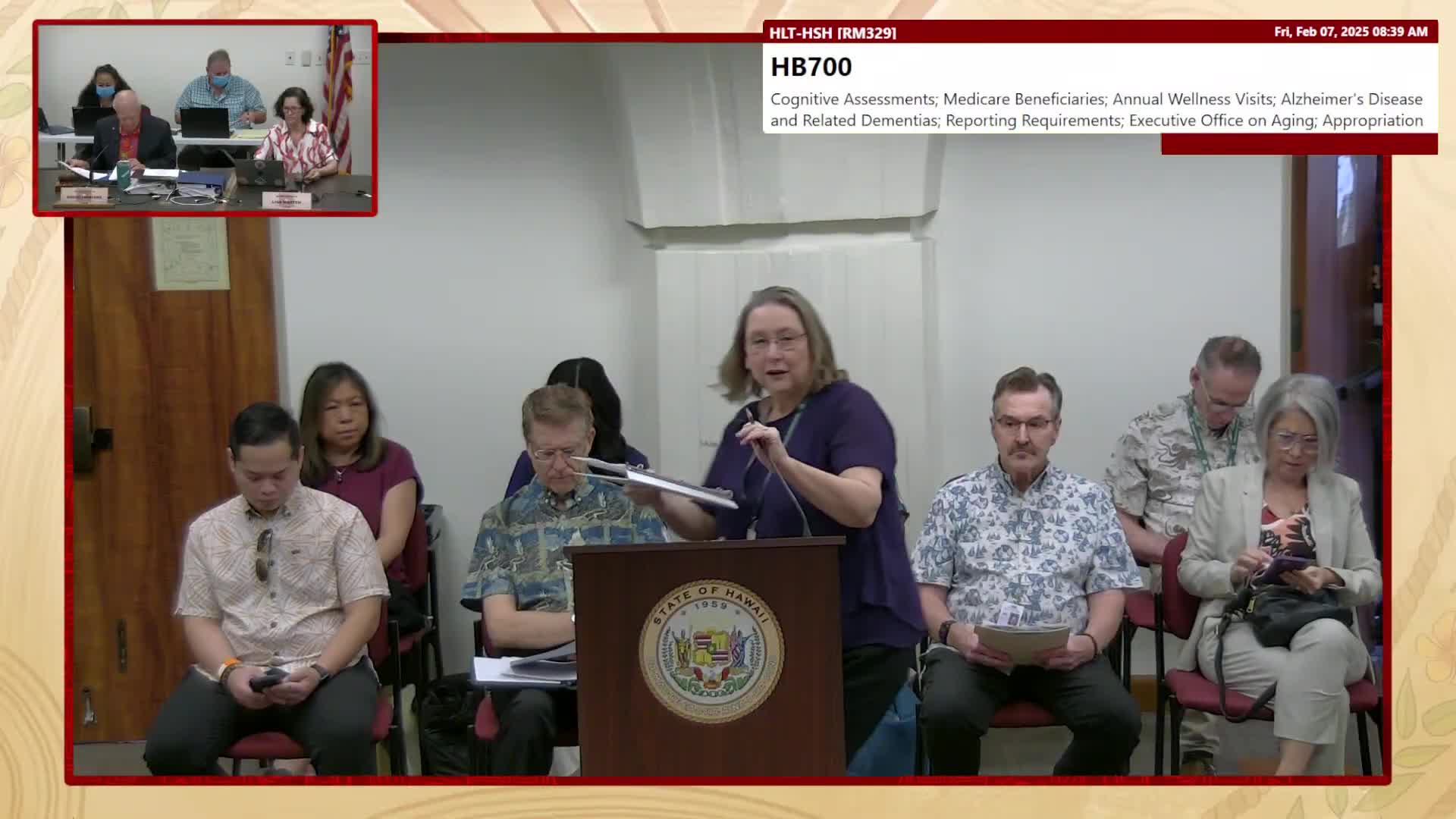
Caroline Catterau (executive office on aging) told committees that EOA supports the intent of requiring cognitive assessments but recommended amendments to change the measure from a mandate to an offered service and to authorize a pilot project. She said data requested in the bill would need to be HIPAA‑compliant and that EOA should have flexibility to identify specific data elements and security obligations.
Jack Lewin, administrator of the State Health Planning and Development Agency (SHPDA), also testified in support of the concept but recommended testing rather than an across‑the‑board mandate and urged payers to ensure providers are reimbursed when assessments are done. The Alzheimer's Association and caregiving groups urged the committees to advance the measure, pointing to new disease‑modifying treatments for Alzheimer’s that increase the value of earlier detection.
Committee members asked about costs. Catterau said a pilot project in testimony would likely be in the ballpark of $150,000, though securing and storing data could increase costs for a larger rollout. The House draft moving forward included technical amendments and an adopted suggestion to add a pilot option and other EOA technical changes.
Why this matters: Supporters said earlier detection can enable timely treatment and referral; agencies raised privacy and administrative burdens and requested time and funding to pilot implementation.
Next steps: HB700 was passed by the committee with amendments and will go to subsequent committees for budget and policy decisions; report language will note pilot costing estimates and recommended clarifications from EOA.
Don't Miss a Word: See the Full Meeting!
Go beyond summaries. Unlock every video, transcript, and key insight with a Founder Membership.
30-day money-back guarantee
Sponsors
Proudly supported by sponsors who keep Hawaii articles free in 2026

