
Patients, insurers and advocates back bill to require insurance coverage for fertility preservation
Get AI-powered insights, summaries, and transcripts
Subscribe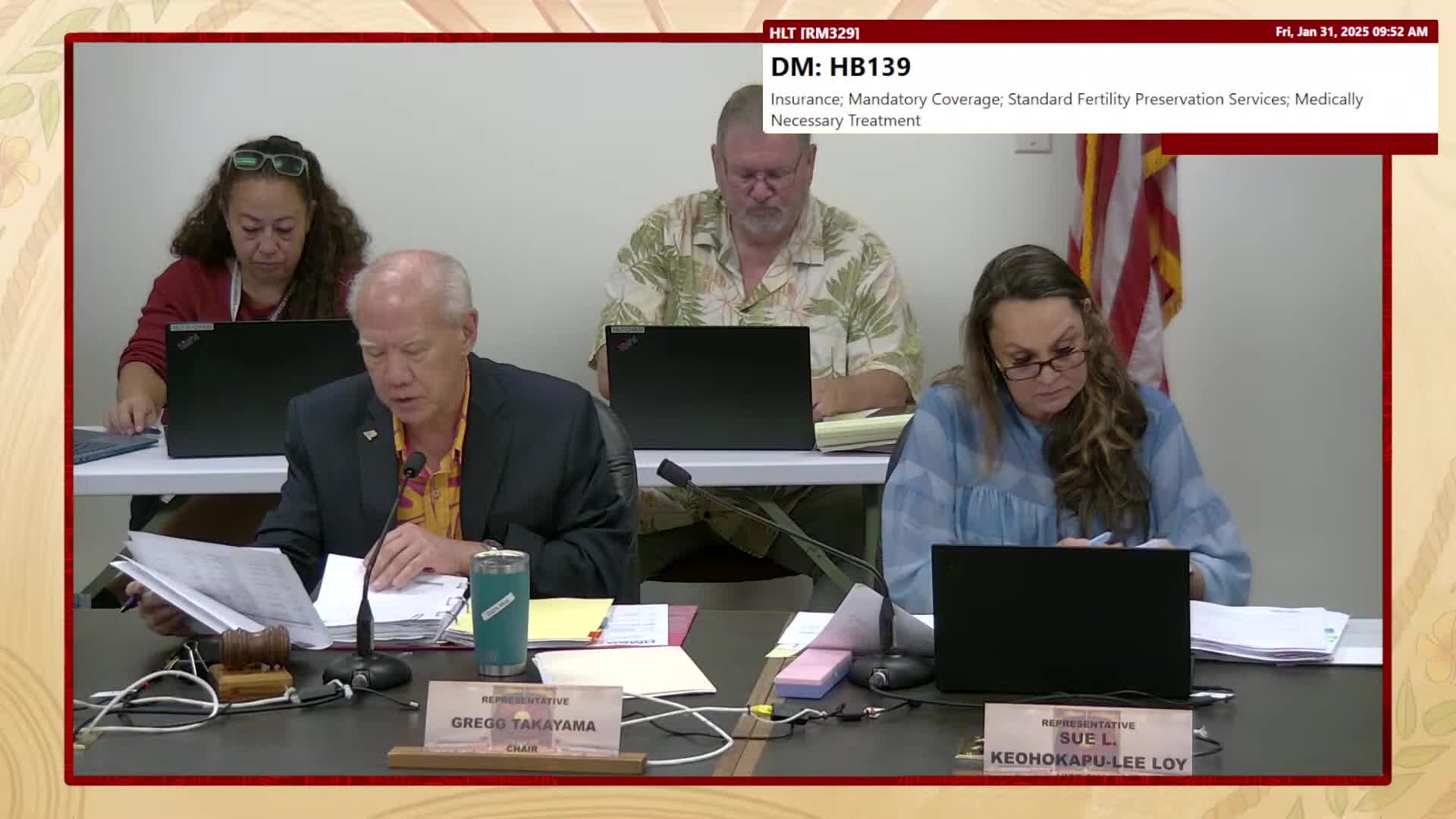
Summary
House committee advanced HB139 after testimony from cancer patients, insurers and advocacy groups supporting mandated coverage for fertility preservation services for people undergoing gonadotoxic treatment.
House Bill 139, which would require coverage for fertility preservation services for patients undergoing treatments that can impair fertility, moved forward after advocates and patients described clinical need and insurers and plans signaled support with comments.
Allison McKenney, a current breast cancer patient, told the committee she relied on insurance coverage to access egg‑ or embryo‑freezing and urged the legislature to extend that protection to other patients who face fertility loss from cancer treatment. Testimony noted that sperm banking is commonly covered for men undergoing cancer treatment while egg or embryo preservation is less frequently covered and is substantially more expensive.
Dawn Kurisu of HMSA and Rachel Wilkinson of the Hawaii Association of Health Plans indicated support in testimony; the Department of Commerce and Consumer Affairs Insurance Division submitted comments. Several advocacy organizations, including the Alliance for Fertility Preservation and the American Cancer Society, provided written support.
Committee action: the Health committee moved HB139 forward with a defective date and report language asking subsequent committees to consider whether spouses of covered persons should also be included — an issue flagged for cost implications.
Why it matters: Supporters framed the requirement as a parity and survivorship issue: patients undergoing treatments with a high likelihood of causing infertility need affordable access to fertility preservation to preserve future family‑building options, especially for those whose plans do not currently cover egg or embryo preservation.