Get Full Government Meeting Transcripts, Videos, & Alerts Forever!
Get email alerts on the Historic Preservation topic
No spam. Unsubscribe anytime.
Bon Ton neighbors ask Bozeman commission to rezone portion of historic district to protect character
Summary
Residents of the Bon Ton Historic District asked the Bozeman City Commission to rezone about one-quarter of their neighborhood from R-4 to R-A, citing recommendations from a previous consultant’s report, the neighborhood's listing in the National Register, and rising development pressure.
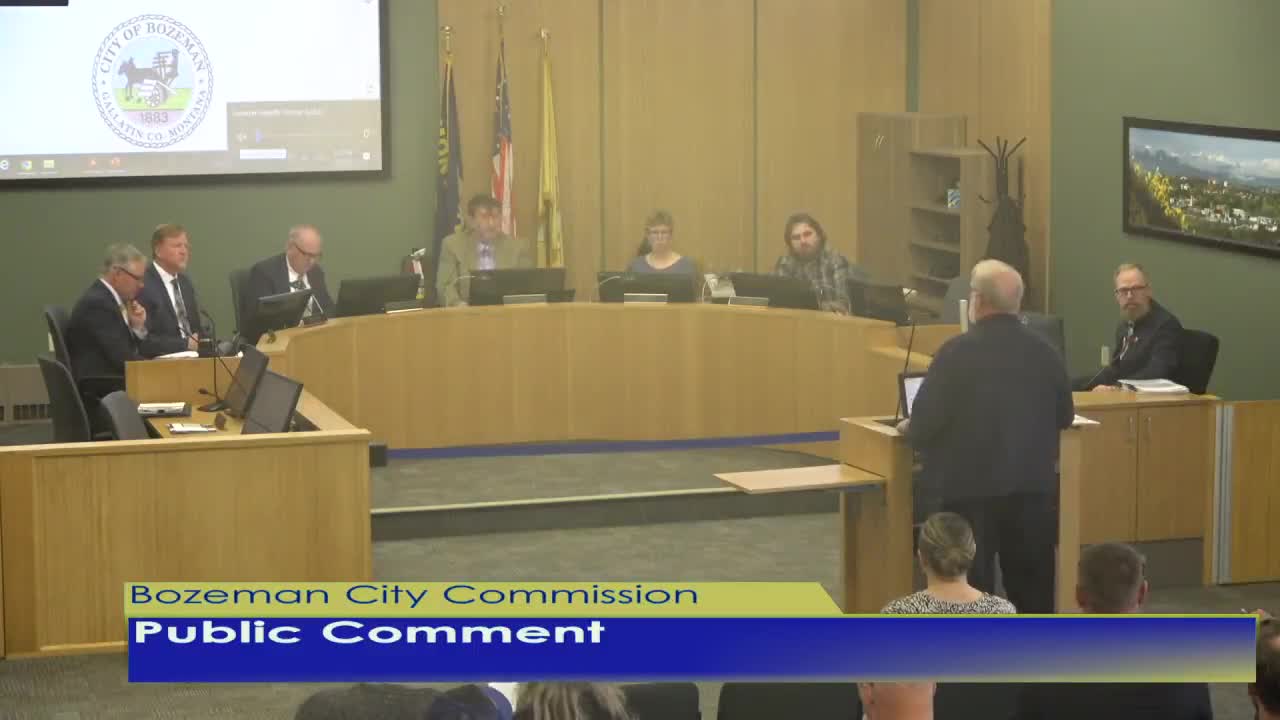
Residents of the Bon Ton Historic District urged the Bozeman City Commission Tuesday to approve a rezoning request that would change roughly one-quarter of the district from R-4 to R-A under the new Unified Development Code.
Speakers described the Bon Ton as “Bozeman’s finest examples of historic residential architecture,” spanning from the 1880s to the 1930s and containing more than 200 buildings listed on the National Register of Historic Places. They urged the commission to act now as development pressure increases.
Jim Webster, a member of the city’s Historic Preservation Advisory Board who spoke as a private resident, told commissioners the requested change would make the neighborhood’s zoning consistent with nearby properties and follow recommendations from a consultant report produced for the city in 2019. Bruce Comer and other longtime residents described the neighborhood’s mature trees, historic houses and multigenerational households and said rezoning would help preserve the district’s character.
Jonathan Pika read prepared testimony for absent resident David Quammen, who emphasized his 40 years in the neighborhood and urged support for neighborhood protections.
Speakers asked the commission to consider the neighborhood conservation goals in the city’s planning work and to provide a process for public engagement as the request moves forward. No formal action on the rezoning request was taken at the May 6 meeting; the comments were submitted to the commission during the general public-comment segment.