Get Full Government Meeting Transcripts, Videos, & Alerts Forever!
Get email alerts on the Energy Microgrids topic
No spam. Unsubscribe anytime.
County commissioners, state delegate discuss House Bill 2014 on microgrids and data centers
Summary
Hampshire County commissioners heard an overview of House Bill 2014, the "microgrid" bill affecting data-center-style energy sites, with concerns raised about local control and tax revenue sharing.
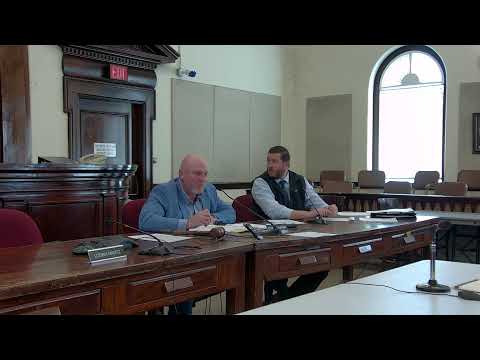
Hampshire County commissioners discussed House Bill 2014 — the state microgrid bill — at their April 15 meeting, with Delegate Hildebrand outlining the measure and county officials pressing for more local input and a share of tax revenue.
The discussion began when Commission President Brian Englanger summarized constituent concerns about how potential data-center and microgrid projects would be sited and taxed, and invited a briefing from the state delegate. "House Bill 20 14, known as the microgrid bill, does a number of different things," Delegate Hildebrand said, describing the legislation as an effort to attract microgrid and data-center investment while attempting not to shift costs to regular ratepayers.
The delegate told commissioners the law creates special microgrid sites — intended to be largely self-sufficient energy islands — with size limits of roughly 2,500 acres and requirements such as a 30-day fuel stockpile where fossil-fuel generators are used. He also summarized how the legislation apportions potential tax proceeds, saying some revenue offsets go to state income tax reduction and portions are to be distributed to the host county and statewide on a per-capita basis.
Commissioners said residents have raised two recurring concerns: (1) that counties would have reduced authority to regulate siting and local land use, and (2) that local governments should share more of the revenue generated by large energy facilities. "I voiced my single opinion as to we would like to see some more county input on where these centers might be located," President Englanger said. Commissioner Mance noted that the bill preempts many local ordinances and said the commission should keep the issue "on our radar" as the county evaluates zoning and permitting options.
Delegate Hildebrand said the final language went through negotiations and that multiple microgrid projects were in early talks in the state. He also said the bill's sponsors sought to avoid passing direct costs to utility ratepayers while making the state attractive for new energy investment. "We wanted to make the state attractive for microgrids, but without imposing upon the regular rate payers," he said.
The commissioners did not take formal action on the bill at the meeting. They discussed continuing engagement with the county’s state delegation and flagged zoning and local permitting as areas for future work should microgrid projects be proposed in Hampshire County.
Ending: Commissioners said they would continue monitoring state-level developments and consult with the planning commission and local stakeholders if proposals emerge in Hampshire County.