Get Full Government Meeting Transcripts, Videos, & Alerts Forever!
Get email alerts on the Risk Management topic
No spam. Unsubscribe anytime.
City finance committee reviews expanded risk-management program, DriveCam rollout and rise in claims costs
Summary
Finance staff and the city risk manager briefed the Finance Committee on the city's risk-management program, explaining new policies, a DriveCam safety program intended for every city vehicle and recent increases in workers'compensation and legal-payments timing that have raised fund payouts.
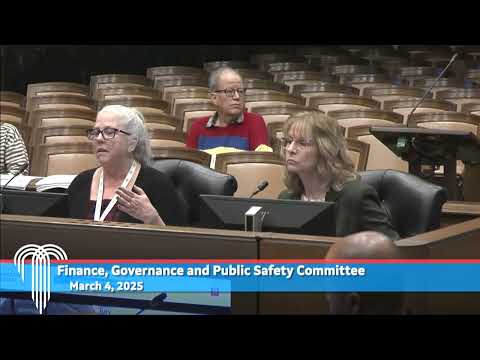
Tammy Queen, director of finance, told the Finance Committee on a presentation that the city has expanded its formal risk-management program to make safety and claims mitigation "pervasive in everything that we do." Queen said the city's risk program is established in the code of ordinances and is implemented by the corporate safety and risk management division overseen by Sherry Adams, the city's risk manager.
The presentation reviewed the program's components, including a city safety program, an expanded DriveCam fleet camera program used for driver coaching and exonerations, insurance purchasing and risk-transfer strategies, the legal expense fund that pays third-party claims, and workers'compensation administration. "These are where we can be effective," Adams said of seat-belt and cellphone coaching, noting DriveCam "exonerations are huge" because video can show when the city is not at fault.
Why it matters: Committee members pressed staff for a clearer line between the program's activities and the city's rising payout trends. Councilwoman Robinson asked for a consolidated summary of the policy changes and mitigation steps being taken after committee members noted workers'compensation and legal-expense totals have increased in recent years.
Key details from the presentation:
- Governance and staffing: Queen said the risk-management committee is established in the code; the director of finance chairs the committee. Queen named members and said Sherry Adams serves as a nonvoting secretary. The law department's claims unit includes three investigators and a supervisory attorney, the committee was told.
- DriveCam fleet program: Adams described a DriveCam video program used for driver training, coaching and incident review. The system has produced exonerations where video shows the city was not at fault. Adams said some city vehicles already had units (solid-waste, fire) and the city has worked with vendors to outfit every vehicle; activation and full deployment remain ongoing. "We don't watch video all day," Adams said; clips are triggered by events.
- Leave and accommodations: Risk management took over family medical leave, pregnancy leave, reasonable and religious accommodations in January, Adams said, tying these programs to workers'compensation return-to-work and transitional assignments.
- Insurance and risk transfer: The city maintains a mix of purchased coverages, self-insured retentions and internal funds. Queen said the city purchases workers'compensation coverage above a self-insured retention (SIR) of $2,000,000 and purchases other coverages (property, cyber) with annual deductibles.
- Legal expense fund and claims timing: Queen reviewed the legal expense fund, an internal service fund that allocates the cost of legal claims and settlements across departments. She told the committee that timing of payments can cause apparent increases in a single year when court judgments or appeals resolve. City Attorney Matt Gellotti described the claims unit's role in assessing sovereign-immunity issues, handling tort and property claims and recommending when litigation should be defended or settled.
- Workers' compensation totals and timing: Committee discussion referenced slide numbers shown to members: a workers' compensation fund figure that moved from roughly $19 million (earlier fiscal years) to about $29 million (current), and a public-official liability figure that rose from roughly $3 million to about $6 million. Queen and Gellotti cautioned that those spikes can reflect delayed payments, pandemic-era court timing and the long tail of older cases rather than only recent incident rates.
Committee requests and staff follow-up: Councilwoman Robinson and other members asked staff to compile a single, accessible summary that (1) lists policy and administrative regulation changes the risk committee and city have adopted since 2019, (2) ties specific mitigation efforts to trends in claims and payouts, and (3) makes the administrative regulations and the slides available to the public. Queen said administrative regulations and program materials are being documented and that staff would follow up with the committee about where ARs and the slide deck are posted.
Accomplishments and next steps: Queen highlighted accomplishments attributed to Adams' leadership, including realized insurance-renewal savings, the hiring of a chief information security officer (CISO) and work to close a longstanding escrow account with the state of Missouri. Planned next steps include updating the risk-management strategic plan, implementing a risk-management information system for reporting, completing work-task analyses and establishing a citywide accident-review committee to centralize investigations and reduce potential bias from department-level reviews.
No formal votes were taken during the presentation. Committee members asked for additional documentation linking mitigation activities to claim trends and for confirmation of where the public can access the presentation materials.