Minnesota Board of Nursing reports staffing gains, large licensee population and steady complaint volume
Loading...
Summary
The Minnesota Board of Nursing told legislators it now oversees 165,642 nurses, has added staff to speed complaint handling, and is tracking shifts in program completions and temporary permits while offering to provide more timeliness data to the committee.
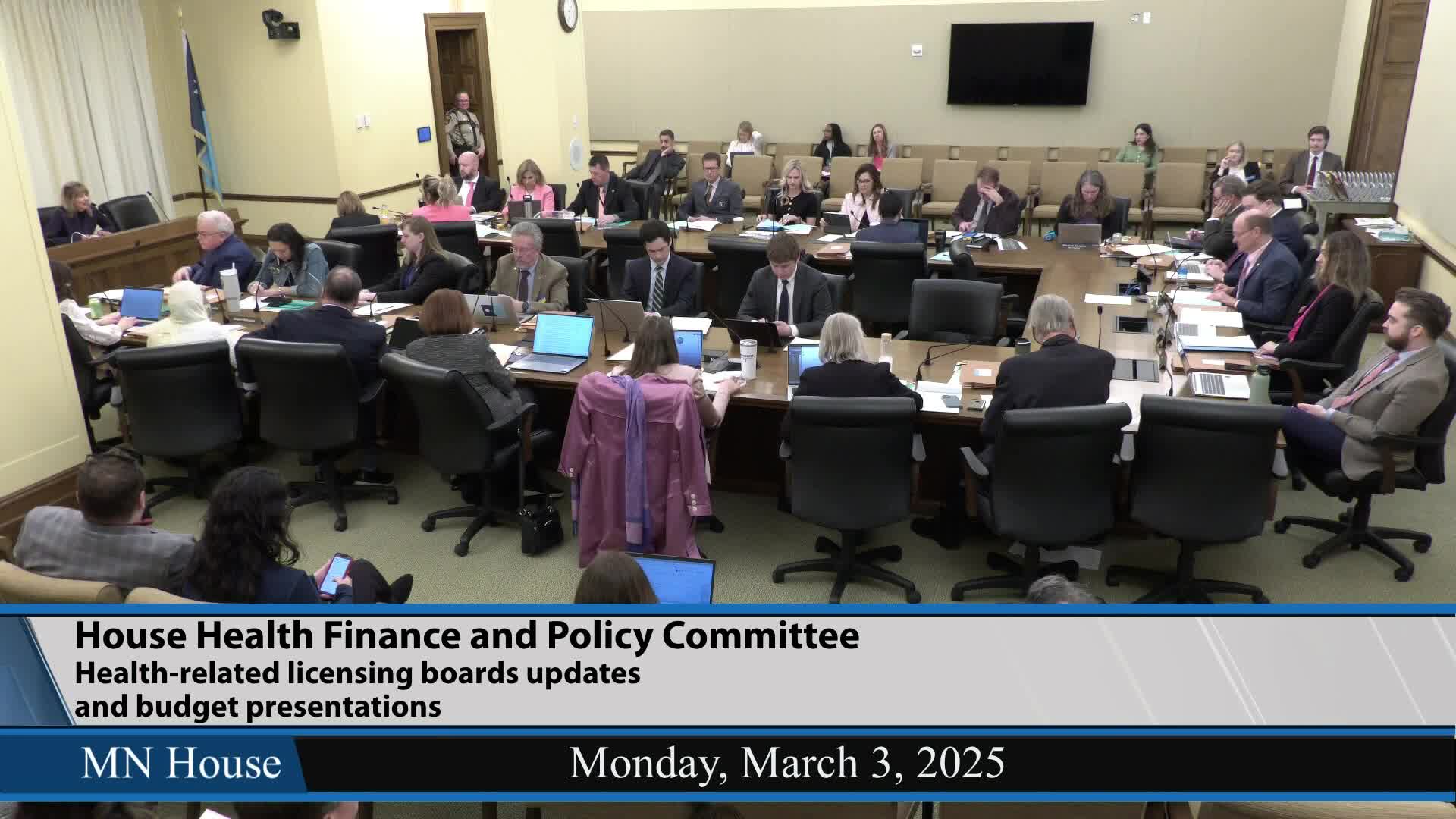
Deborah Schumacher, director of nursing education at the Minnesota Board of Nursing, told the House Health Finance and Policy Committee on March 3 that the Board now registers 165,642 nurses in Minnesota and has recently filled multiple open positions that had hampered licensing and complaint-processing work.
Nut graf: The Board said it has strengthened licensing systems and added staff — including a director of practice and compliance, a director of health policy and research, and additional complaint-handling staff — to reduce case backlogs and improve timeliness. Schumacher said the board averages roughly 150 complaints per month and has taken steps to speed investigations by adding nurse practice specialists and legal support.
Key facts from testimony
- License population: 165,642 total in 2024 (134,648 RNs; 17,887 LPNs; 13,107 APRNs). - Education completions: In 2024, Minnesota reported 4,248 practical and professional nursing graduates and 4,158 APRN graduates; associate degree completions fell 21.5% since 2019 while baccalaureate/master graduates rose 28%. - Complaint volume: The board averages about 150 complaints per month; Schumacher said the board has added two nurse practice specialists, a paralegal and a legal analyst and increased monthly conferences to move cases.
Schumacher said the board would provide committee staff with additional data on licensure timeliness and other metrics upon request. Committee members asked for five-year trends on license-processing timeliness and for counts of temporarily permitted providers and un- or under-employed licensees; Schumacher said she would follow up with that data.
Ending: The board emphasized its reliance on licensing fees (no general fund dollars) and that staffing increases were intended to create “seamless systems from new applicant licensure to complaint resolution.” Written testimony and supporting spreadsheets were supplied to the committee.