Behavioral health board cites rapid licensing growth, seeks fee for counseling-compact privileges
Loading...
Summary
The Minnesota Board of Behavioral Health and Therapy told the health finance committee it has regulated nearly 10,000 counselors and drug/alcohol counselors as of early 2025, wants one full-time position and statutory authority to charge up to $100 for out-of-state compact privileges under the counseling compact.
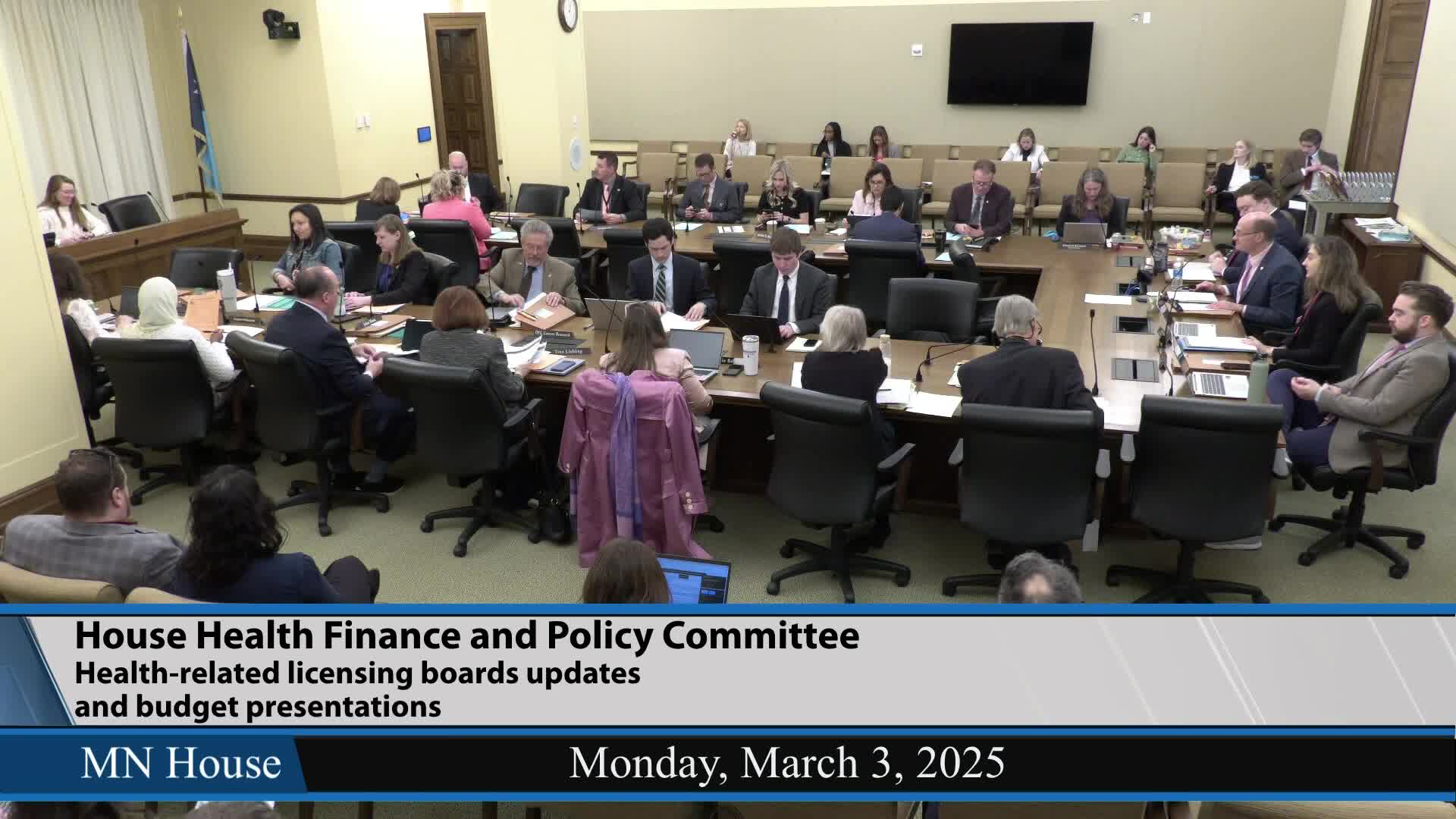
Samantha Strehlo, executive director of the Minnesota Board of Behavioral Health and Therapy, told the House Health Finance and Policy Committee on March 3 that the number of licensees regulated by the board has more than doubled in the last decade and that workload growth is driving a request for one additional full-time position and a compact-related fee.
The board said it now regulates nearly 10,000 counselors and alcohol-and-drug counselors (up from about 4,000 in 2014) and receives roughly 1,000 new license applications each fiscal year. Strehlo said current fee revenue is sufficient to cover an added staff position but the board also wants statutory authority to collect a compact privilege fee for the counseling compact.
Nut graf: The counseling compact — a multistate agreement enabling licensed counselors to practice across member states — allows Minnesota to collect a fee from applicants who reside outside Minnesota but seek a privilege to practice in Minnesota. The board requested language permitting a charge of up to $100 per out-of-state privilege application to cover BBHT’s compact-related costs.
Details and context: Strehlo told lawmakers telehealth and cross-border practice were important drivers behind the counseling compact, which officials expect to begin issuing privileges in late 2025 or early 2026. She described access challenges in rural and border communities, and said the compact is one tool to increase access to counseling services. When asked about data on telehealth use and on practice locations, Strehlo said most licensed counselors are in the Twin Cities and she did not have statewide telehealth percentages available at the hearing.
Ending: Strehlo closed by offering to provide additional follow-up and noted the board’s written change items — the FTE request and the compact-fee language — were included in the committee packet.