Get Full Government Meeting Transcripts, Videos, & Alerts Forever!
Get email alerts on the Patient Rights Non Opioid Directive topic
No spam. Unsubscribe anytime.
Committee approves author’s amendment and refers non‑opioid directive bill to judiciary
Summary
House File 1379 would create a non‑opioid directive form for patients to include in electronic health records; the committee adopted an A1 amendment and voted to refer the bill to the Judiciary and Civil Law Committee.
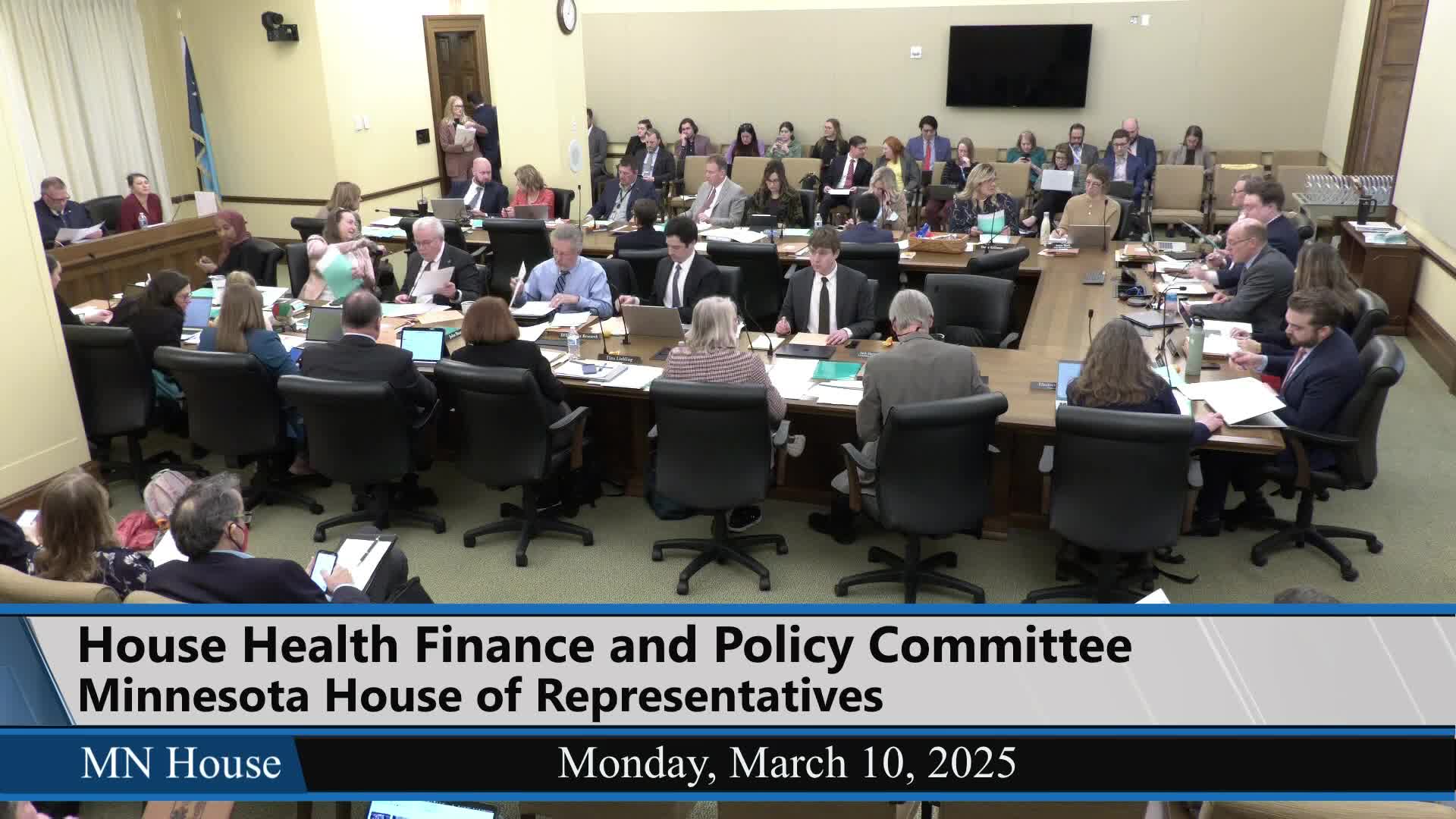
House File 13‑79, a bill authored by Representative Baker to create a non‑opioid directive that a patient can place in their electronic health record, received committee approval of an A1 amendment and was referred to the Judiciary and Civil Law Committee on March 10.
Representative Baker described the non‑opioid directive as a one‑page form the Minnesota Department of Health would make available online. She said the form “is a tool to help patients advocate for themselves” and would indicate that a patient prefers alternatives to opioids or does not want opioids administered unless medically necessary. The bill includes exceptions for emergency circumstances or when providers cannot feasibly access the patient’s record.
Alicia House, executive director of the Steve Rimmler Hope Network, testified in support. She said she had seen people with severe opioid use disorder prescribed opioids for routine procedures and that the directive would “empower patients to make informed decisions about their own care.”
Committee members asked technical and liability questions about how the directive would be stored and accessed in electronic health records, whether providers in dental clinics and other outpatient settings would see the form, and how the emergency exceptions are worded. Representative Liebling and others suggested refining language in the bill to make the emergency exceptions clearer so the directive does not appear to exempt all in‑hospital care.
After discussion the committee approved the A1 amendment by voice vote and voted to refer House File 13‑79 as amended to the Judiciary and Civil Law Committee for further consideration.