Get Full Government Meeting Transcripts, Videos, & Alerts Forever!
Get email alerts on the Healthcare Interpreters topic
No spam. Unsubscribe anytime.
Bill would create work group to study spoken‑language health interpreters
Summary
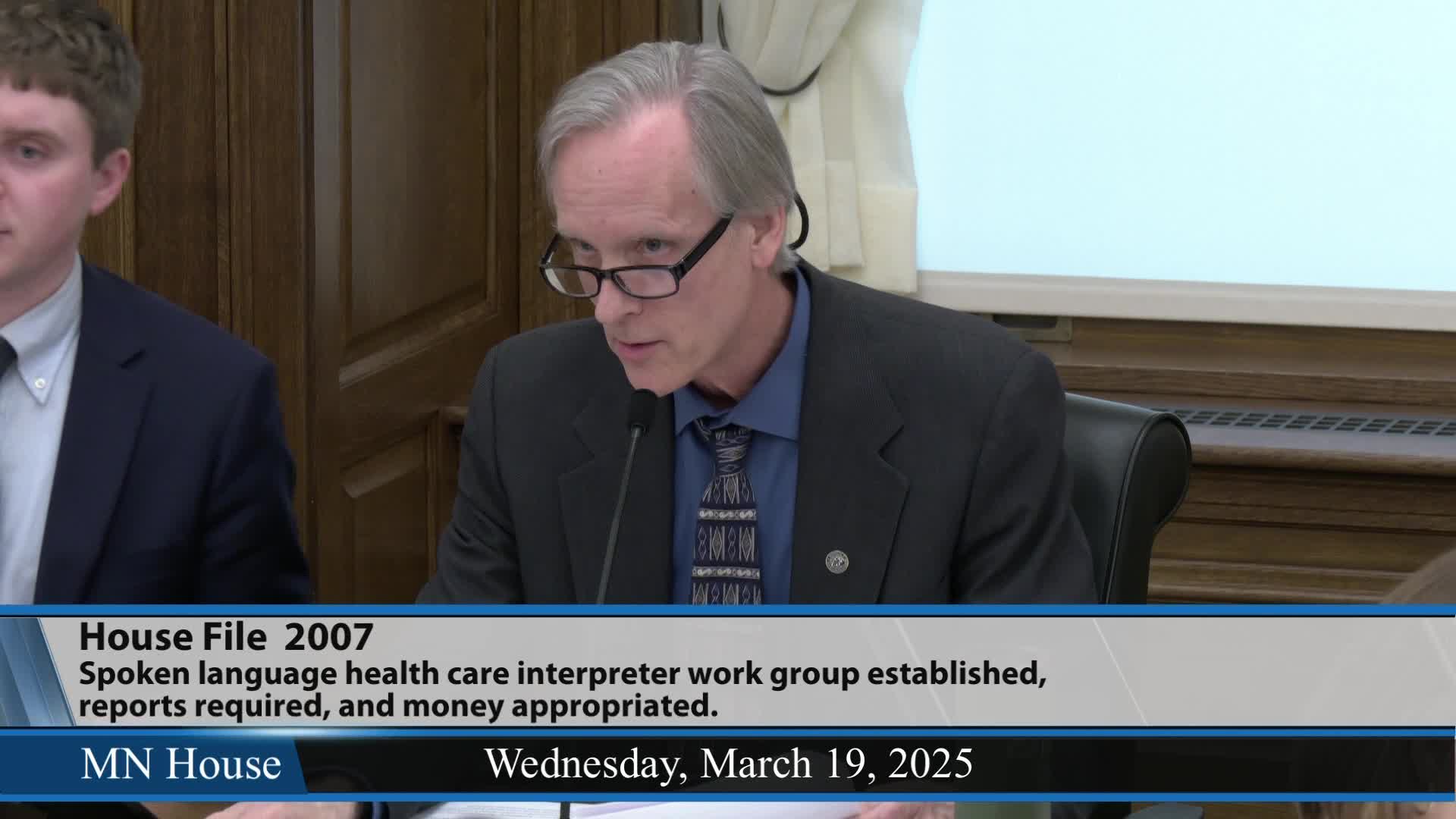
House File 2007, sponsored by Representative Nadeau, would establish a work group to study spoken‑language health interpreter standards, access and reimbursement; the committee adopted the DE/DE1 and laid the measure over after testimony from health systems, ethnic councils and interpreter program representatives.
Representative Nadeau told the Health Finance and Policy Committee House File 2007 would create a health care interpreter services work group to recommend steps to increase access to qualified spoken‑language interpreters and to address workforce shortages.
Health system and community witnesses said poor interpretation can cause harm and cited examples. Dr. Tali Vang, vice president for health equity at Hennepin Healthcare, recounted a trauma patient whose recovery was jeopardized by an interpreter who lacked appropriate medical and cultural training. "The difference between an interpreter and medically trained interpreter is not just about language. It's about patient dignity, safety, and access to equitable care," Vang said. Rosa Tock of the Minnesota Council on Latino Affairs and Andy Morris of the Council on Asian Pacific Minnesotans urged standards, training and funding to address interpreter shortages and quality.
Fairview’s director of language services, Aida De Oliva, said her system provides more than 1,600 language‑assistance encounters per day and employs more than 55 full‑time interpreters, but stressed the need for standardized education and training to ensure consistent qualifications.
Under the amended language (DE/DE1) adopted in committee, the work group’s appointments will be completed by August 2025 and the group will expire after issuing recommendations to the legislature by November 2026. Committee members praised the bill as bipartisan and noncontroversial and laid it over for possible omnibus inclusion.