Get Full Government Meeting Transcripts, Videos, & Alerts Forever!
Get email alerts on the Community Pharmacy Access topic
No spam. Unsubscribe anytime.
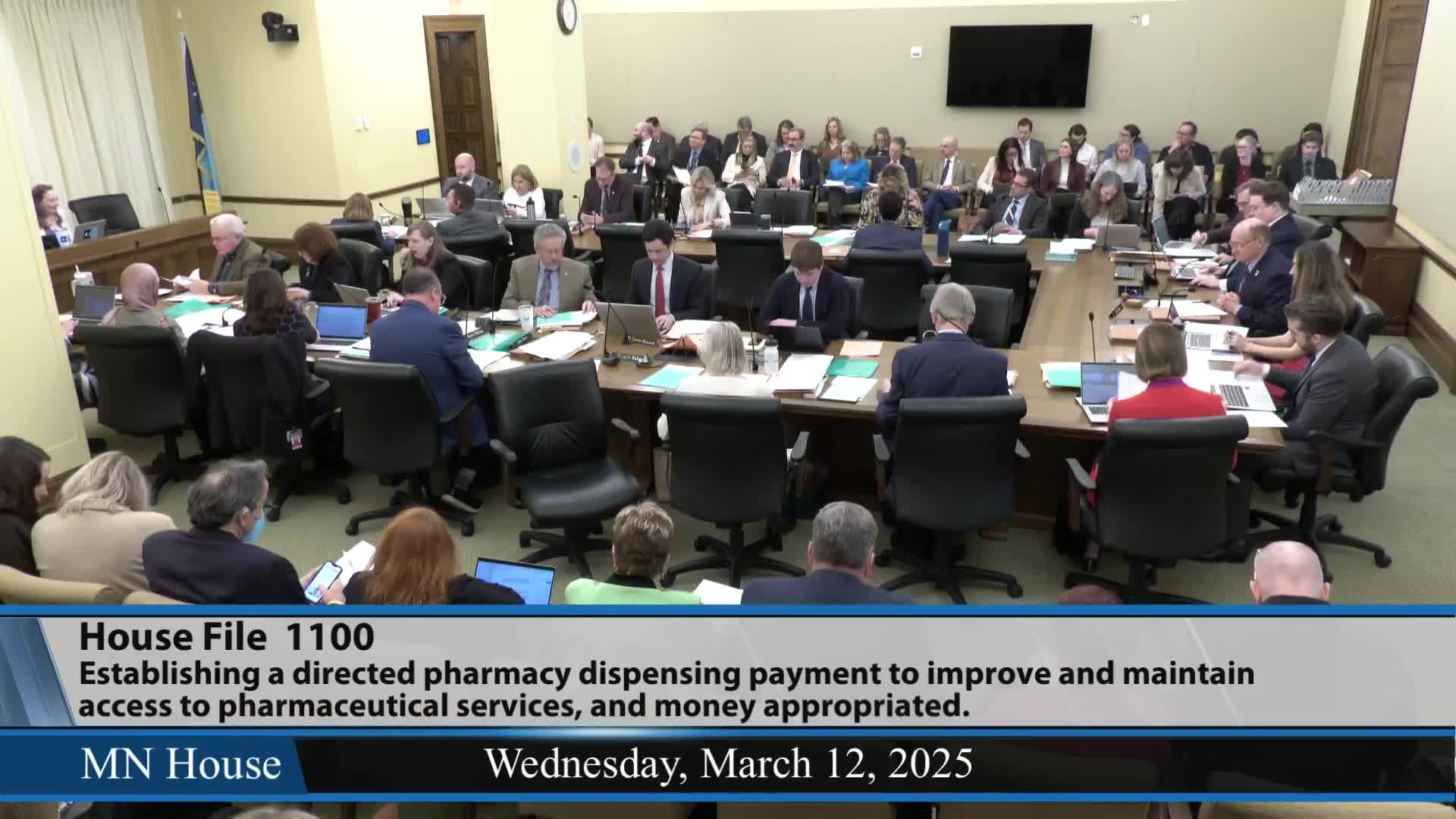
Committee hears pleas to shore up struggling community pharmacies; bill laid over
Summary
Lawmakers heard multiple independent pharmacists and advocates describe widespread pharmacy closures and unsustainable reimbursements driven by PBM underpayments. Representative Bonner's House File 1,100 was laid over for possible omnibus inclusion; sponsors described the bill as a short‑term lifeline while broader PBM reforms proceed.
A bipartisan bill intended as a short‑term lifeline for Minnesota community pharmacies drew broad testimony Wednesday about pharmacy closures, underpayments and impacts on patient access.
Representative Jon Bonner, author of House File 1,100, said Minnesota pharmacies face a crisis: testimony and materials in the committee packet cited statewide losses of independent and chain stores between 2013 and 2023 and warned about growing pharmacy deserts. Bonner said state action was necessary to preserve medication access, particularly in rural communities.
Several independent pharmacists and industry advocates testified in support. Jessica Aistrip Arid (introduced in testimony as Jessica Aistrip Arid), who operates multiple community pharmacies in southern Minnesota, described store closures and patients traveling long distances for medication. Pharmacist Justin Stofran, representing the Minnesota Farmers Union, said the bill would protect rural access while structural PBM reforms are pursued.
Andrew Russell, owner of a small independent pharmacy, said 44 percent of Minnesota pharmacies have closed in the last decade and that under‑reimbursement by pharmacy benefit managers (PBMs) is the primary driver. Hildy Hessian, a nurse and pharmacy leader, and John Hession, owner of a 103‑year‑old independent pharmacy in St. Paul, described the daily patient care pharmacies provide beyond dispensing — vaccinations, chronic care counseling and triage — and presented examples of tens of thousands of claims that pharmacies filled below operational cost.
Testimony cited an average dispensing cost of $11.55 per prescription and examples where managed‑care reimbursements and PBM practices left pharmacies filling prescriptions at a loss; witnesses said the bill would provide an add‑on reimbursement to qualifying pharmacies to preserve access. Supporters acknowledged the bill is a stopgap and urged concurrent, longer‑term PBM reforms.
Members asked about alternatives, fiscal impacts and longer‑term solutions; Representative Tina Liebling and others said more structural bills are also under consideration and could provide comprehensive solutions while arguing the committee consider immediate options to stem closures. Representative Bonner said the bill would be a lifeline to keep pharmacies open while broader reforms are developed.
The chair laid House File 1,100, as amended at the hearing, over for possible inclusion in the omnibus bill.