Get Full Government Meeting Transcripts, Videos, & Alerts Forever!
Get email alerts on the Opioid Epidemic Response topic
No spam. Unsubscribe anytime.
State director outlines opioid response: declines in overdose deaths, focus on naloxone, harm reduction and Medicaid waivers
Summary
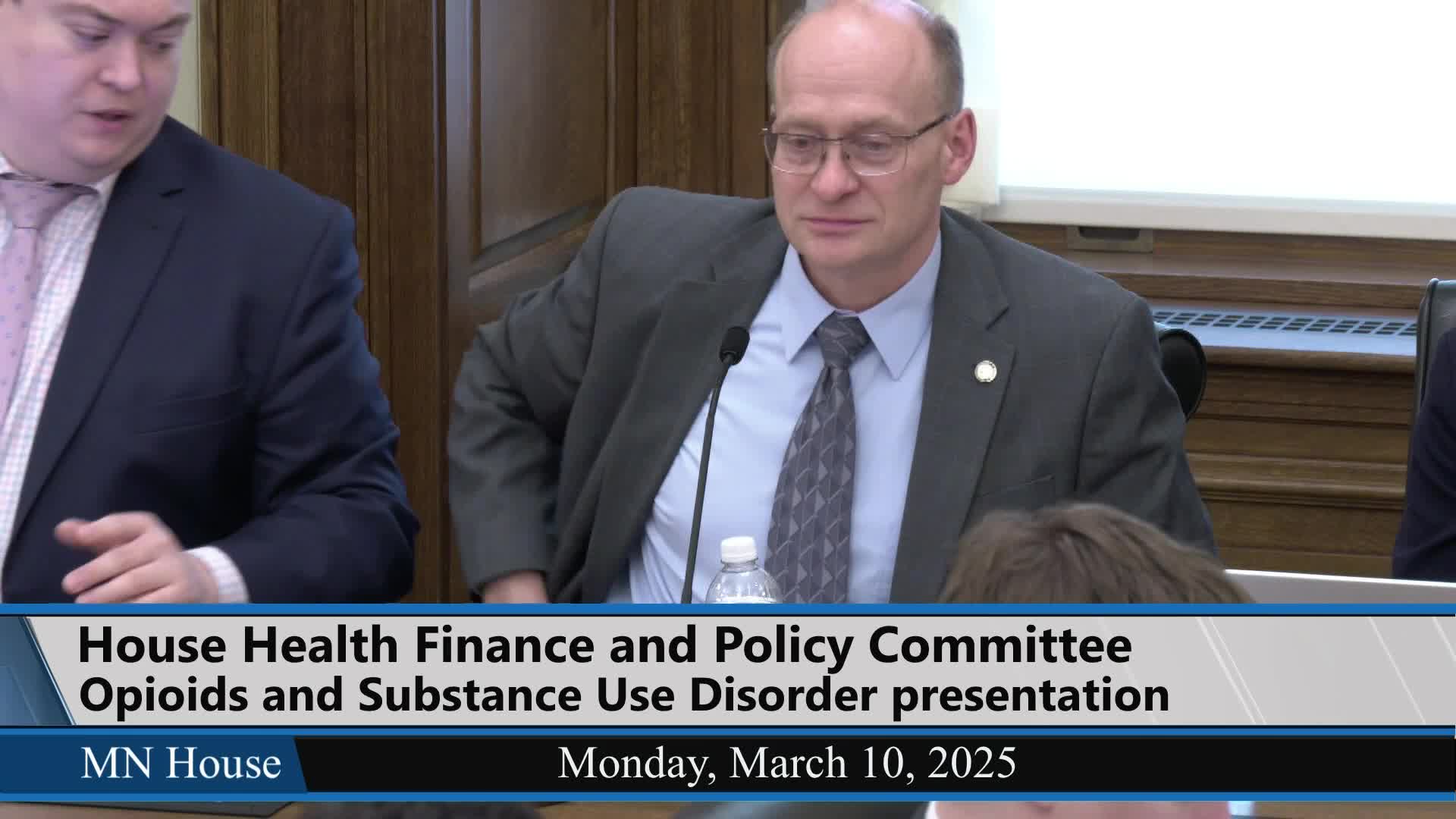
Jeremy Drucker, director of the Office of Addiction and Recovery, briefed the Health Finance and Policy Committee on the state's substance use trends and multiagency response, highlighting declines in overdose deaths, the role of fentanyl, medications for opioid use disorder and plans for naloxone saturation and data integration.
Jeremy Drucker, director of the Office of Addiction and Recovery, told the Health Finance and Policy Committee March 10 that opioid‑related overdose deaths in Minnesota began to spike after fentanyl became dominant in 2019, but recent data show declines in deaths in 2023 and preliminary 2024 figures.
Drucker summarized the state’s multiagency response: prevention, harm reduction, treatment and recovery. He described medications for opioid use disorder (MOUD) — methadone, buprenorphine and naltrexone — as “particularly effective” when combined with counseling, and said harm reduction services such as naloxone distribution, outreach and drug checking are key to reducing deaths.
On equity, Drucker said American Indian and Black Minnesotans have higher overdose rates than white Minnesotans, and that justice‑involved people and people experiencing homelessness have disproportionate overdose risk. He cited a 2023 Department of Human Services and Hennepin Health study that found one in three deaths among people experiencing homelessness was from a substance overdose.
Drucker described several initiatives under way or proposed: an 1115 SUD reform waiver to set new care standards and allow Medicaid payments for services to incarcerated individuals on reentry; the Department of Health’s overdose morbidity and prevention act; drug checking authorized in 2023 and now operating; and a recovery friendly workplace executive order instructing the state to model recovery‑supportive employment policies. He said the Office of Addiction and Recovery is assembling a fiscal map of state funding and is working across agencies to create shared metrics, including tracking referrals to treatment and treatment placements.
On naloxone, Drucker said the state does not yet have clear, integrated data to define saturation and is pursuing a “four‑pillar” strategy (data, education, partnerships, procurement) to measure and expand access. He said the 11‑15 reentry waiver application has been submitted to federal officials and will require negotiation before implementation.
Committee members asked about naloxone saturation, drug‑checking, equity in settlements distribution and coordinating prevention and treatment efforts across counties and tribes. Drucker said his office is convening partners, working on data integration and plans to publish metrics. "This is truly a team effort," he told the committee, crediting counties, tribes, law enforcement, providers and community groups.