Get Full Government Meeting Transcripts, Videos, & Alerts Forever!
Get email alerts on the Midwifery Licensure topic
No spam. Unsubscribe anytime.
Committee forwards certified‑midwife licensure bill to next committee amid questions about training and scope
Summary
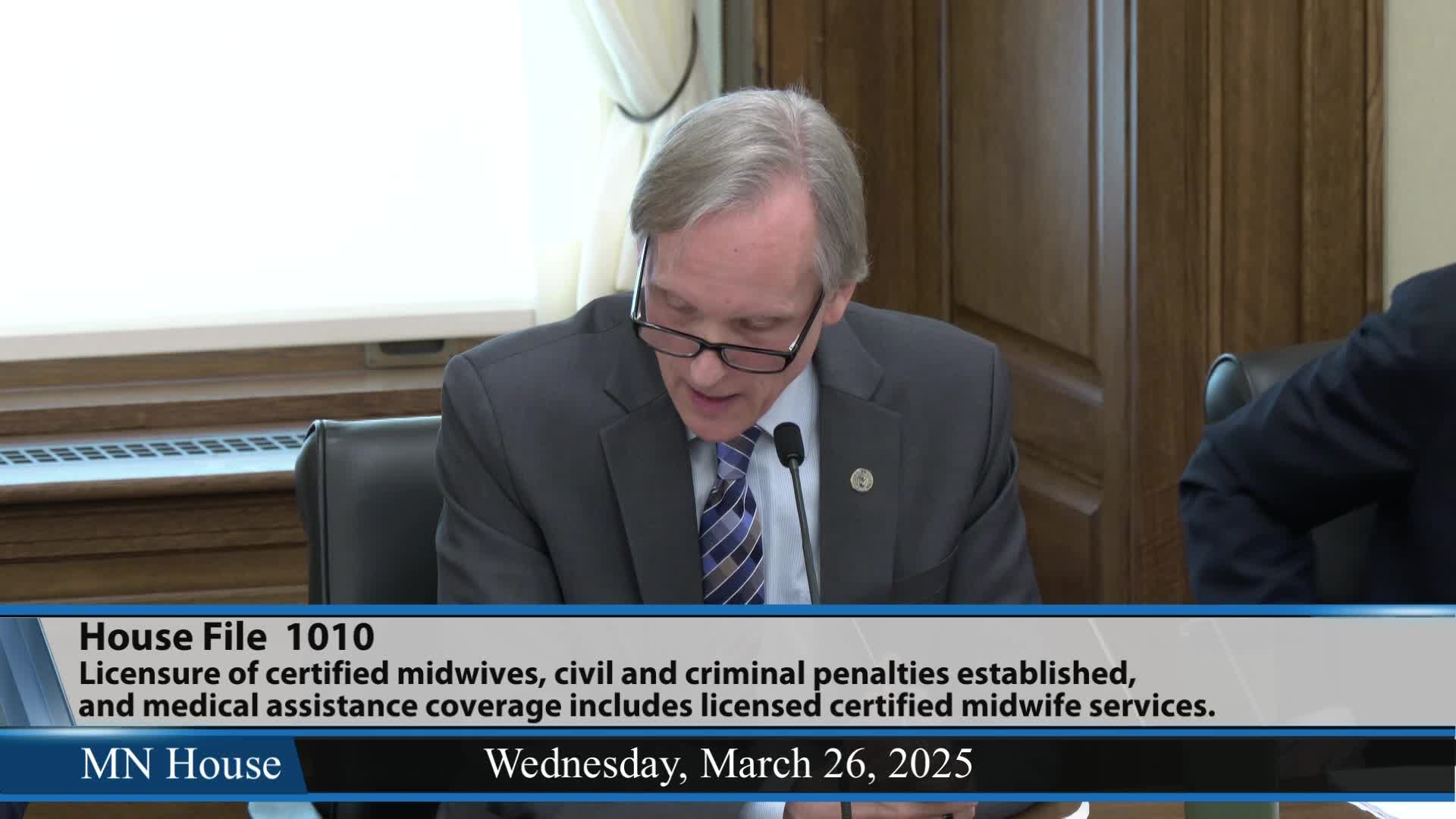
House File 10‑10, which would establish a certified‑midwife licensure pathway in Minnesota, was referred to the Judiciary, Finance and Civil Law Committee as amended after sponsors and multiple professional groups testified in support and members asked for further details on education and scope.
The House Health Finance and Policy Committee voted to refer House File 10‑10, the Minnesota Certified Midwife Act, to the Judiciary, Finance and Civil Law Committee after adopting an author’s amendment.
Representative Agbaje presented the bipartisan measure as a workforce and maternal‑health access policy. The bill would create a licensure pathway for certified midwives — practitioners trained in graduate midwifery education who are not required to be registered nurses — and would mirror the scope of practice for certified nurse midwives except for nursing‑specific provisions. Supporters told the committee the change would expand the midwifery workforce, increase workforce diversity and help address so‑called maternity deserts in rural Minnesota.
Mandy Huber, a certified nurse midwife and board member of the Minnesota affiliate of the American College of Nurse Midwives, said certified midwives complete the same graduate midwifery education and board certifications as certified nurse midwives and that allowing a non‑nurse pathway would reduce time and financial barriers to entering midwifery. Rebecca Polston, founder of Roots Community Birth Center in North Minneapolis, told the committee her center serves predominantly patients of color with strong outcomes and said expanding licensure would help scale that model.
Proponents cited state and national data: testimony referenced a March of Dimes 2023 report identifying Minnesota counties as maternity deserts and a University of Minnesota study projecting health system benefits from expanded midwifery access. Supporters said the University of Minnesota is prepared to launch a certified‑midwife program but will not proceed until a licensure pathway exists.
Committee members asked detailed questions on entry requirements, length of graduate programs and the breadth of the bill’s scope. Representative Liebling said the bill grants a broad “women’s primary health care” scope that raised questions about whether a non‑nurse pathway provides equivalent clinical experience. Witnesses said graduate midwifery programs include the same core clinical training for certified nurse midwives and certified midwives and that programs may be two to three years depending on degree level.
Representative Agbaje and multiple committee members said they would continue work on clarifications while moving the measure forward. The committee approved the author’s amendment and referred the A‑amended bill to Judiciary, Finance and Civil Law for further consideration.