Get Full Government Meeting Transcripts, Videos, & Alerts Forever!
Get email alerts on the Optometry Scope topic
No spam. Unsubscribe anytime.
Committee recommends expanding optometry scope to increase access; ophthalmologists warn of safety gaps
Summary
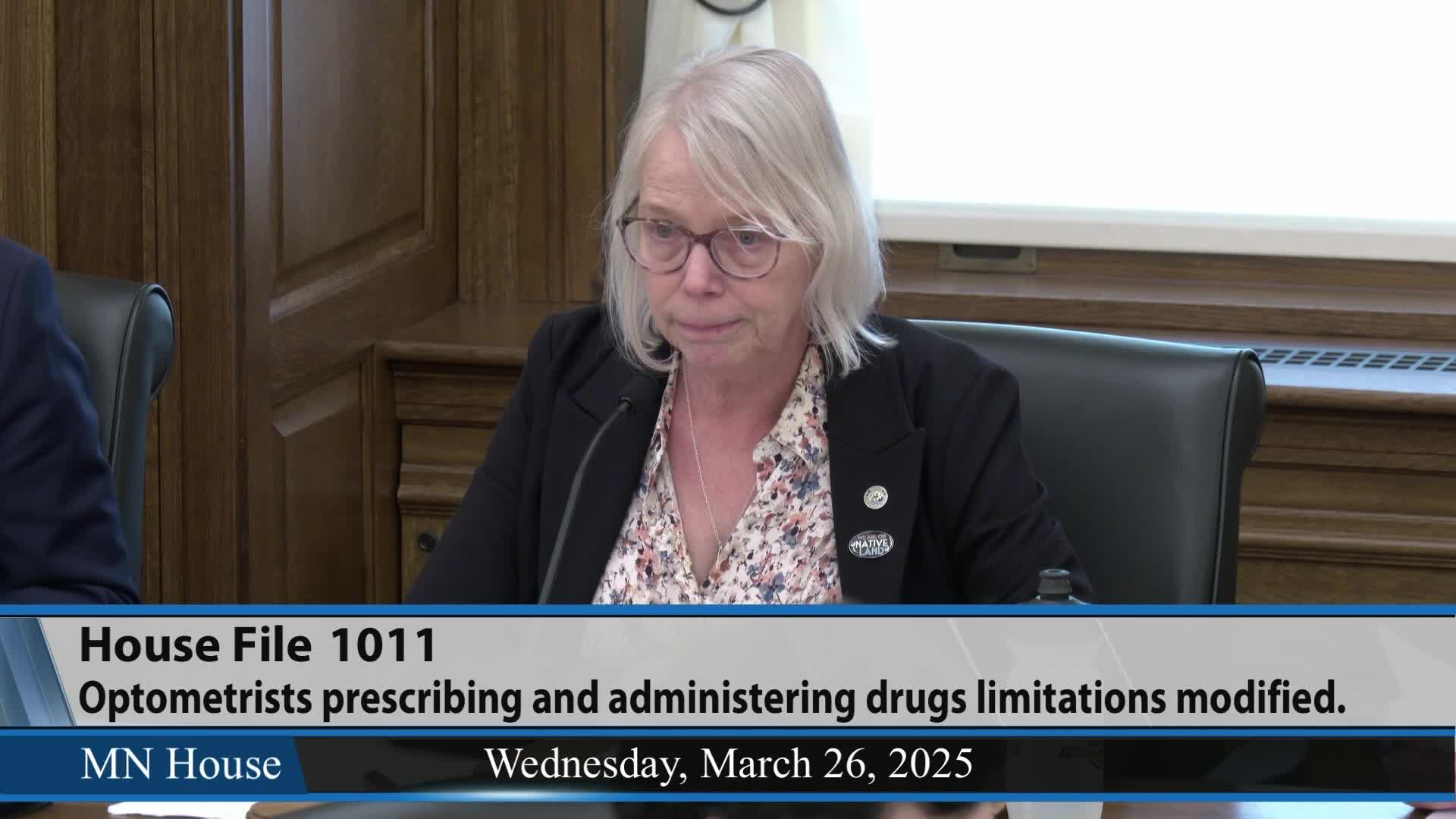
At a committee hearing, the House Health Finance and Policy Committee recommended House File 10‑11 to be placed on the general register after extended debate over expanding the licensed scope of practice for doctors of optometry in Minnesota.
At a committee hearing, the House Health Finance and Policy Committee recommended House File 10‑11 to be placed on the general register after extended debate over expanding the licensed scope of practice for doctors of optometry in Minnesota.
Proponents including the bill sponsor, Chair Representative Bierman, board members and practicing optometrists told the committee the measure modernizes a scope of practice that was last substantially updated more than 20 years ago and will increase patient access to care, especially in rural and underserved areas. “Follow the data, not the anecdotes,” Representative Bierman told the committee as he introduced the bill.
The bill removes some existing restrictions on oral medications and allows a limited set of injections and procedures that supporters said are taught in U.S. optometry programs and already practiced in many states. Tina McCarty, public policy and planning committee chair for the Minnesota Board of Optometry, told the committee the board “has no hesitation and complete support of House File 10‑11,” saying the board views modernized scope as a public‑safety and access issue. Brigitte Axelson, past president of the Minnesota Optometric Association, said the proposal “only expands our ability to provide in‑office, noninvasive treatments, not surgeries involving operating rooms.”
Supporters pointed to national practice patterns and testing standards: committee testimony noted that injectable procedures have been a component of the National Board of Examiners in Optometry testing since 2013 and that roughly two‑thirds of eye care in Minnesota is delivered by optometrists. Members testified that many states allow optometrists to administer oral antivirals and other medications and that optometry programs include clinical rotations where such procedures are taught.
Opponents — chiefly practicing ophthalmologists — argued the bill’s language is vague and could authorize invasive procedures without the depth of surgical training ophthalmologists undertake. “All surgery is invasive. There is no such thing as noninvasive surgery,” ophthalmologist David Volman told the committee, citing AMA definitions and warning that broad injection authority could lead to surgical practice without residency‑level surgical training. Other ophthalmologists described risks including eyeball puncture, infection, bleeding and permanent vision loss and said the bill does not clearly define required training, supervised experience or minimum procedure counts for safe practice.
Committee members pressed both sides on training specifics. Witnesses representing optometry told the committee they could not provide a single, universal number for injections completed during training because clinical experience varies by program and by clinical rotation; Tina McCarty said graduates since 2013 have been tested on injectables by the national board and that licensees who graduated earlier would be required to complete additional education and testing under board rules.
The bill contains explicit exclusions and restrictions discussed at the hearing: witnesses and the author said intravitreal injections and retrobulbar, subtenon and intravenous injections were excluded; the bill limits injectable procedures to eyelid‑ and anterior‑segment related treatments and puts a 14‑day cap on some oral steroid uses. Supporters argued those limits are concessions reached during stakeholder meetings.
After public testimony and member questions the committee recommended House File 10‑11 to the general register. The motion was carried by voice vote after a short procedural exchange about a requested roll call. The recommendation moves the bill forward for further floor consideration and additional hearings or amendments.
The committee record shows sustained, organized opposition from ophthalmology societies on patient‑safety grounds and organized support from the Minnesota Board of Optometry and the Minnesota Optometric Association; committee members said they expect continued negotiation as the bill moves through the process.