Witnesses describe MWBE certification process as slow, adversarial; call for clearer standards and faster recertification
Loading...
Summary
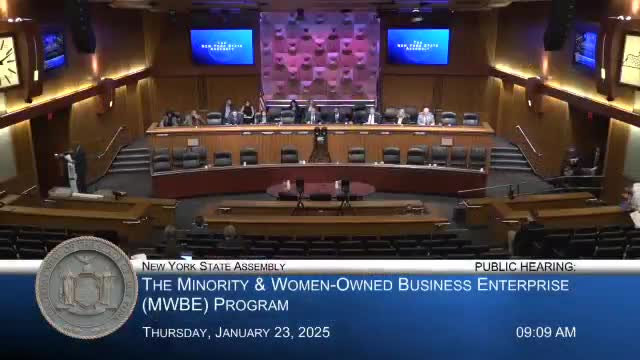
Chair John McDonald opened the Governmental Operations Committee hearing by saying the minority and women-owned business enterprise program, known as MWBE, is “essential to fostering equity and opportunity” but that state agencies of jurisdiction were not present to answer questions.
Chair John McDonald opened the Governmental Operations Committee hearing by saying the minority and women-owned business enterprise program, known as MWBE, is “essential to fostering equity and opportunity” but that state agencies of jurisdiction were not present to answer questions.
The hearing featured business owners and industry groups reporting recertification delays, opaque criteria for denials and costly appeals that many small firms cannot afford. “The attempt to weed out the fraud has really made the program be perceived negatively,” said Stephanie Wiley, president and owner of Hoosick Valley Contractors, who described a six-year recertification and appeal process that ultimately reinstated her WBE status. “I cried when I got the call.”
Why it matters: the MWBE program is intended to expand access to state contracts for women- and minority-owned firms. Panelists told lawmakers problems on the front and back end of the certification process reduce participation, shrink the pool of available contractors and undercut the program’s goals as the legislature considers whether to extend or revise the program.
Business groups praised recent progress on initial certification timelines but said recertification and appeals remain a major barrier. Ryan Silva of the New York State Economic Development Council said Empire State Development’s recent “whirlwind” certification initiative — which returned decisions in 30 to 60 days — was helpful and should be made permanent. “I would like to see that whirlwind 30 to 60 days become a permanent timeline,” Silva said. But he and others stressed that recertification can still take years and that some firms are denied without clear explanation.
Several business owners described denials that they said relied on narrow or outdated interpretations of managerial control and wage patterns. “They said I did not have adequate managerial experience,” Wiley said of a recertification denial; she provided bank records, letters from bonding companies and other documentation during an appeal. Mary Shepherd, owner of a heating and plumbing distributor, said reviewers told her, “you couldn’t possibly run the business, you’re a woman,” language she called “insulting.”
Panelists identified recurring concerns: inconsistent standards across agencies, lack of clarity about what documentation is required, long waits between agency requests and final decisions, and limited or no opportunities for two-way clarification before denials. Tom O’Connor of the Capital Region Chamber said the process often feels “adversarial” and urged clearer rules and better alignment between statute, regulation and agency criteria.
Several witnesses recommended practical fixes: more site visits by regional staff to verify operations on the ground; clearer, published guidance on documentation needed for recertification; use of local Small Business Development Centers as navigators or liaisons; and an expanded mentor-protégé program to build firm capacity. “A site visit is a critical piece of being able to fundamentally understand [a firm] more so than any documentation,” O’Connor said.
Appeals and the economic cost: witnesses said appeals are costly in time and legal fees. “These aren’t done on flat fees,” said a representative of the Women Presidents Organization. Attorneys’ hourly rates and the hours owners spend preparing appeals can total thousands of dollars and months away from running a business, witnesses said.
The committee did not take formal votes. Members and witnesses urged closer work with Empire State Development and regional partners to reduce unnecessary denials and speed recertification so that the MWBE program can meet its stated equity goals.
Ending: Committee members said they would use the testimony and written submissions to inform policy recommendations and potential legislative fixes, and urged ESD to provide clearer, regionalized guidance and staffing to shorten recertification timelines.