Get Full Government Meeting Transcripts, Videos, & Alerts Forever!
Get email alerts on the Staffing topic
No spam. Unsubscribe anytime.
Assembly and Senate probe staffing crisis after illegal correction officers' work stoppage
Summary
Lawmakers questioned the DOCS commissioner and union leaders about a three‑week illegal work stoppage, resulting staff resignations and terminations, the use of National Guard troops, and how staffing shortfalls affect safety and prison operations.
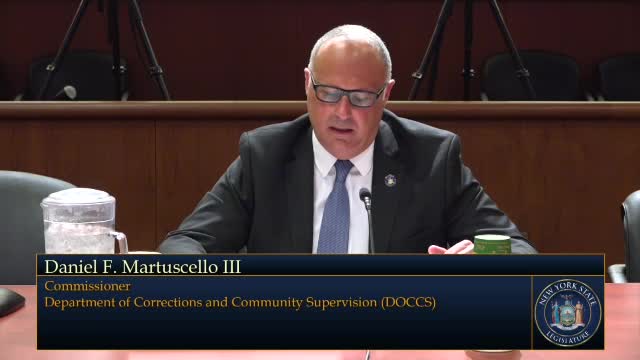
Lawmakers examined the effects of an illegal three‑week work stoppage by correction officers earlier this year and the staffing shortfalls that followed. DOCS Commissioner Daniel Martisell III told the joint hearing that roughly 2,000 officers and sergeants were terminated or resigned in connection with the work stoppage and that the department had relied on the National Guard to maintain secure operations during the emergency.
Commissioner Martisell said the strike led to “unsustainably low staffing levels” and that the department had authorized mass hiring, regional recruiting programs and settlement agreements to reinstate some terminated employees under strict conditions. He described an aggressive recruitment push and noted that the candidate pool had increased 82 percent from the previous year.
Union leaders told the committees staffing issues predated the stoppage and said low pay, retention problems and safety concerns contributed to labor unrest. Wayne Spence, president of the Public Employees Federation, noted that DOCS overtime costs exceeded $350 million in the prior year and that civilian staff and parole officers had been asked to fill roles outside their training during the stoppage.
Committee members and DOCS leaders confirmed that the National Guard provided large‑scale support: at the peak of the emergency nearly 7,000 Guard members were deployed in DOCS facilities, with numbers declining to about 3,000 as hiring and resumption proceeded. Data requests are pending on the guard deployment’s effect on facility incidents. The commissioner agreed to provide a breakdown of assaults during the period.
Nut graf: The stoppage and its aftermath spotlighted the department’s personnel fragility and the operational impact on programming, visits and medical care. Lawmakers and union leaders agreed that long‑term solutions are needed — including recruitment, retention, workplace safety and changes to how certain positions are staffed — but differed over whether collective bargaining constraints and HALT reforms contributed to rising violence.
Supporting details: DOCS described regional hiring successes at Green Haven and Fishkill, and the department’s plan to expand recruiting into urban areas to boost diversity and local hiring. Union leaders endorsed policy fixes including better training, retention bonuses and the so‑called “death‑gap” legislation (referred to in testimony as “death gamble”) to protect pensions for long‑tenured officers who fear early death on the job and retire early as a result.
Ending: The committee asked DOCS to provide a staffing and incident breakdown and said it will hold follow‑up hearings. Lawmakers signaled interest in legislation addressing recruitment, retention and management discretion in discipline — while oversight bodies, advocates and families urged measures that prioritize safety and accountability for both incarcerated people and staff.