Get Full Government Meeting Transcripts, Videos, & Alerts Forever!
Get email alerts on the Student Safety topic
No spam. Unsubscribe anytime.
Hopewell Valley accepts mid‑year student safety report as parents press board on bias and harassment
Summary
District staff presented the Student Safety Data System mid‑year report and the board accepted it. The superintendent and staff described training and supports; parents and residents urged stronger action after a run of bias incidents at middle and other schools.
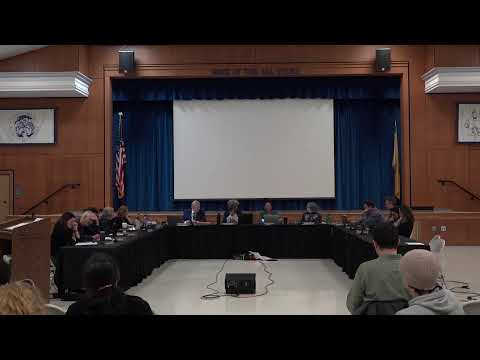
At its March 17 meeting, the Hopewell Valley Regional Board of Education accepted the district’s mid‑year Student Safety Data System (SSDS) report and heard extended public concern about a recent rise in harassment, intimidation and bias incidents across grade levels.
The SSDS presentation covered September–December data, discipline counts, and how incidents are categorized and reported to the state. "We strive to create safe, welcoming, and respectful environments for all," said Corey, a district presenter, summarizing the district’s approach. The district said it continued to report incidents to the state and to document restraint and seclusion separately from incident totals.
The nut graf: parents and residents used the public‑comment portion of the meeting to press the board for a more visible response after swastikas and racial slurs were reported in school buildings and on desks. The superintendent and school leaders described training, threat‑assessment procedures and supports the district already uses while promising further steps.
District presenters stressed prevention and response systems. Paulette, who described staff training efforts, said, "All staff that, supports our students that need de escalation techniques are trained in safety care training." The district detailed partnerships (including a Rutgers behavioral‑health clinician on site), threat‑assessment practices, counseling supports, restorative circles and the use of safety‑care de‑escalation training for staff.
Administrators noted that one SSDS incident can involve multiple students and multiple violations; suspension and in‑school‑suspension day counts are recorded per student. The report showed no weapons incidents in the first half of the school year, two identified threats that reached full threat‑assessment procedures, and four additional screenings that did not progress to formal threat findings. The district said police involvement and ongoing collaboration with families are part of the response plan.
Public commenters expressed alarm and asked for concrete steps. "As the parent of a middle schooler, it is very evident to me that bias incidents are on the rise at our middle school," said Catherine Fulmer Hogan. Several parents and community members, including Kelly Beeman and Lee Rosenfield, described repeated slurs, graffiti and social‑media amplification and urged the board to involve outside experts and male mentors, increase peer‑to‑peer programming, and expand outreach to families about monitoring social media and gaming content.
Superintendent Doctor Therese framed the problem as both local and national. "The rise of incivility in our district ... verbal attacks, disrespectful interactions, and decisiveness that has hindered our ability to work together for the success of our students," she said, adding that the district would continue teaching civil discourse and work with families to model respectful behavior. Board members reiterated support for administration and said they would press for additional community engagement and programming.
Board action and next steps: the board moved to accept the SSDS mid‑year report by voice vote; the motion passed (accepted). The board announced an intent to hold a community forum on the incidents; the date will be adjusted so it does not conflict with Holocaust Remembrance Day and to ensure community participation. Administrators said they will continue to monitor incident data, follow the state SSDS reporting process, and pursue additional programming and communications with families.
Ending: board leaders asked parents to continue reporting incidents and to support school efforts, and they urged the community to join a broader, ongoing conversation about online content, peer influence and how to reinforce respectful behavior at home and at school.