Get Full Government Meeting Transcripts, Videos, & Alerts Forever!
Get email alerts on the Capital Projects topic
No spam. Unsubscribe anytime.
Hopewell Valley board approves submission of capital projects to state as district readies possible referendum
Summary
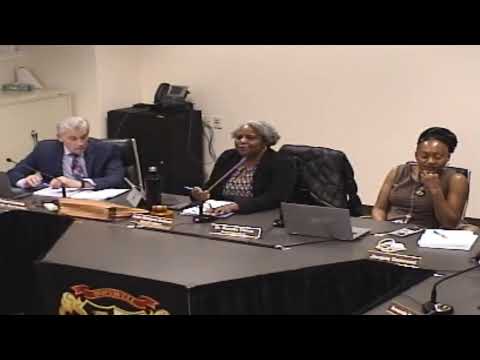
The Hopewell Valley Regional Board of Education on Feb. 24 voted to authorize staff to submit a package of school capital projects to the New Jersey Department of Education to enable state approvals and final pricing ahead of a possible referendum.
The Hopewell Valley Regional Board of Education on Feb. 24 voted to authorize staff to submit drawings and project descriptions to the New Jersey Department of Education as preparatory steps for a possible capital referendum. The submission does not commit the board to any ballot question or dollar amount, administrators said.
The submission request covers a list of infrastructure work carried over from a prior referendum and several new items board and staff identified as emergent: multiple roof replacements, HVAC and chiller upgrades, drainage and paving repairs, electrical switch-gear replacement at Tollgate, and classroom additions at Tollgate and Bear Tavern to remove portable trailers and create permanent classroom space. Administrators said the state’s school construction reimbursement program is expected to cover roughly one-third of the eligible total cost, subject to annual state appropriations.
Board and staff emphasized the submission step is procedural: it allows the architect to seek Department of Education approvals and to produce final pricing so the board can decide later whether to place questions on a ballot and how many questions to include. “Nothing is being decided tonight,” a district presenter told the board; the board’s vote was a voice vote and the consent agenda item passed.
Administrators described site‑specific problems the projects are intended to fix: recurring drainage and flooding that damages Stony Brook Elementary, failing boilers and chillers at multiple schools, deterioration of storefront steel and facades, roof sections beyond their useful lives at the high school and Tollgate, and continued reliance on portable classrooms at Bear Tavern and Tollgate that are ineligible for preschool under updated rules. Timberlane’s HVAC coils and accessibility/trip-hazard paving also were cited as urgent needs.
Board members asked about splitting the referendum into multiple questions so higher-priority work (for example, classroom additions to eliminate trailers and address student safety) could be decided separately from projects eligible for state aid. Administrators said districts can design ballot questions either as independent questions or with dependencies (for example, requiring Question 1 to pass before Question 2 takes effect); they noted examples from nearby districts and said options will be discussed in coming months.
Hopewell Township officials have told district staff they are exploring options to cover a large portion of the Bear Tavern addition; if the township provides funds as discussed, administrators said that could remove that item from a district bond question and reduce the local tax impact. Board members asked for a written commitment from the municipality and were told negotiations and legal review are ongoing.
Costs previously escalated because construction inflation has increased since the district last priced projects, staff said. The board’s finance and facilities committee directed architects to prepare updated cost estimates and to cap the set of projects that would appear on a November ballot if the board ultimately approves that schedule.
The board’s action authorizes going to the next step — state submission and final pricing — but does not authorize borrowing or placement of a question on a ballot. Any future referendum question or questions must be separately approved by the full board.