Get Full Government Meeting Transcripts, Videos, & Alerts Forever!
Get email alerts on the Childcare Space Variance topic
No spam. Unsubscribe anytime.
Committee adopts amendment to let DHS grant small square‑foot variances for freestanding childcare centers; bill laid over
Summary
The committee adopted an amendment allowing the commissioner to grant a variance of up to 100 square feet from space requirements for freestanding childcare centers and laid House File 656 over for possible inclusion in an omnibus bill, with members asking DHS to clarify licensing and fire‑code interactions.
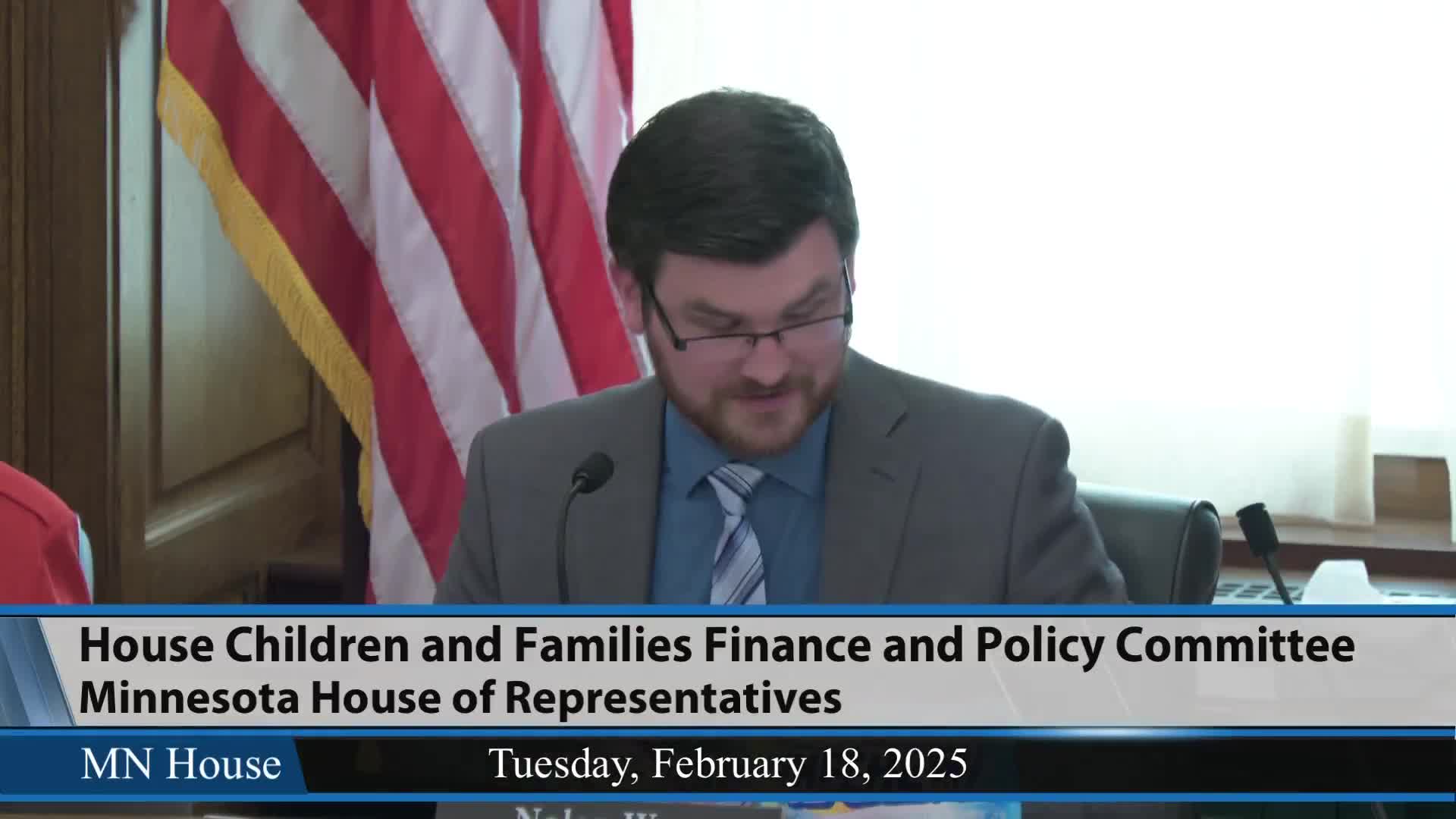
The House Committee on Children, Youth and Families on Tuesday adopted an amendment and laid over House File 656, a bill that would allow the commissioner to grant a variance of up to 100 square feet from per‑child space requirements for freestanding childcare centers.
Representative Zalesnikar, the bill author, said the change is intended to give local inspectors and the Department of Human Services more flexibility to approve a small variance so an otherwise compliant center can accept two additional children and relieve local waiting lists. "This is a very small space…it's a 10‑by‑10 rug," she said, describing the 100 square‑foot maximum.
Committee members asked DHS licensing about the variance process and whether the agency coordinates with the state fire marshal. Ari Dinian, legislative director at the DHS Office of Inspector General, told the committee licensing staff were not present in the hearing and that DHS would follow up; he said some space requirements are constrained by the state fire code and that DHS works with the fire marshal to align licensing and life‑safety standards.
Members discussed the bill's language. Representative Coulter asked why the bill would require the commissioner to grant the variance rather than simply permit rule changes; Representative Zalesnikar said the "must grant" language is intended to create a clear, administrable pathway and that the variance remains subject to life‑safety review. Representative Sensamura and others sought detail on what DHS considers when reviewing variances — photographs, site visits, evacuation procedures — and the committee asked DHS to provide those specifics.
Supporters described practical examples from site visits. Zalesnikar said she visited a center whose staffing ratios allowed two teachers to supervise 14 toddlers under ratios, but licensing limited the center to 12 children because room square footage fell short of the written allocation. She said the amendment would aim to remove such an obstacle: "Two kids not in service is a big deal to families."
The committee adopted the A2 amendment, which adjusts statutory language clarifying the variance pathway, and moved the bill forward by laying it over for possible inclusion in a later omnibus bill. Members requested follow‑up from DHS licensing and the state fire marshal on how the variance would be evaluated and whether any safety risks remain.
Representative Lesnicar (bill author) said she will continue to work with colleagues and agencies to refine language and ensure safety remains protected as the bill advances.