
Budget workshop: West Irondequoit outlines $700K rise in special-education nonpersonnel costs and transportation uncertainty
Get AI-powered insights, summaries, and transcripts
Sign Up Free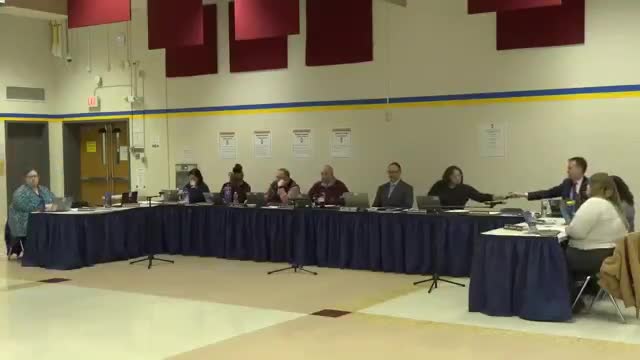
Summary
District budget staff briefed the board on nonpersonnel expenditures March 6, citing a projected near-$700,000 increase in special-education costs, continued reliance on BOCES and uncertainty over transportation contract renewals.
WEST IRONDEQUOIT — At a March 6 study session, district finance staff walked the Board of Education through the nonpersonnel portion of the 2025–26 budget, highlighting an expected increase in special-education out-of-district costs, technology and transportation pressures and the district's use of state and federal reimbursement programs.
"About a third of our budget really comes from this non personnel side," Mr. Brennan said during the presentation, summarizing the overview of supplies, equipment and contractual services that do not include salaries. "Special education ... is over 8 and a half million dollars of this non personnel budget or 27%." He told the board the district projects an increase in special-education nonpersonnel spending of just under $700,000 from the prior year, largely tied to out-of-district placements and the services those placements require.
Brennan described the district's continued use of BOCES purchasing to leverage state aid on capital- and technology-related purchases: "Spend a thousand dollars on a computer, get 780 back the next year ... that's why we run this through BOCES," he said, referring to a roughly 78% state reimbursement rate for some equipment purchases. He also described plans to pursue E‑Rate federal funding and said the combination of BOCES and E‑Rate can push reimbursements higher for some technology purchases.
Transportation costs were flagged as an uncertain element of the upcoming budget. Brennan said district officials are awaiting a decision from First Student about whether the carrier will extend the current contract. "If they don't extend the contract," he said, "we will have to go RFP; there are not a lot of other players in town that can handle our volume of transportation." Board members asked about setting an earlier contract-decision date in future RFPs to reduce this year's timing risk.
On school nutrition, district staff said federal and state policy changes carry risk and upside. Brennan noted the district currently participates in the Community Eligibility Provision (CEP), which has raised participation and generated a slight surplus for the school lunch fund; he cautioned that federal threshold changes could affect future eligibility. Board members who attended Albany budget discussions described "cautious optimism" that the state would move to maintain or expand universal free lunch support, but no guarantees were made.
Other details in the presentation included:
- Operations and maintenance budget projected at approximately $5.6 million with a moderate increase; planned equipment and vehicle replacements were listed. - Contractual transportation estimated about $5.4 million with increases tied to CPI and carrier costs. - Technology budget roughly $3.7 million (about 12% of the nonpersonnel total) with proposals to upgrade student and faculty devices and invest in network infrastructure. - Debt service presented as a smaller share of the budget (around 5%), with about $600,000 attributable to interest on the district's RISE project debt. - A proposed $100,000 transfer from the general fund to the capital fund for elevator refurbishments; staff said they expect roughly 84% state aid reimbursement the following year on that work.
During a follow-up discussion about special education, Christy, a district special-education leader, told the board that out-of-district placements "are not required; it is typically the best match of programming needs for the students," and said the district first exhausts in-district options and aims to return students to the least-restrictive environment when appropriate.
District staff called the March 6 presentation an information session; board members did not take final budget votes. The full budget remains under development, with several items to be finalized at upcoming meetings ahead of voter review.