
West Irondequoit outlines UPK expansion and Pine Grove renovation in multi-year plan
Get AI-powered insights, summaries, and transcripts
Subscribe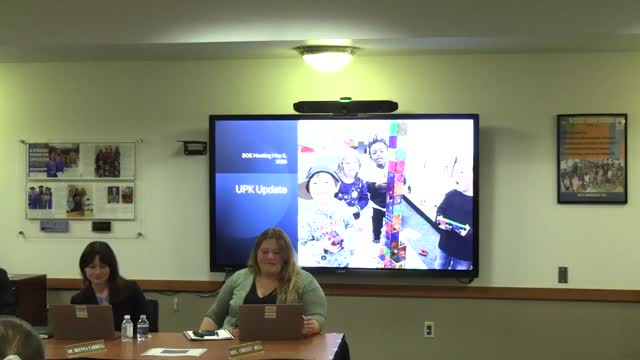
Summary
District officials reported 72 UPK slots for 2025–26, existing classrooms at Sunshine Daycare and Briarwood, plans to add an in-district classroom at Seneca and long-range plans to renovate Pine Grove to house three UPK classrooms as part of the Promise 2027 work.
District staff told the Board of Education on May 8 that Universal Pre-K (UPK) programming will continue to expand for the 2025–26 school year and that long-term facility work tied to the Promise 2027 program will create dedicated space for more prekindergarten classrooms.
Miss Mika (presentation lead for UPK) summarized current and planned UPK slots: 72 slots for 2025–26, with two classrooms at Sunshine Daycare (36 slots, 18 each), two hybrid classrooms at Front of Friends (mix of private-pay and UPK students) and one 18‑student classroom at Briarwood. "We do have 2 classrooms at Sunshine Daycare, 36 students and 18 in each," she said while reviewing current placements.
The district used an expansion grant that increased the reimbursable per-pupil UPK rate from about $6,600 to $10,000 for awarded slots; the 2024 expansion award provided 54 slots this year, and the district said it used that expansion funding first when placing students. Administrators are reapplying for available grant funding for subsequent years and said the reapplication process is simpler in year two.
Officials said they have notified families on the wait list as slots became available; the district reported its largest UPK lottery yet with 149 applicants. In response to questions from trustees, staff said screening and an "entering kindergarten boot camp" are used to identify incoming kindergarteners who may need extra support and to help close readiness gaps for children who did not have UPK access.
On facilities, the district is planning a multi-year renovation of Pine Grove under the Promise 2027 project to accommodate three in-district UPK classrooms beginning in the 2026–27 school year. Project planning with facilities and CPL includes classroom design details tailored to pre-K needs such as rest/sleep nooks and dedicated activity space. District leaders said the capital reserve and Promise project planning are intended to support expansion of district-run early childhood seats.
Administrators acknowledged limits in partnering with community-based providers: the NYS Office of Family and Child Services provides an RFP list from which districts must solicit community providers, and some local providers decline to participate. The district earlier participated in a two-year suburban-to-urban arrangement to send a small cohort to an urban pre-K program under a grant that later ended.
Staff said they plan to continue monitoring demand, pursue available state funding and use community-school development work to connect families to supports as UPK slots expand.