Get Full Government Meeting Transcripts, Videos, & Alerts Forever!
Get email alerts on the Children Mental Health Screening topic
No spam. Unsubscribe anytime.
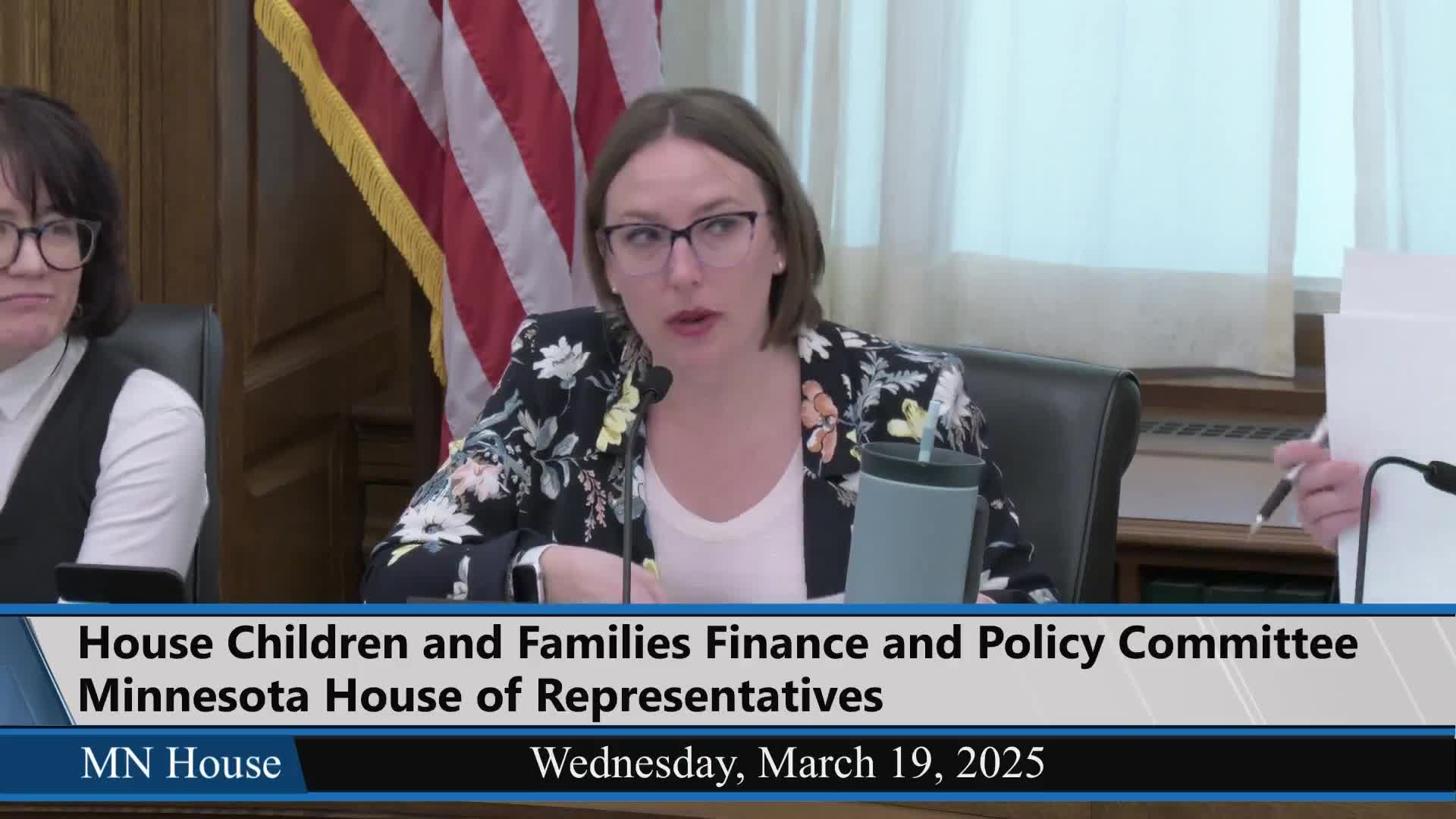
Bill would bar screening families into child protection when lack of services prevents safe home placement; committee forwards measure after amendment
Summary
Representative Kraft’s bill would codify a 2023 policy excluding families who are actively seeking care but cannot safely bring a child home because of lack of services; mental‑health advocates and parents gave emotional testimony and the committee adopted an amendment and referred the bill to Judiciary, Finance and Civil Law.
Representative Ryan Kraft said House File 16,14 would move a Department of Human Services policy into statute to prevent families from being screened into child‑protection based solely on a lack of available children’s mental‑health services.
Why it matters: Testimony from NAMI Minnesota, the state ombudsman for mental health and developmental disabilities, parents and legal guardians described repeated instances in which hospitals threatened to report or actually reported parents to county child protection after caregivers refused an unsafe discharge for children with acute or violent mental‑health symptoms. Advocates said such referrals often punish families who are actively seeking care but cannot access timely placements or specialized services because of statewide shortages.
Testimony and details: Sue Abderholden of NAMI Minnesota said callers told of children with “homicidal or suicidal” ideation, aggressive behavior and long wait lists for residential or intensive placements; she urged codifying the screening guidance so counties and hospitals cannot interpret the guideline merely as nonbinding. Lisa Anthony Thomas, deputy ombudsman for the Office of Ombudsman for Mental Health and Developmental Disabilities, told the committee that families often have active case managers and waiver services in place yet still cannot find a timely placement because providers decline difficult cases. Multiple parents testified about extended hospital stays, threats of child‑protection reporting and the strain on families’ employment and custody status when they could not safely accept discharges.
Members’ remarks and concerns: Legislators from both parties described the issue as a statewide service‑capacity failure. Representative Hicks — a co‑author — said families who are doing everything the system asks “should not be punished for our failures to create a system that meets the needs of children.” County representatives asked for careful statutory language to avoid creating barriers to county responses when maltreatment is suspected.
Action taken: The committee adopted the author’s DE1 technical amendment (which moved the language to the most appropriate statutory chapter) and re‑referred the bill to the Committee on Judiciary, Finance and Civil Law.
Ending: Supporters and county officials alike said the state needs both statutory clarity that prevents punitive referrals when services do not exist and parallel investments in children’s mental‑health capacity and placements.