Get Full Government Meeting Transcripts, Videos, & Alerts Forever!
Get email alerts on the Fame Program Funding topic
No spam. Unsubscribe anytime.
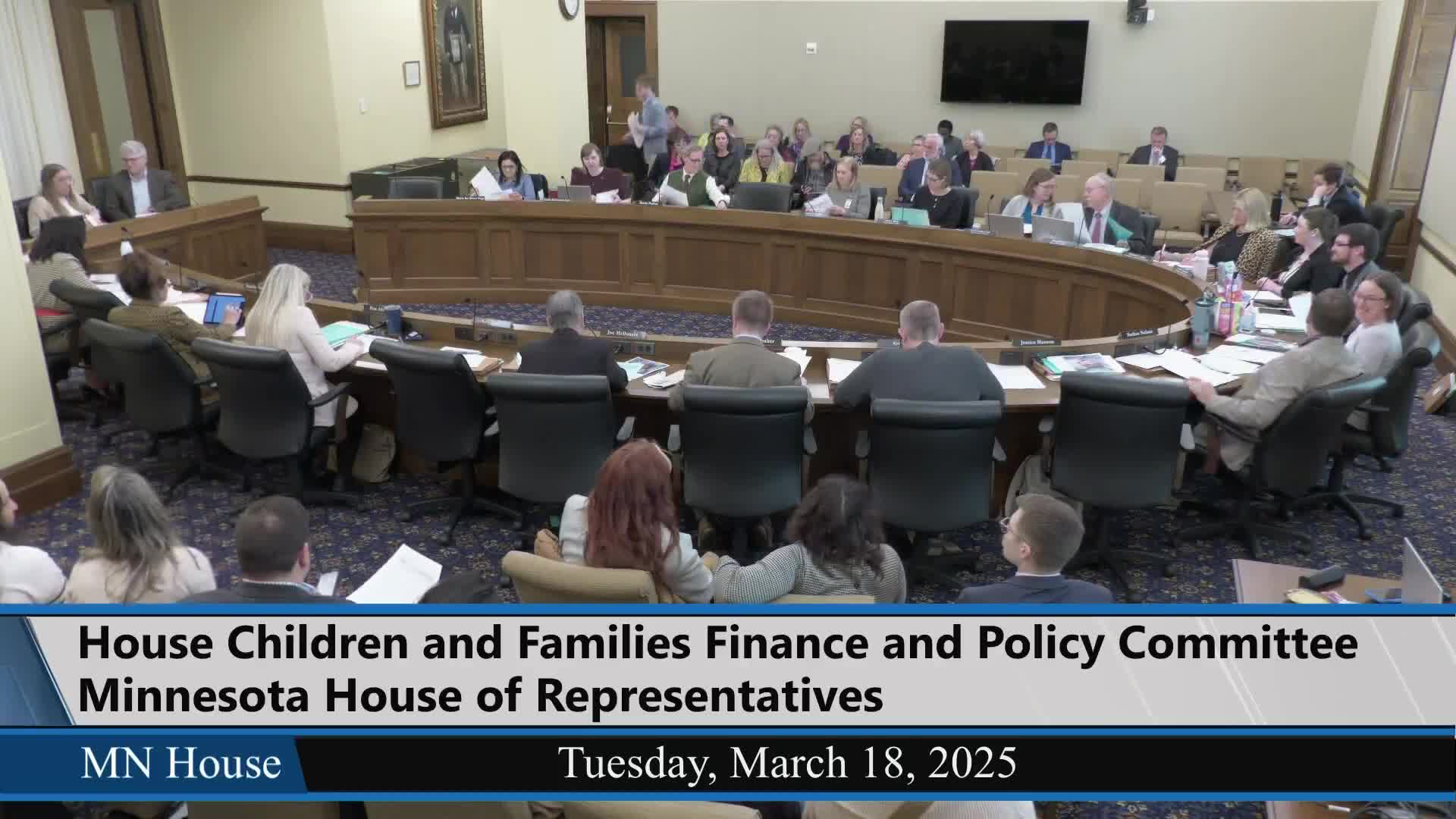
Committee hears testimony in favor of expanding FAME program funding
Summary
Lawmakers and participants praised the Family Assets for Independence in Minnesota (FAME) program as a path to homeownership, education and small-business starts; the committee laid House File 776 over for possible omnibus inclusion after testimony and member questions about outcomes and funding levels.
House File 776, carried by Vice Chair Hansen, would add $1.5 million to the FAME (Family Assets for Independence in Minnesota) program’s base funding for each fiscal year in the 2026–27 biennium to sustain and expand the program’s matching savings accounts and financial coaching network.
David Snyder, director of FAME based at West Central Minnesota Community Action, testified the program triples participant savings (up to $4,000 saved by the participant) to help low-income Minnesotans buy homes, start businesses, buy cars, or pay for postsecondary education. Snyder said a recent temporary funding boost expanded accounts from about 65 to around 200 and allowed new partnerships with community organizations and tribal partners.
A participant, Mayres Espitia, testified about personal outcomes, saying she used FAME to buy a home in February 2023 and later started a small business and enrolled in college.
Members asked for outcome data. Vice Chair Hansen and Snyder pointed the committee to an external evaluation referenced in packet materials and said a further evaluation is under way; Snyder offered to follow up with participant-level statistics, including how many graduates moved above 200% of the federal poverty guideline.
Representative Nadeau and others pressed for evidence the program moves people out of poverty and how FAME coordinates with other home-ownership and assistance programs. Snyder and other supporters said coaches work with clients to avoid benefit cliffs and that program matches are structured to avoid counting against public benefits in many cases. Committee members also discussed program scale, matching ratios, and whether a smaller match would permit more participants.
Vice Chair Hansen said the program is bipartisan and urged continued investment, noting community action agencies and other local partners deliver services statewide. House File 776 was laid over for possible inclusion in a later omnibus bill.