Get Full Government Meeting Transcripts, Videos, & Alerts Forever!
Get email alerts on the Forensic Interview Training topic
No spam. Unsubscribe anytime.
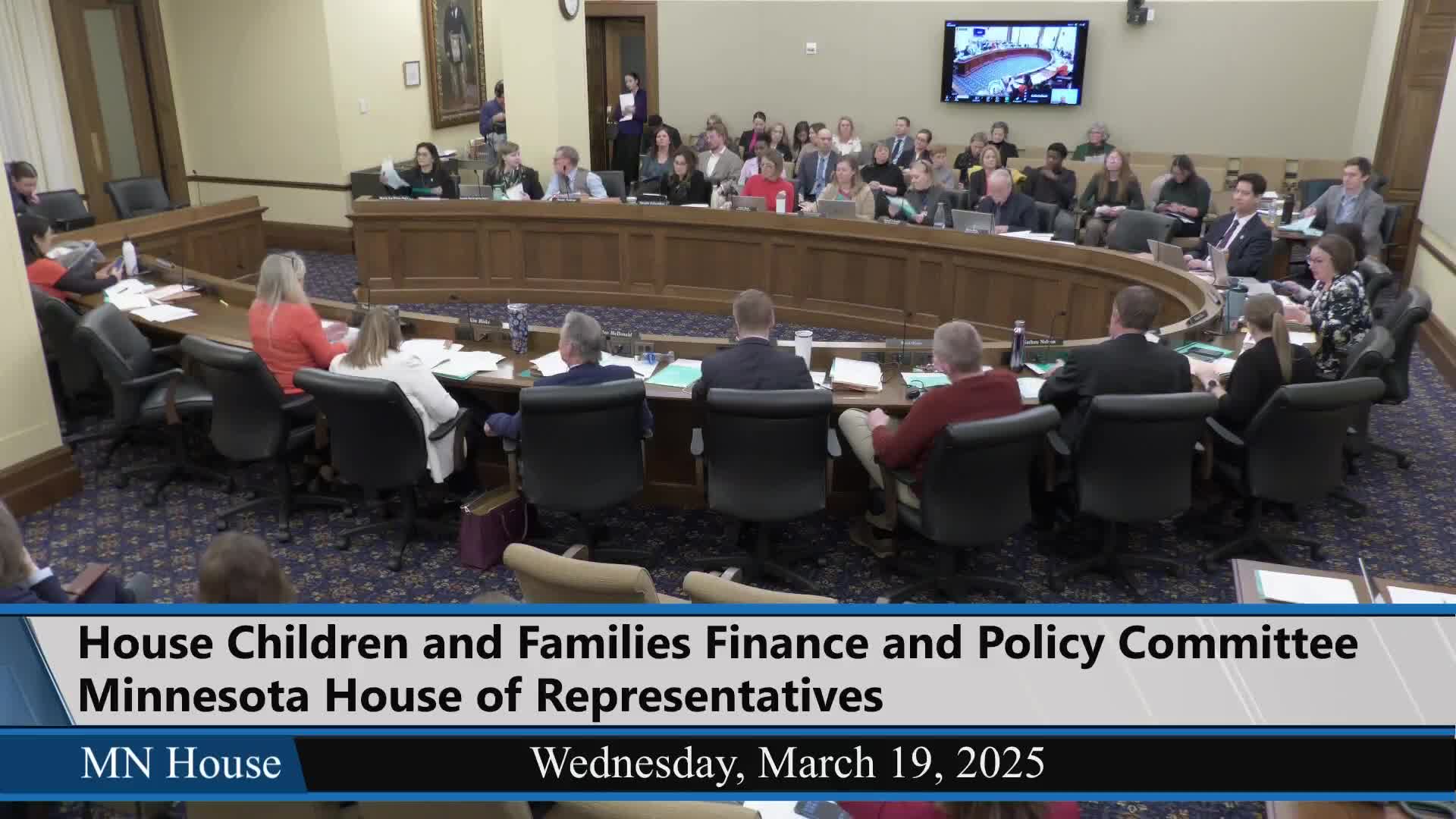
Panel backs scholarships for forensic‑interview training; committee refers bill to Public Safety
Summary
Law enforcement, child-protection supervisors and advocacy groups urged $500,000 over the biennium to fund scholarships for forensic-interview training; the committee voted to re‑refer House File 2,136 to the Public Safety Committee.
Representative Jennifer Johnson told the committee that House File 2,136 would provide $500,000 in scholarships over the next biennium to fund basic, advanced and specialized forensic-interviewer training for law enforcement, child-protection workers, prosecutors, health care professionals and children’s advocates.
Why it matters: Witnesses described forensic interviewing as a standardized, legally sound practice that reduces retraumatization, prevents redundant interviews and improves multidisciplinary investigations of child maltreatment. “What we don't want is a cop, a social worker, multiple cops, multiple social workers going and talking to the kid trying to determine what they mean,” Wade Rasch, a division commander with the St. Louis County Sheriff’s Office, said.
Testimony and details: Wade Rasch said forensic interviews are the “linchpin” of many child-abuse investigations and urged broader, consistent training across the multidisciplinary team (MDT). Carrie Hone, Olmsted County program manager for child protection, described county social workers’ use of forensic protocols and said scholarships would allow county and tribal staff to access basic and advanced training programs (including Minnesota’s First Witness and CornerHouse models). Marcia Milliken, executive director of the Minnesota Children’s Alliance, said federal Children's Justice Act funds have subsidized training in the past but that growing demand makes state support necessary.
Training structure and costs: Committee members discussed training length and formats. Witnesses said basic forensic interview training runs about 32 hours (typically four to five days), advanced training is intended for experienced interviewers seeking peer review and continued practice, and specialized modules address interviews of nonverbal children or multi-session approaches. Representative Johnson said each class costs roughly $1,300 and the $500,000 appropriation would be distributed as scholarships to expand access across counties and agencies.
Action taken: After testimony and member discussion, the committee voted to re‑refer House File 2,136 to the Committee on Public Safety.
Ending: Supporters framed the bill as an investment in professionally consistent, trauma‑informed interviews that strengthen investigations and reduce harm to children.