Get Full Government Meeting Transcripts, Videos, & Alerts Forever!
Get email alerts on the Maltreatment Jurisdiction topic
No spam. Unsubscribe anytime.
County attorneys back bill to close jurisdiction gap for maltreatment of Minnesota children that occurs out of state; committee lays bill over
Summary
Representative Pinto's bill would clarify that Minnesota social service agencies can investigate maltreatment of Minnesota children that occurred while the child was temporarily in another state and that human services judges can adjudicate appeals; committee laid the bill over after discussion.
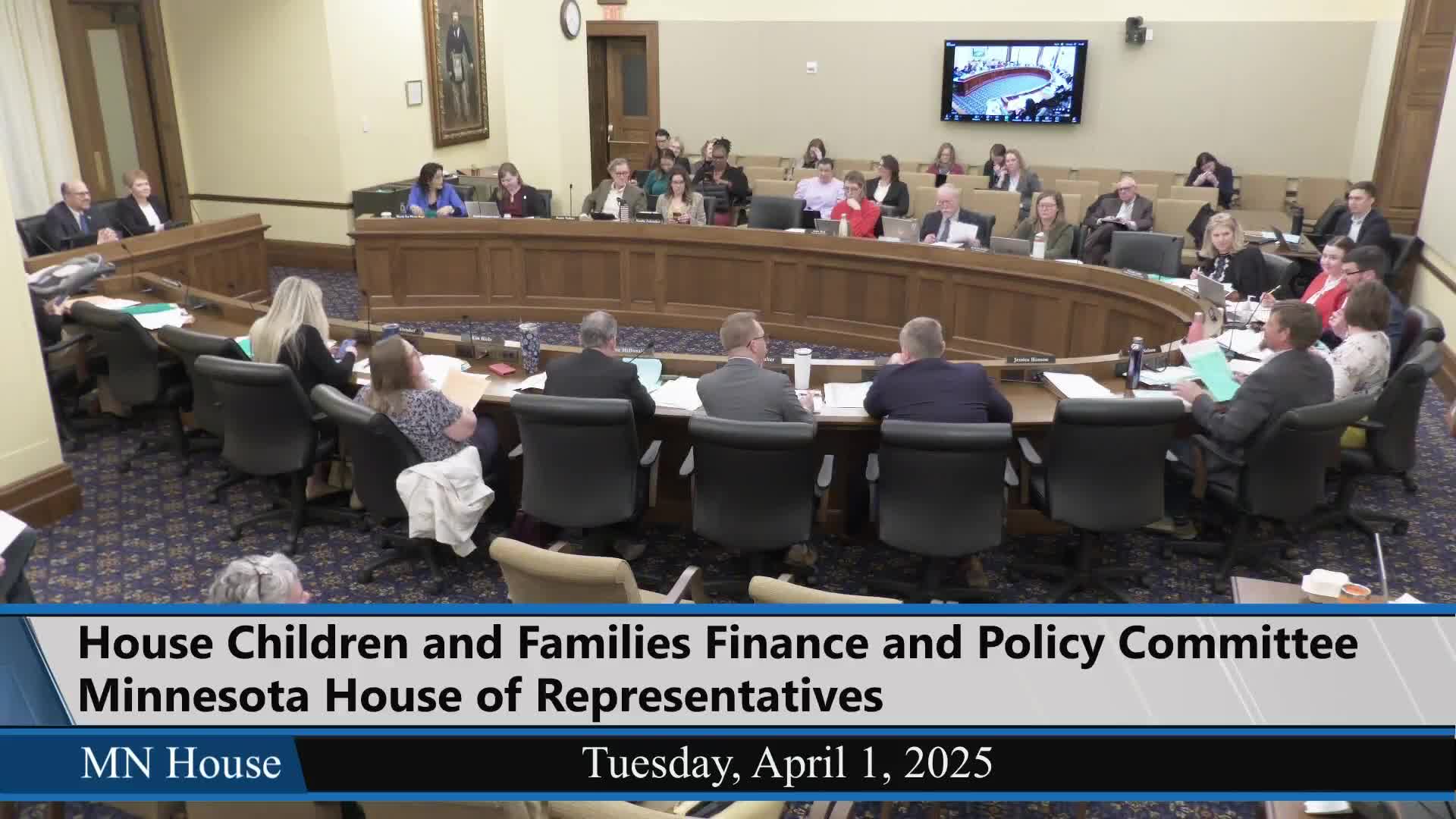
Representative Pinto introduced House File 13,67 (HF1367) to address what county attorneys described as a jurisdictional gap for maltreatment reports involving Minnesota children abused while temporarily out of state. The Minnesota County Attorneys Association's Juvenile Law Committee testified that counties had encountered cases where a child was abused out of state, the in-state social service agency found maltreatment and offered services, but a human-services hearing officer later concluded a lack of jurisdiction to sustain a maltreatment finding.
Testifiers described examples in which a Minnesota-resident child was sexually abused while vacationing out of state and the out-of-state jurisdiction declined criminal charges; the county social-service agency in Minnesota nevertheless investigated and sought to make a maltreatment determination and/or provide services. The proposed bill clarifies that a local welfare agency has authority to investigate such incidents and that a human-services judge may have jurisdiction to hear appeals related to maltreatment determinations affecting Minnesota residents.
County attorneys said the change is intended to protect Minnesota children and to ensure local agencies can place appropriate administrative restrictions (for example, on employment in child-facing roles) when a maltreatment determination is supported by the evidence. The department and the county attorneys worked on clarifying language, including a change to intake timing language to align with DCYF's guidelines (removing an absolute requirement of an immediate investigation in favor of the intake timelines the department uses).
Committee members asked whether other states have comparable provisions; Representative Pinto said the office had reviewed other states but did not provide a comprehensive list at the hearing. Because members wanted additional time to consider the draft and the committee chose not to send the bill directly out, HF1367 was laid over for further work and coordination with Human Services staff.