Get Full Government Meeting Transcripts, Videos, & Alerts Forever!
Get email alerts on the Transit Assistance Program topic
No spam. Unsubscribe anytime.
Informational hearing: bill would link SNAP benefits portal to Metro Transit reduced‑fare application
Summary
Representative Kraft presented an informational bill to add a link from the MN Benefits (SNAP) application portal to Metro Transit’s Transit Assistance Program (TAP) application, aiming to increase awareness and usage among low‑income residents; no committee action was taken.
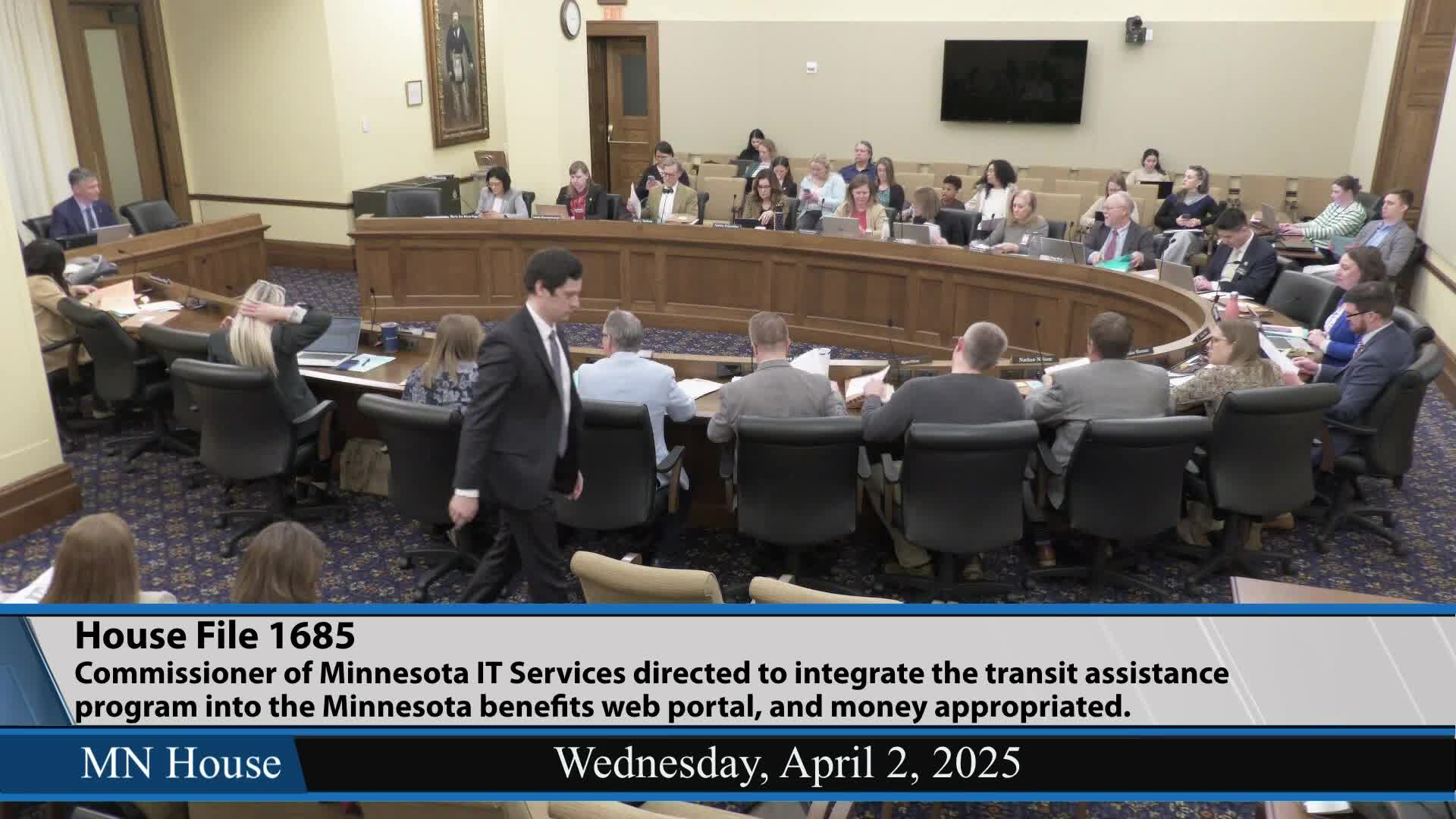
Representative Erik Kraft presented House File 16‑85 at an informational hearing to ask that the MN Benefits (SNAP) online portal include a direct link to the Metro Transit Transit Assistance Program (TAP) application.
Kraft said TAP provides a year‑long reduced‑fare pass on a Go‑To card that costs about $1 per ride and that Metro Transit’s TAP enrollment is low relative to the estimated eligible population in the Twin Cities metro area. “In 2024, only about 11,500 unique users took advantage of the program ... yet about 500,000 in the metro area are eligible,” Representative Kraft said. He said integrating a link from the SNAP application portal would cost about $35,000 and — based on conservative uptake assumptions — could pay for itself in months through increased fare revenue.
Naz (Nas) Norkati, state policy lead for Move Minnesota Action, testified in support and described outreach and interviews with riders. “The need for the legislation is clear,” Norkati said, arguing that TAP is effective but under‑advertised and that adding a link would present the program to people already applying for other benefits.
Committee members discussed operational and budget questions. Representative McDonald asked whether Metro Transit already runs the TAP program; Kraft confirmed it does and said the bill focuses on awareness. Chair West and others asked whether increased usage would affect Metro Transit revenue and program costs; Kraft and the testifier said they expect net revenue increases but acknowledged uncertainty about how many new riders would otherwise already be using transit.
Committee staff clarified that MNIT (Minnesota IT Services) would perform the integration and that funding for the estimated $35,000 development cost would come from the state government committee budget (MNIT), not the Children and Families committee. Representative West and others noted the committee connection to DCYF through SNAP but emphasized the technical work and funding would sit with state government and transportation committees. Because the hearing was informational, no committee action was taken.