Get Full Government Meeting Transcripts, Videos, & Alerts Forever!
Get email alerts on the Committee Procedure topic
No spam. Unsubscribe anytime.
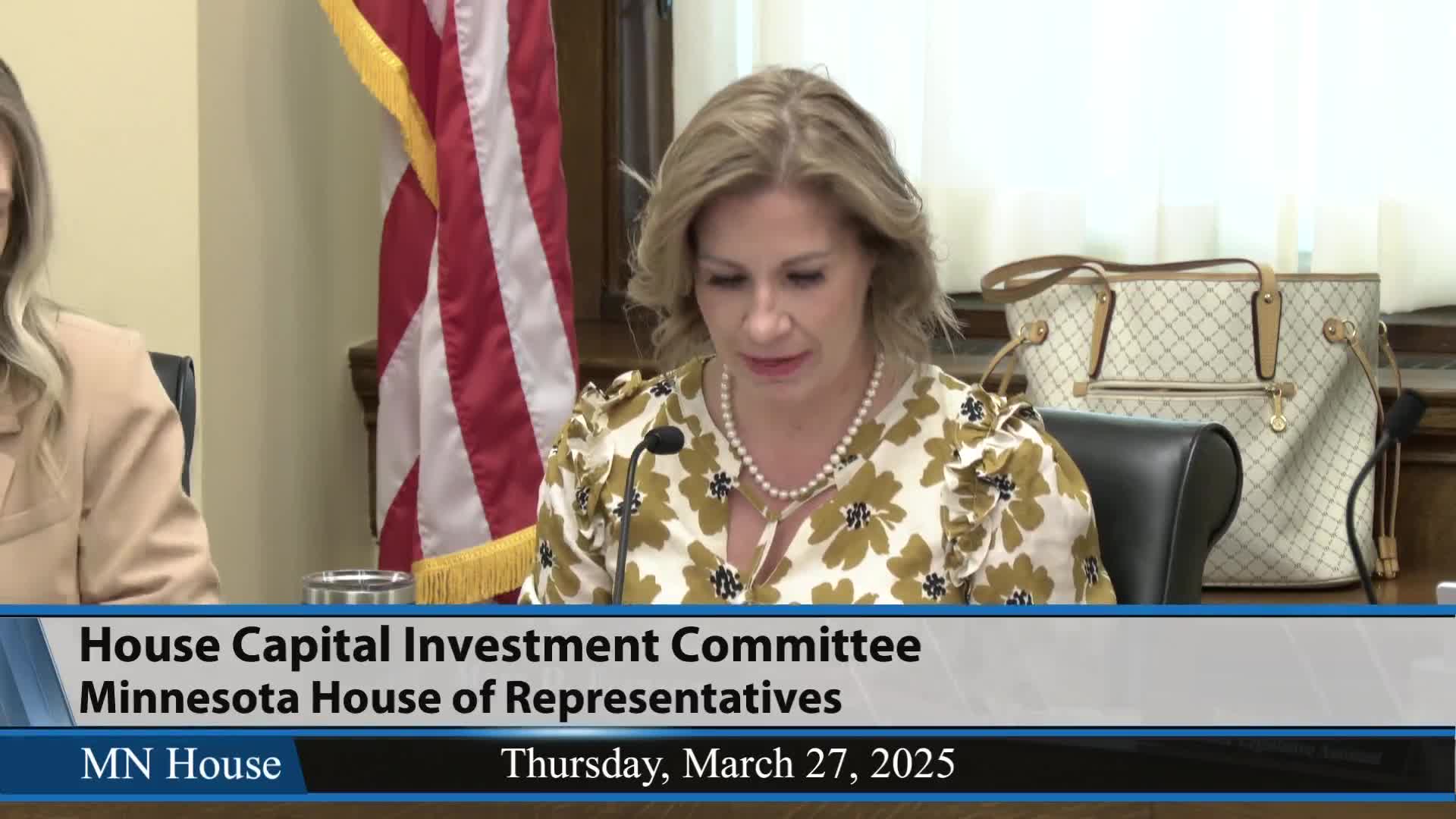
Capital Investment Committee approves minutes, hears dozens of municipal bonding and infrastructure requests
Summary
The Minnesota House Capital Investment Committee approved its March minutes and heard testimony on multiple bonding and infrastructure requests from small cities and regional partners, focusing largely on water, wastewater and public safety projects.
The Minnesota House Capital Investment Committee approved minutes from its previous meeting and spent the hearing hearing day taking testimony on bonding requests from towns and regional organizations across northern and central Minnesota.
The committee approved the minutes from the prior meeting after Representative Carroll moved to approve; the committee chair announced the minutes were approved with no recorded roll-call vote. Later in the session Representative Sexton moved House File 424 forward to committee consideration without a recorded roll-call vote and testimony proceeded.
Throughout the roughly four-hour hearing, municipal officials and mayors presented requests ranging from water-treatment plants and wastewater upgrades to public safety campuses and transportation turnbacks. Presenters repeatedly described projects as phased, noted rising construction costs since initial estimates, and said small tax bases limit local ability to fully fund projects. Several presenters referenced federal or state programs (USDA rural development, the Minnesota Pollution Control Agency and an Emerging Contaminants program) as partial fund sources or programmatic constraints.
No formal roll-call votes on bonding appropriations were recorded on the hearing record; committee action at the meeting consisted of approving minutes and moving a legislation packet forward for further consideration. Testimony will be part of the committee’s record as lawmakers and staff weigh whether to include the projects in a bonding bill or other funding vehicles.
Committee members repeatedly emphasized limited bonding resources statewide and asked presenters about local matches, phasing, and partnerships with counties or regional entities. Presenters commonly said projects were “critical” for public health (water quality) or operations (police, fire and emergency operations centers).