Get Full Government Meeting Transcripts, Videos, & Alerts Forever!
Get email alerts on the Public Housing Rehab topic
No spam. Unsubscribe anytime.
Public housing agencies urge $100 million in GO bond funding to address backlog of repairs
Summary
Representatives and public housing officials urged the committee to include general obligation bonding for public housing rehabilitation; witnesses described a roughly $300 million statewide backlog and health-and-safety projects funded in part with prior GO bonds.
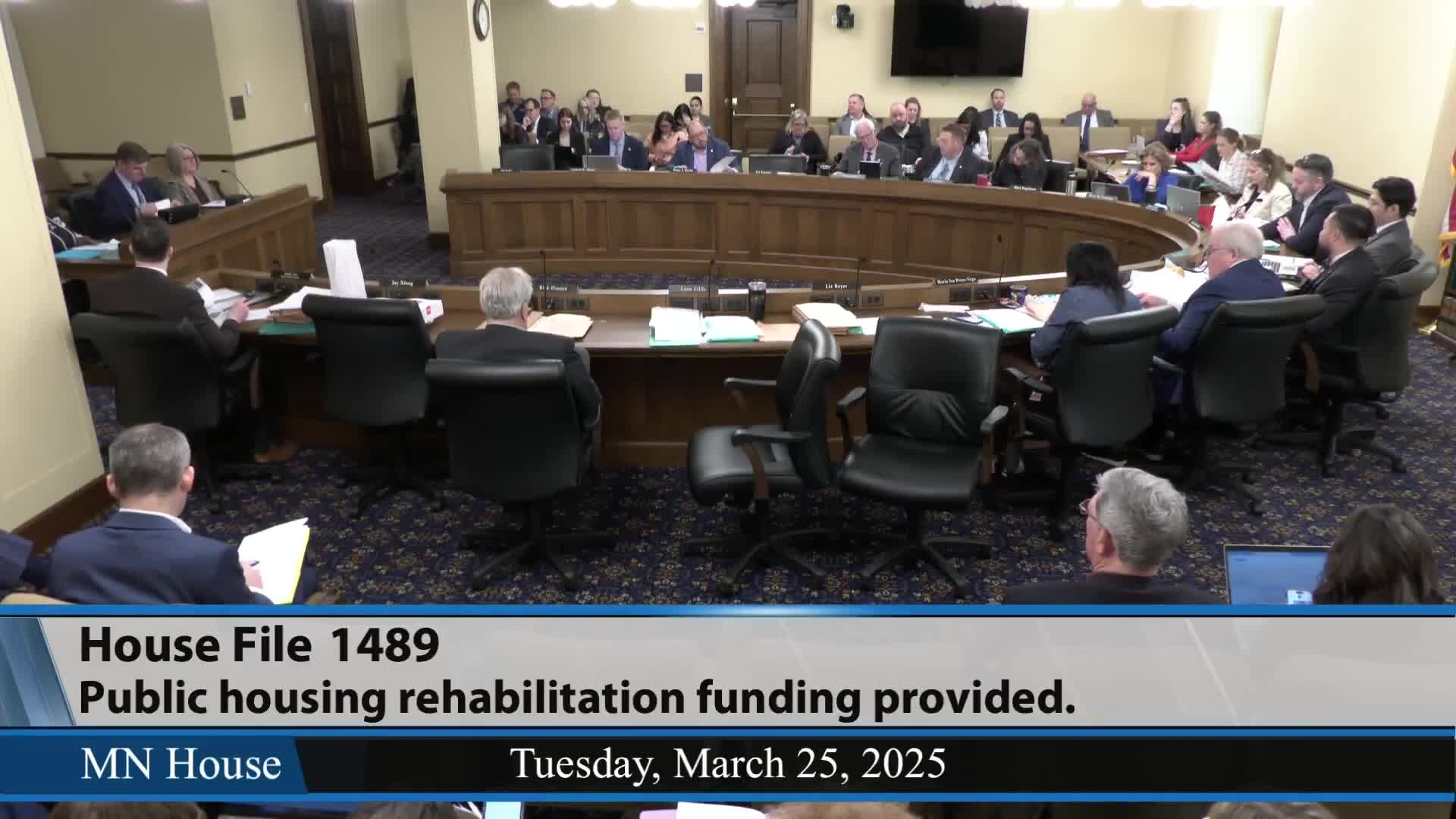
Witnesses representing local public housing authorities asked the Capital Investment Committee to include general obligation bond funding for public housing rehabilitation.
Melissa Taphorn, executive director of the Washington County Community Development Agency and legislative chair of Minnesota NAHRO, said publicly owned housing (the federal public housing program established by the U.S. Housing Act of 1937) currently houses more than 36,000 Minnesotans and that most residents have incomes under $15,000. Taphorn said a survey of member agencies found a capital backlog in excess of $300 million and described examples where the publicly owned housing (POP) loans and other funds paid for boilers, air handlers, fire suppression and other health-and-safety work.
Belinda Walker, a Minneapolis public-housing resident and leader on multiple resident councils, told the committee that elevators, ventilation and other building systems in Minneapolis high-rises need repairs and that federal capital funding provides only a fraction of needed work. She urged support for $100 million in GO bonds for public housing to offset decades of underfunding by the federal government.
Supporters said past state GO bond awards had been used to install sprinklers, repair electrical components and address other urgent infrastructure in high-rise public housing, and they urged continued state investment to preserve units serving seniors, people with disabilities and families with children. The proposal was presented for informational consideration; no committee vote was taken at the hearing.