Get Full Government Meeting Transcripts, Videos, & Alerts Forever!
Get email alerts on the Agri Program topic
No spam. Unsubscribe anytime.
Department of Agriculture presents AGRI program overview and recent grant activity
Summary
The Minnesota Department of Agriculture briefed the House Ag Finance Committee on the AGRI program’s structure, funding mix, competitive grant programs, and newly created 'Protect' and 'Prepare' grants that respond to disease and extreme weather risks.
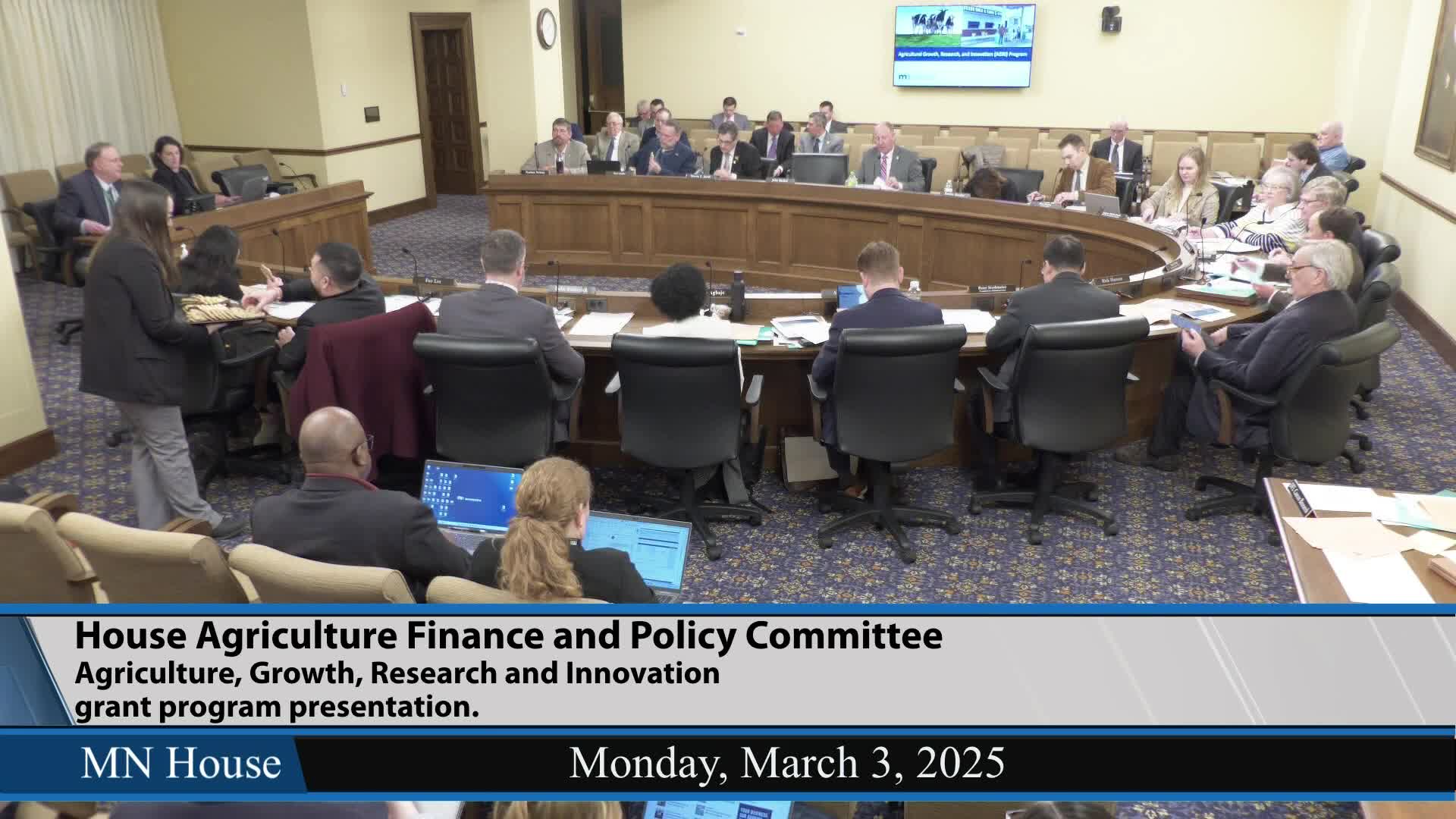
Paul Huguenen, director of the Ag Marketing and Development Division at the Minnesota Department of Agriculture (MDA), presented an overview of the AGRI (Agriculture Growth, Research and Innovation) program and its grant portfolio to the House Agriculture Finance and Policy Committee.
Huguenen explained AGRI’s funding mix (designated earmarks plus undesignated funds) and how undesignated funds allow the department to respond to changing industry needs and federal matching opportunities. He said designated spending in the current fiscal year totaled about $21,660,000 and that the remaining undesignated funds available for general competitive programs were roughly $5,800,000 for that year.
Highlights Huguenen reviewed included: - AGRI supports 16 different programs, including livestock investment grants, value‑added grants, farm business management scholarships and sustainable agriculture demonstration grants. - The RFA‑style Protect grants (for disease preparedness, electronic ID, biosecurity) were created from undesignated AGRI funds after stakeholder conversations about risks such as chronic wasting disease, African swine fever and avian influenza; the program received 127 requests for nearly $1,000,000 and awarded just short of $400,000 in fiscal 2024. - The Prepare grants (preparing for extreme weather) stem from lessons learned during severe drought response work; they fund infrastructure such as irrigation, pond dredging and hail netting. In the prior year the program had requests of about $1,500,000 and awarded just under $500,000. - The department uses external reviewers and three‑year grant terms for projects that require longer timelines (for example, livestock facility construction or multi‑year research grants).
Huguenen noted that the department strives to exceed Office of Grants Management standards and pointed to an Office of the Legislative Auditor review: auditors examined $14,500,000 of payments and recommended reclaiming only one‑tenth of 1%.
Ending: Huguenen encouraged members to review the AGRI legislative report, which includes grantee spotlights and maps showing where livestock investment grants and other projects have been funded across the state. Committee members asked about long‑term outcomes and the department said it completed a third‑party follow‑up survey in recent years showing that most respondents reported increased gross revenue as a result of AGRI projects.