Get Full Government Meeting Transcripts, Videos, & Alerts Forever!
Get email alerts on the Sewage Sludge Manure topic
No spam. Unsubscribe anytime.
Committee debates sewage‑sludge provisions; agencies raise jurisdictional concerns; amendment fails on tie vote and bill withdrawn
Summary
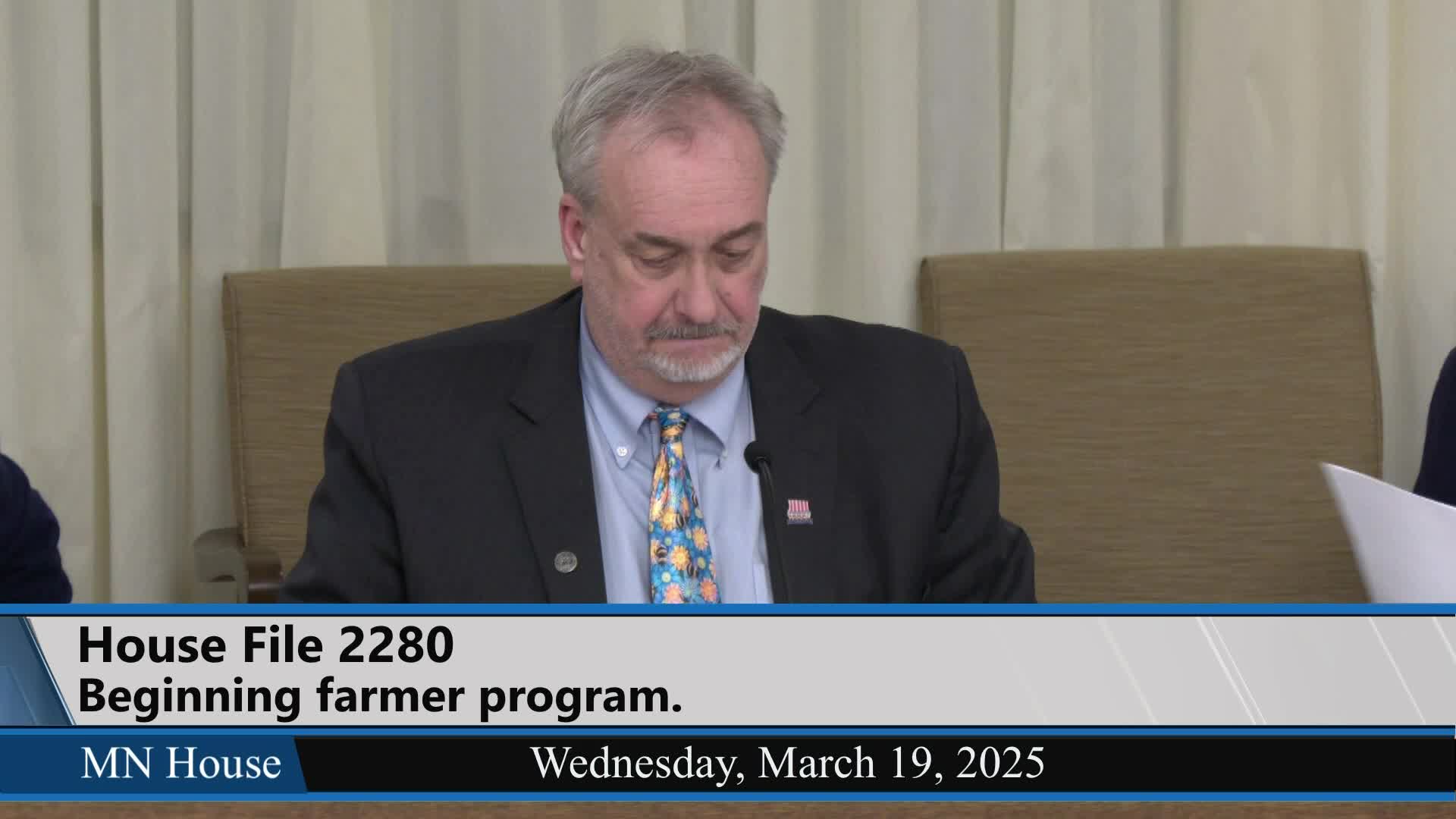
Chair Hansen moved an A1 amendment to House File 2280 that would add provisions on sewage sludge, manure application, and fertilizer-container handling; the MPCA and MDA testified with jurisdictional and fiscal concerns, and the amendment failed on a 7–7 division.
Chair Hansen moved an A1 amendment to House File 2280 to add provisions addressing sewage sludge, manure application, record retention and related handling and storage; the committee then heard testimony from the Minnesota Pollution Control Agency (MPCA) and the Minnesota Department of Agriculture (MDA) expressing concerns about jurisdiction and existing rule authority.
Tom Johnson, government-relations director for the MPCA, told the committee that MPCA already regulates sewage sludge and manure application under existing rules (citing sewage-sludge rules and feedlot rules) and that the agency was concerned the amendment would duplicate authorities. Deputy Commissioner Andrea Vaubel (Minnesota Department of Agriculture) said MDA had concerns about delegation language, uncertainty about whether the U.S. Environmental Protection Agency would honor a reallocation of authority, and potential fiscal impacts to MDA.
Committee members raised practical questions about the amendment’s language. Representative Nelson noted differences between small on‑farm septic sludge and municipal sewage sludge and cautioned against treating all materials identically. Representative Anderson asked whether the rules would criminalize commonplace conduct (for example, trashing cardboard or an accidental release from a spreader) and said he was concerned by broad language that could lead to unintended enforcement. Representative Gander said the goal of avoiding long‑term accumulations and costly future cleanups was important but requested more methodical work so agencies and members could resolve jurisdictional issues.
After discussion, Chair Hansen asked for a division vote on the A1 amendment. The clerk counted seven hands in favor and seven opposed; the amended language therefore failed on a 7–7 division. Following the failed division, Representative Hansen withdrew House File 2280 from consideration. Committee members expressed willingness to continue working on the issue with agencies and stakeholders outside the committee.
Why it matters: Testimony indicated the topic — biosolids, manure management and potential PFAS contamination in sludge — raises complex regulatory and technical issues, overlaps existing agency rules, and has potential fiscal and legal implications if responsibilities are shifted between agencies.
Formal action and next steps: The A1 amendment failed on a 7–7 division and the author withdrew the bill from consideration; members asked agencies to continue engagement and to provide technical clarifications and fiscal information for future drafting.