Get Full Government Meeting Transcripts, Videos, & Alerts Forever!
Get email alerts on the Biological Nitrogen Incentive topic
No spam. Unsubscribe anytime.
Proposal would pay farmers to cut synthetic nitrogen by replacing it with biological sources
Summary
House File 2683 would create a one-year incentive program paying farmers per acre to reduce synthetic nitrogen by replacing part of the application with biological sources; proponents cited water-quality benefits and Nebraska’s recent experience while members asked about peer-reviewed evidence and program duration.
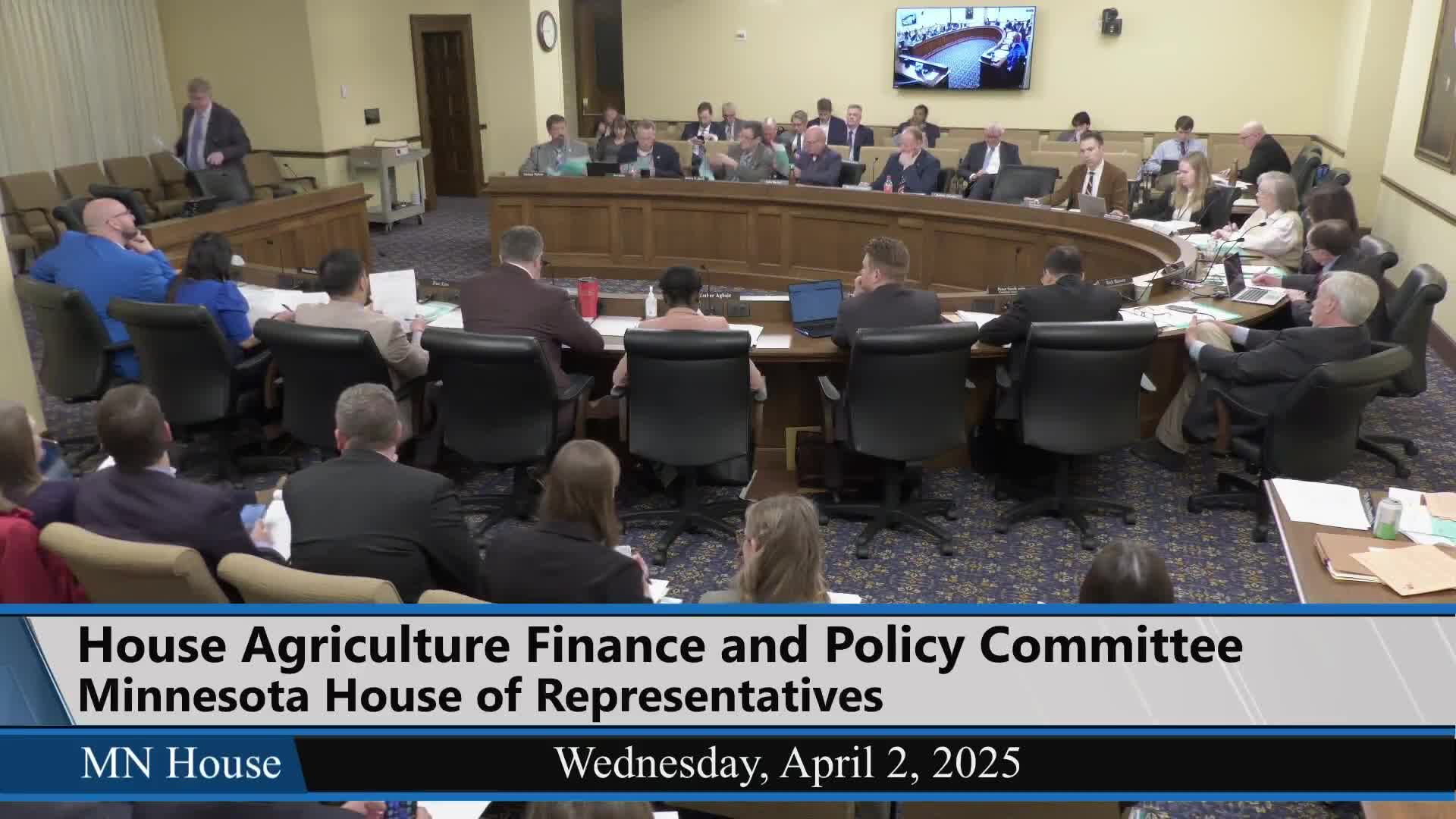
Chair Anderson introduced House File 2683, a proposal to incentivize farmers who grow nitrogen‑dependent crops (primarily corn) to reduce synthetic commercial nitrogen application by 15% (up to 30 pounds per acre) and replace the reduced portion with a biological nitrogen source. The bill as presented would set a minimum field size eligibility (40 acres) and a payment formula described in committee documents.
Cameron Henning, a commercial agronomist for Pivot Bio, told the committee that biological products "spoon feed" part of a plant’s nitrogen needs and, if implemented broadly, can reduce leaching and volatilization. Henning testified: "If fully funded at $1,500,000 and the rate remained at $5 per acre, the funding would result in over 8,000,000 pounds of synthetic nitrogen avoided, which when calculated at a 24% loss is more than 2,000,000 pounds of potential contaminants that were never applied to the soil."
Proponents pointed to Nebraska’s similar program, which passed unanimously and attracted more applications than available funding. Chair Anderson said the program is intended as a one‑year pilot to lower the perceived risk for farmers trying new products and to encourage adoption; Representative Lee asked whether payments are one-time or ongoing, and Anderson answered the current bill funds a one-year program with the hope of future continuation if successful.
Representative Hansen asked about peer‑reviewed, independent research supporting the efficacy of biological nitrogen products; Chair Anderson acknowledged some research exists but said he had not compiled independent studies at the hearing and noted anecdotal farmer reports. Committee members discussed program design, potential environmental benefits and the administrative timeline.
Action: Chair Anderson moved House File 2683 and the committee laid the bill over for further consideration; funding levels and program duration remain subject to future decisions.