Get Full Government Meeting Transcripts, Videos, & Alerts Forever!
Get email alerts on the Childcare Cameras topic
No spam. Unsubscribe anytime.
Parents press for mandated daycare cameras; providers and privacy advocates warn of costs and unintended harms
Summary
Parents of children harmed at licensed daycare centers urged lawmakers to require cameras and longer video retention; providers and privacy advocates warned a mandate would raise costs and privacy risks.
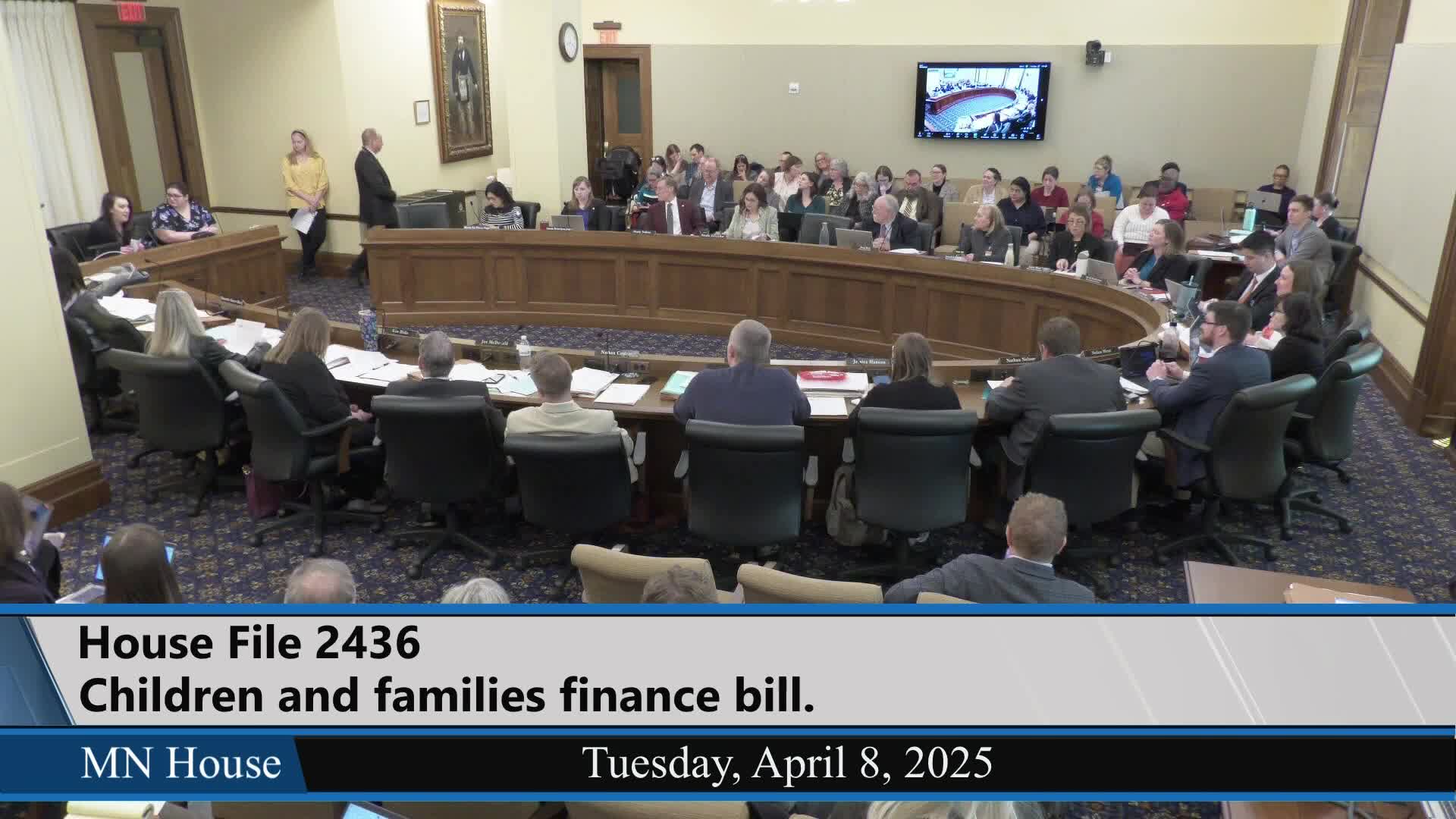
Parents of children injured at licensed daycares urged the Children and Families Committee to include House File 1915’s camera and video-retention provisions in the children and families DE1 omnibus bill, while childcare providers and privacy advocates warned that a statewide mandate would create privacy risks, substantial costs and unintended consequences for staffing and access.
“Had their footage gone further back there would be a conviction for the atrocities committed against my son,” said Christina Peck, a parent who described a July 19, 2024 incident and told the committee her son sustained a tibia fracture that did not appear in the center’s one‑week camera archive. Peck asked lawmakers to “support this bill as we feel it truly would keep children safe by having cameras present.”
Multiple other parents gave similar accounts. Suzanne Dickerson said cameras at her granddaughter’s center helped identify abuse but added that “they deleted the video after just 7 days,” limiting prosecutions and convictions. Becca Kerfeld described emergency-room findings of multiple healing rib fractures in her infant and said that without video “we would have justice.”
Medical and child-safety advocates also testified in favor. Dr. Lisa Hollensteiner, chair of Safe Passage for Children of Minnesota and a retired emergency physician, said children under 3 are at the highest risk of death and injury from abuse and that “without cameras we have no way of verifying injuries on a non mobile infant or a non verbal toddler.” She told the committee that camera footage can both hold staff accountable and exonerate workers when injuries are not caused by abuse.
Providers, provider associations and rural operators urged caution. Chantelle Gurba, owner of Iron Range Tikes Learning Center, said cameras present “substantial privacy concerns” and warned about unauthorized access, storage and the effect of surveillance on staff. Karen DeVos, owner of three small rural centers, said upgrading camera systems to meet the proposal’s requirements would create “a significant one time as well as an ongoing expense” and likely force higher parent fees or cuts to teacher pay.
National and statewide provider groups repeated concerns about cost and privacy. Kathleen McHenry of the Early Care and Education Consortium, representing providers, said existing camera policies vary and that the DE1’s proposed recording and retention requirements would impose equipment, internet and staffing costs far above the modest appropriation in the bill.
Several providers said they voluntarily use cameras for training and transparency but objected to a mandate without funding and safeguards. Joe Pickett, a recently retired Primrose Schools owner, said cameras “at best only tells you what happened after the fact” and urged investments in supervisory staffing and workforce supports rather than a broad surveillance mandate.
Committee members and staff noted the DE1’s text as walked through in committee did not contain the camera mandate from a signed chairs’ agreement; Chair Nolan West said an amendment would be offered at the next day’s markup to resolve that discrepancy. West noted that article language and specific subdivision changes were still being finalized.
Ending: The committee heard compelling, often traumatic testimony from parents seeking stronger evidence-retention rules and from providers and associations highlighting costs and privacy risks. Lawmakers left the final decision to the amendment and markup process scheduled for the committee’s next meeting.