Get Full Government Meeting Transcripts, Videos, & Alerts Forever!
Get email alerts on the Workforce Compensation topic
No spam. Unsubscribe anytime.
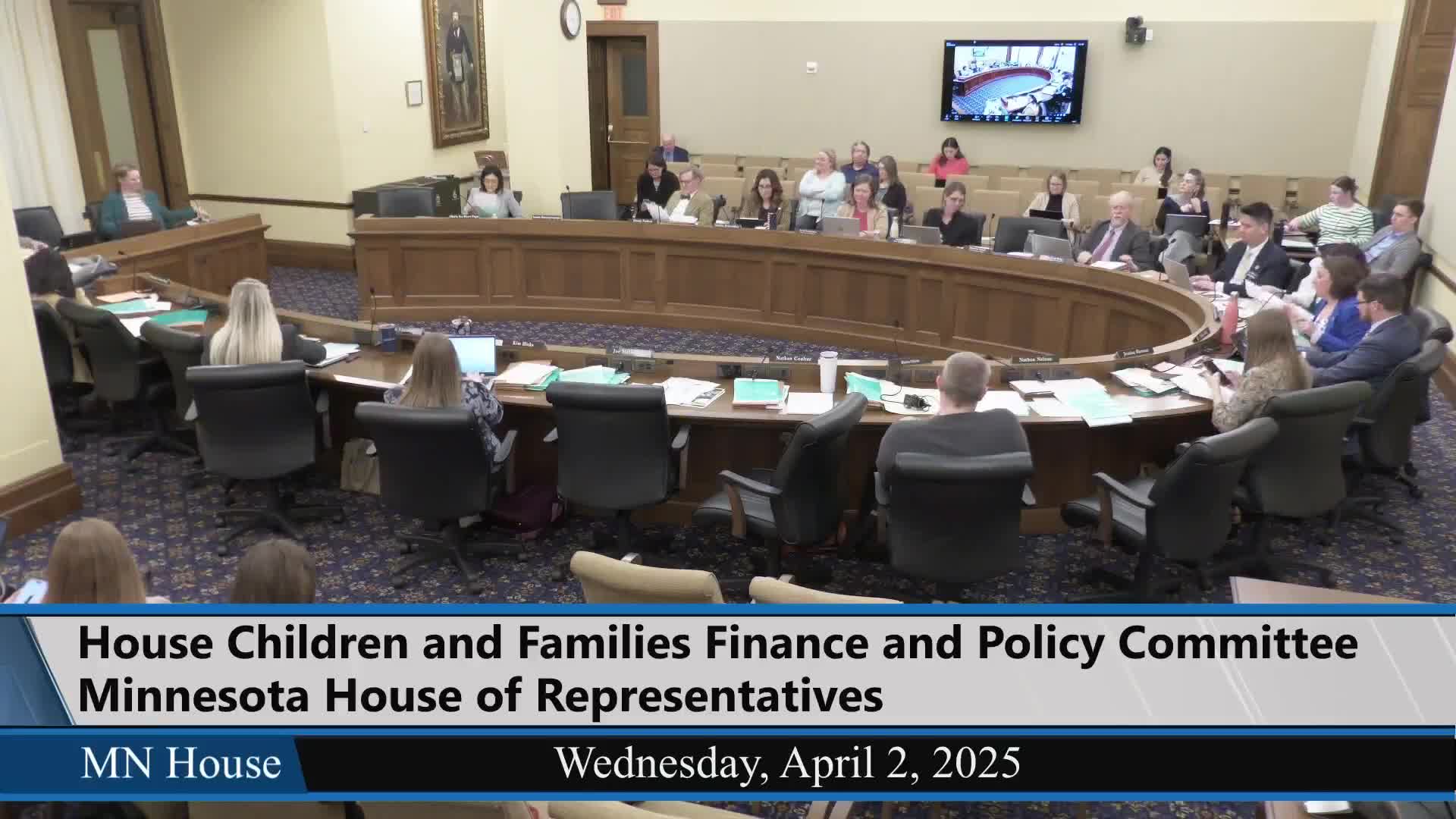
Panel considers modest expansion of what hours qualify for Great Start compensation support
Summary
House File 27‑28 would allow professional development, training and lesson‑planning hours to count toward provider eligibility for Great Start compensation payments; supporters said the change recognizes the full scope of provider work but warned of budgetary effects.
Representative Coulter offered House File 27‑28 to modify the Great Start Compensation Support Program so that additional time — for example, professional development, lesson planning, and related activities — could count toward the hours that make an educator eligible for compensation grants.
Witnesses described the program as “a literal lifesaver” for providers, saying the grants helped centers retain staff and avoid closures. Brandy Saroga, executive director of a multi‑site childcare operation, said the program allowed the organization to avoid a $700,000 operating loss last year and credited the grants with retaining staff and paying for life‑essentials and holiday bonuses. She supported the bill’s change to include hours spent in training and required meetings.
Cindy Cunningham, representing family child care providers, said she supports recognizing additional hours but warned that expanding eligible hours without adding base funding could lead to smaller award amounts for each provider because the program has a base appropriation and one‑time funds. Representative West explained the arithmetic risk: expanding qualifiers without increasing the budget could reduce per‑recipient payments. Representative Coulter said the change would not expand who receives payments — only which hours count toward eligibility.
The committee laid House File 27‑28 over for further consideration; members requested attention to fiscal sustainability while acknowledging provider demands for recognition of non‑contact work time.