Get Full Government Meeting Transcripts, Videos, & Alerts Forever!
Get email alerts on the Childcare Affordability topic
No spam. Unsubscribe anytime.
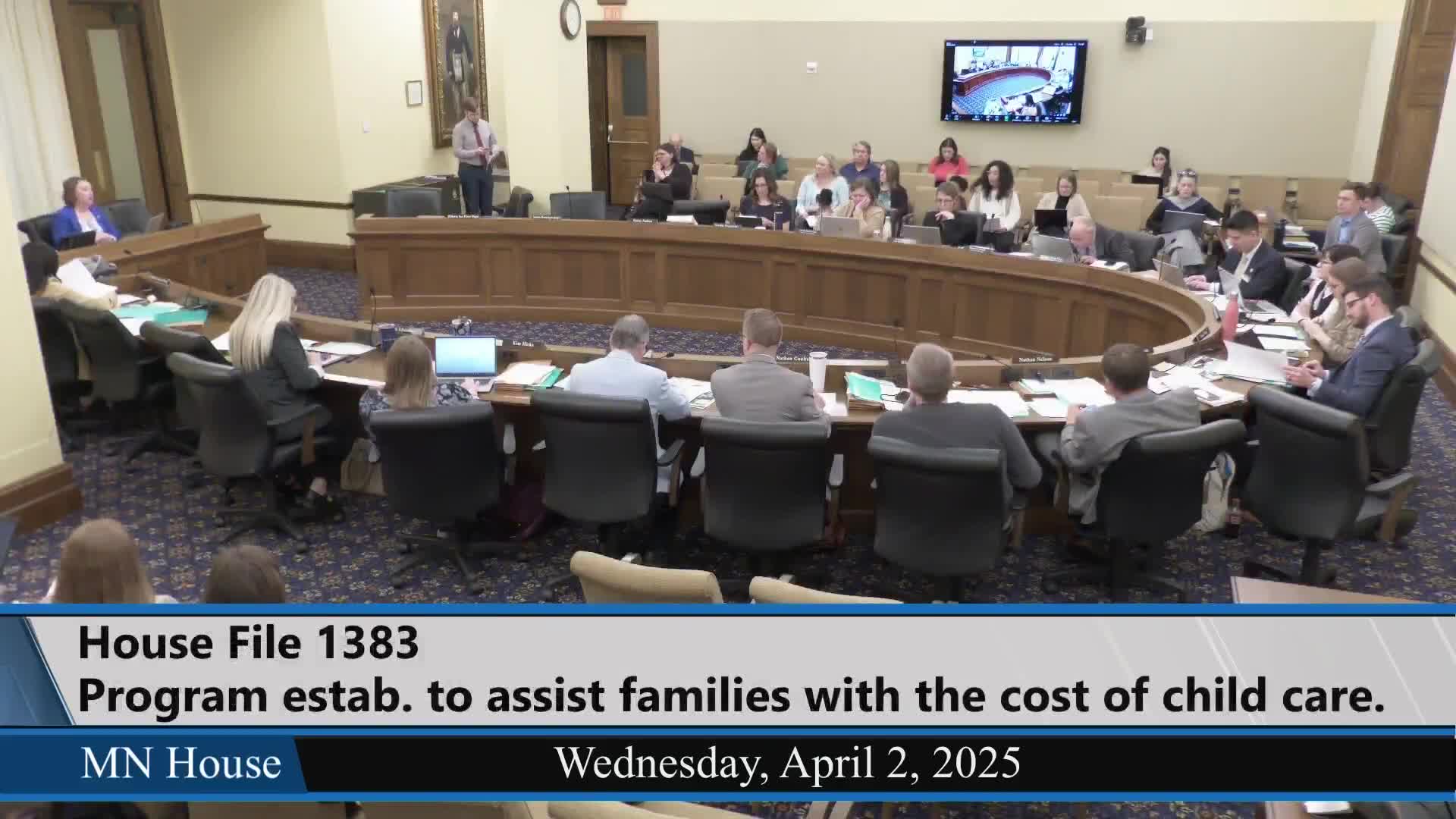
Sponsor outlines $500 million Great Start affordability plan to cut family childcare costs; committee lays bill over
Summary
Representative Katiza Wooten introduced a broad Great Start Affordability program to subsidize childcare on a sliding scale for families earning up to 150% of state median income; supporters called it an ‘aspirational’ proposal with an estimated cost near $500 million a year and asked for long‑term discussion and revenue solutions.
Representative Katiza Wooten presented House File 13‑83, the Great Start Affordability Program, proposing a large‑scale subsidy to reduce out‑of‑pocket childcare costs on a sliding scale for families earning up to 150% of the state median income. The sponsor described the measure as an alternative to a tax credit and estimated the program would cost about $500 million annually if implemented at scale.
The bill envisions payments made prospectively to providers on behalf of families, producing a discount on family invoices. Representative Wooten said the program would be designed to utilize existing systems (for example, early learning scholarships) to speed implementation and avoid reinventing payment infrastructure. She framed the proposal as both an affordability measure and a workforce support strategy for providers.
Parents and providers testified in support. Elena Scoglin, a childcare teacher and parent, said she earns $19.27 an hour and pays about $2,400 per month in child care for two children — “it's my entire paycheck plus some of my husband's paycheck” — and urged passage. Alexandria Packard, a parent who works full time and relies partially on a relative to care for a child, said the program would answer “How do we pay for this?” for many working families who do not qualify for existing assistance but struggle with costs.
Committee members discussed costs and design. Representative West asked about the program’s fiscal magnitude; Wooten estimated roughly $500 million per year and described the proposal as “aspirational.” Members debated policy design questions including whether subsidies should be paid to providers (the sponsor proposed monthly prospective payments) and the program’s interaction with existing supports. Representative West cautioned that a large program would require revenue and asked the committee to consider melding or consolidating existing programs where appropriate.
The committee laid the bill over for possible inclusion and further work; the hearing produced no final fiscal action or appropriation in this session.