Get Full Government Meeting Transcripts, Videos, & Alerts Forever!
Get email alerts on the Fame Program topic
No spam. Unsubscribe anytime.
Committee hears bipartisan support to continue funding FAME asset-building program
Summary
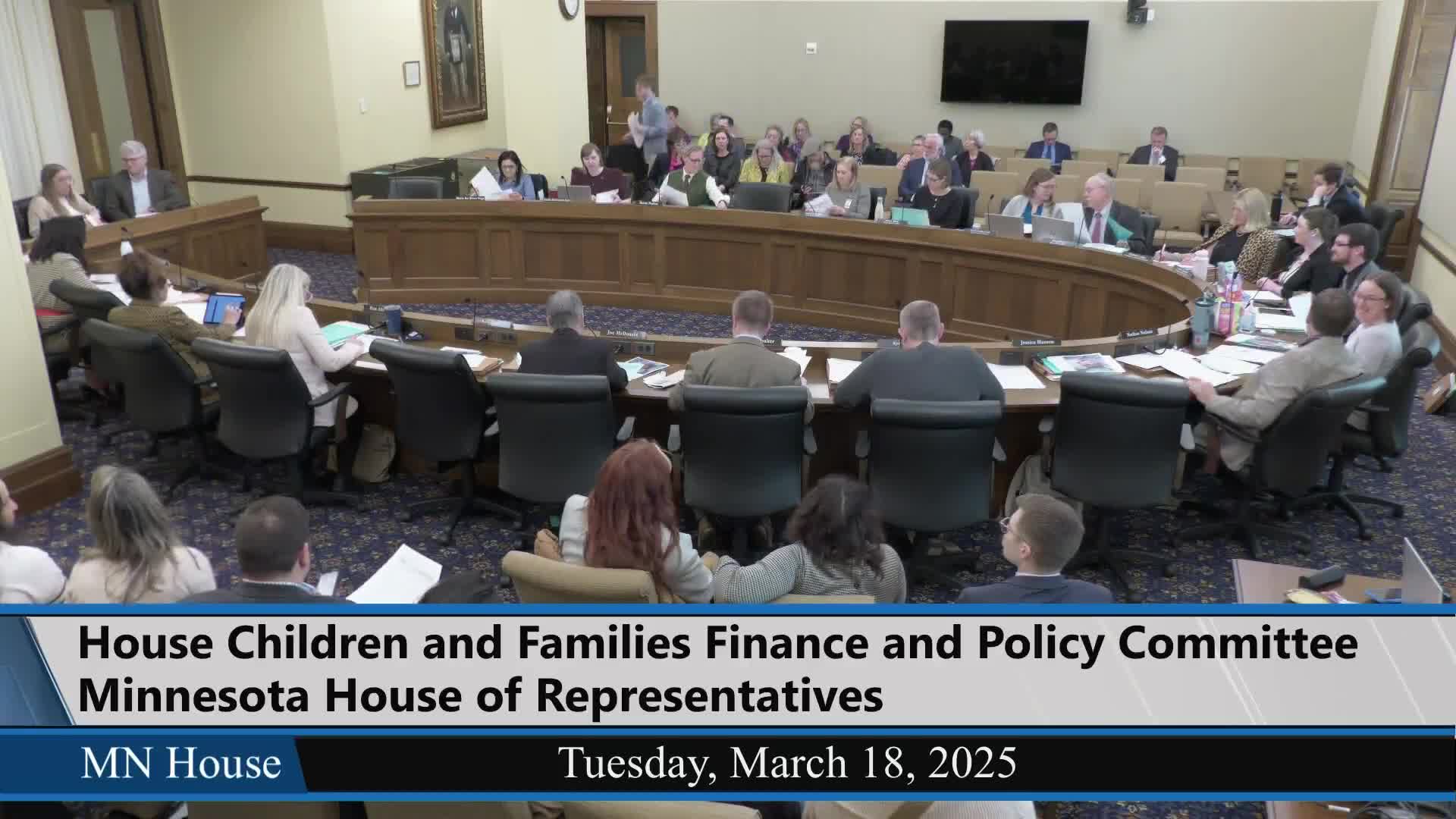
Members heard testimony and public stories supporting House File 776 to add $1.5 million per year to the base to continue the Family Assets for Independence in Minnesota (FAME) program; the committee laid the bill over for possible omnibus inclusion.
The Children and Families Committee on Oct. 12 heard several hours of testimony in support of House File 776, a bill to maintain and expand funding for the Family Assets for Independence in Minnesota (FAME) program, and laid the bill over for possible inclusion in an omnibus package.
Vice Chair Hansen, sponsor of House File 776, told the committee that the bill would add $1.5 million to the base each fiscal year to keep FAME’s matching and coaching services operating at current levels. “FAME helps Minnesotans save money for key investments that create long term financial stability,” Hansen said.
Why it matters: Testimony from program staff, graduates and legislative backers emphasized FAME’s combination of financial coaching and a dollar-for-dollar or better savings match that participants use to buy homes, start small businesses, buy cars, or pay for education. David Snyder, director of the FAME program, said the program triples participant savings and provided evidence that participants who completed the program have higher rates of home and business retention in external evaluations.
Public testimony: Survivors and graduates gave personal accounts. Mayres Espitia, a FAME graduate who described escaping domestic violence and later buying a home, told the committee the program “changed and saved lives.” Members cited program statistics: the committee packet reported more than 3,300 assets acquired through the program to date, with about 30% home purchases and 37% pursuing postsecondary education.
Program details and questions: Members asked about measurable outcomes and return on investment. David Snyder said the program intentionally structures savings matches so they do not count against recipients’ public benefits and noted that a substantial share of recent account holders maxed out the match, limiting the number of accounts served under the current appropriation. Committee members discussed the match level (the program uses a 3-to-1 match for some accounts) and the tradeoffs between match generosity and number of participants served.
Next steps: The committee laid House File 776 over for possible omnibus inclusion. Members and witnesses agreed to follow up with more detailed outcome data and suggested ongoing program evaluation to better link FAME participation with longer-term changes in income and public-benefit reliance.
Ending: Sponsors urged continued bipartisan support and noted past expansions increased account holders and partner organizations statewide; committee action preserved the bill for omnibus consideration.