Get Full Government Meeting Transcripts, Videos, & Alerts Forever!
Get email alerts on the Northstar Kinship Payments topic
No spam. Unsubscribe anytime.
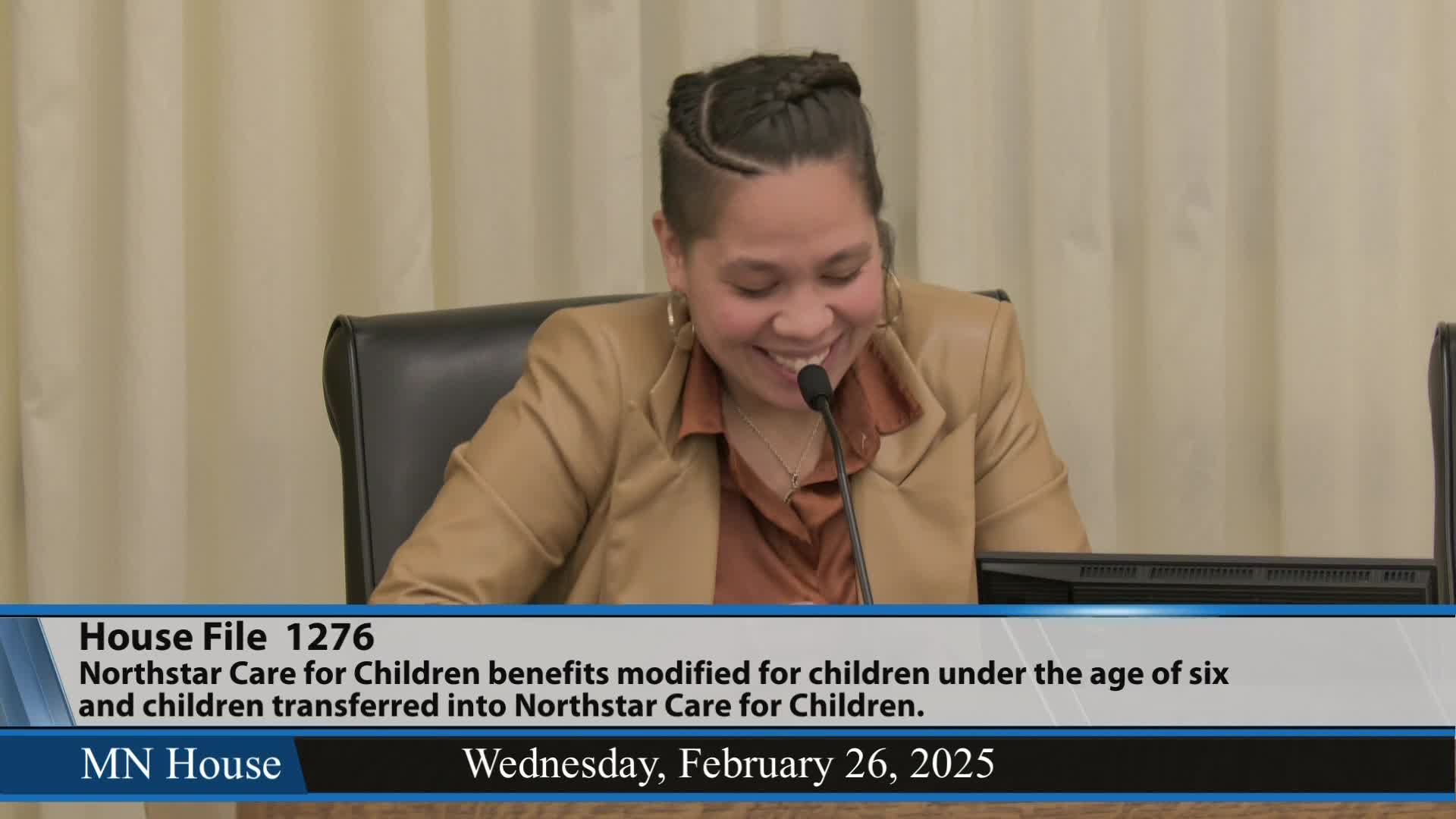
Committee hears bill to equalize Northstar kinship payments for children under 6; laid over
Summary
Representative Jennifer Hicks and advocates urged the committee to eliminate a lower payment rate for children under 6 in Northstar kinship and adoption assistance so relatives can more readily accept permanency. The committee laid House File 1276 over for further fiscal analysis.
The Children and Families Committee heard testimony supporting House File 1276, which would eliminate a reduced Northstar payment rate for children who reach permanency before age 6 and ensure relatives receive the same financial benefit regardless of the child's age.
Rep. Jennifer Hicks, the bill’s sponsor, described the proposal as a tool to help relatives "get to yes" when asked to provide permanent care for young children. "Many times family members are not planning on starting over or raising their grandchildren. This helps them be able to get to yes," Hicks said.
Multiple advocates, tribal liaisons and social workers testified that the reduced preschool-entry rate contributes to delays in finalizing permanency and sometimes leads counties to wait until a child turns 6 to finalize adoption or guardianship so families receive higher financial assistance.
"In many cases, our child placing agencies, our counties are faced with two choices: move the child from family, which is not in their best interest, or wait for permanency and keep them in foster care until they're 6," said Sadie Hart, policy and advocacy director at Enda Young Center.
Testimony summarized research showing fuller Northstar payments correlate with improved outcomes. The Upjohn Institute study cited at the hearing found that full payments were associated with higher average academic achievement and faster timelines to permanency in follow-up analysis described by witnesses.
Fiscal questions remained unanswered in committee. The state fiscal analyst said the program's base spending (for the referenced budget line) is "about $2.20 something million" and that a pending fiscal note will estimate the cost to equalize rates. Committee members and staff discussed Title IV-E and other federal funding streams that may be relevant, but no final reimbursement estimate was presented.
Committee action: Rep. Hicks moved to lay House File 1276 over for possible inclusion in an omnibus bill; the motion was renewed and the measure was laid over pending a fiscal note.
Discussion points included how payments are determined (a MAPC assessment that sets rates based on a child’s age and level of need), how the current preschool-entry alternate rate reduces payments for children under 6 (testimony gave an illustrative daily range: about $25/day for older rates and about $12/day for the preschool entry alternative), and the system-level impacts of delayed permanency.
Next steps: The bill is laid over and committee staff will work with the department and fiscal analysts to produce a fiscal note and further implementation detail.