Get Full Government Meeting Transcripts, Videos, & Alerts Forever!
DHS outlines licensing overhaul, enforcement tools after parent recounts alleged abuse at Plymouth preschool
Summary
Department of Human Services officials told the Children and Families Finance and Policy Committee they are pursuing a multi-part licensing modernization project, stepped-up enforcement tools and background-study practices as parents and lawmakers pressed for stronger oversight after a parent described an incident at Little Explorer’s Plymouth.
At a recent meeting of the Minnesota House Children and Families Finance and Policy Committee, Department of Human Services officials presented an overview of childcare licensing, enforcement tools and a multi-part modernization project while a parent described an incident at a Plymouth preschool that he said went viral online.
Joshua Truax, a parent whose son appears in a widely shared video, told the committee his 3-year-old was “picked up, slammed … aggressively pushed into a table” and had toy drumsticks taken while other toddlers watched. “We must demand stricter oversight, stronger protections, and real consequences for those who fail our children,” Truax said.
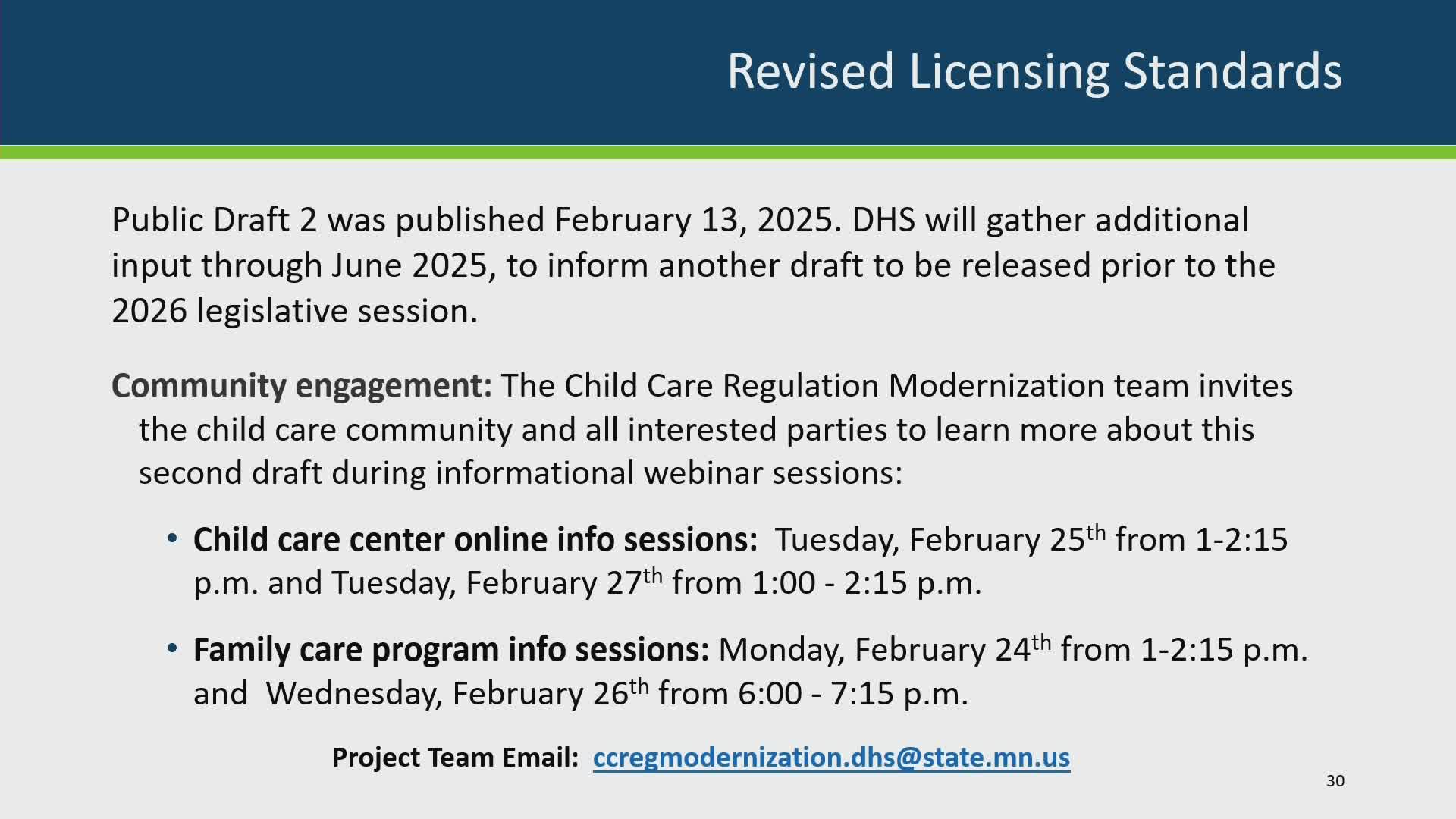
The testimony framed lawmakers’ questions as Alyssa Dodson, Deputy Inspector General for the DHS Licensing Division, described how Minnesota licenses and inspects childcare providers, the range of enforcement tools available and the department’s plan to modernize rules and inspection practices.
Dodson said DHS licenses two main program types: state-licensed childcare centers and county-delegated family childcare programs. As of February 2025, Dodson reported there were 1,791 licensed centers and 5,756 licensed family childcare providers. Centers are directly licensed and inspected by DHS staff; family childcare is licensed through county delegated licensors who recommend sanctions to DHS for more serious actions.
DHS outlined a tiered set of enforcement responses. Low-level issues can generate “documented technical assistance” (replacing the prior “fix-it ticket” approach); correction orders address more substantive but non-imminent violations; fines may be assessed for violations that impact health and safety; conditional licenses set terms and extra monitoring; temporary immediate suspensions stop…
Already have an account? Log in
Subscribe to keep reading
Unlock the rest of this article — and every article on Citizen Portal.
- Unlimited articles
- AI-powered breakdowns of topics, speakers, decisions, and budgets
- Instant alerts when your location has a new meeting
- Follow topics and more locations
- 1,000 AI Insights / month, plus AI Chat